Search Results
Search this site
618 results found with an empty search
- Association Feature: Feminist Union
The Feminist Union, most commonly known as the FU, is the feminist association on campus. We advocate for better equality between men and women and our aim is also to fight against any kind of violences, whether economic, social, or sexual towards women. < Back Association Feature: Feminist Union By Zélie Savinien September 30, 2021 The Feminist Union, most commonly known as the FU, is the feminist association on campus. We advocate for better equality between men and women and our aim is also to fight against any kind of violences, whether economic, social, or sexual towards women. To do so, we organize multiple events such as the consent talks at the beginning of the year or octobre rose (Pink October.) We want everyone to feel included in this association, so if you have any questions, do not hesitate to contact us on our social medias!
- Saudi Arabia Ramps Up Defense Budget at Expense of Islamic Institutions
Saudi Arabia’s Vision 2030 aims to bring about a complete political, economic and cultural transformation to the Kingdom, aspiring to diversify the economy away from oil production and towards cutting-edge innovation transforming its desert dunes into world leading digital technologies. < Back Saudi Arabia Ramps Up Defense Budget at Expense of Islamic Institutions By Lucy Lönnqvist for Sciences Defense March 30, 2024 Saudi Arabia’s Vision 2030 aims to bring about a complete political, economic and cultural transformation to the Kingdom, aspiring to diversify the economy away from oil production and towards cutting-edge innovation transforming its desert dunes into world leading digital technologies. As part and parcel of this strategy, two prominent Saudi fields have undergone major reformation: Islamic religious institutions and national defense establishments. Under the Vision 2030 economic diversification program, Saudi Arabia’s defense spending has grown substantially over the last decade, while the authority of Islamic institutions has taken a step back. Through this process, it seems that the celebrated Crown Prince Mohammad Bin Salman is taking steps towards Western notions of modernity in the liberalization efforts of Vision 2030. Saudi Arabia ranked as the fifth largest defense spender in the world in 2022 behind the United States, China, Russia, and India, and has reiterated full intentions of climbing further up these ranks. When Vision 2030 was announced, only 3% of Saudi Arabia’s procurements came from local companies, with the rest sourced from abroad, largely the US. According to the 2023 budget released by the Saudi Ministry of Finance, the Kingdom increased its military spending by 50% in 2023, to $69 billion – approximately 23% of its total budget. The significant increase in the defense budget comes as part of Saudi Arabia’s Vision 2030 requirements to localize government spending in the defense sector. This leaves us to question – why the sudden escalation in defense spending at the same time as the Kingdom’s full-scale nation-branding scheme? At the same time, Saudi Arabia’s religious establishments have undergone major reform as the monarchy consolidates its vision for the country’s future. The Crown Prince has promised to reel back Islamic extremist presence in the country in favor of a “return to moderate Islam” open to the world and all religions. In his view, Vision 2030 aims to transform the hardline kingdom into an open society that empowers citizens and lures investors. Bin Salman stated that the religious doctrine is no longer “committed blindly” to the teachings of Muhammad ibn Abd al-Wahhab, or any “certain school or scholar.” However, one must approach such statements with skepticism. While it is true that the Crown Prince has condemned Islamic extremist groups such as the Sahwa movement, a political Islam derived from the teachings of the Muslim Brotherhood, in arresting significant Sahwi uUema, he is dually centralizing his power by removing opposition groups to the Royal family who may pose a challenge to their rule. Anyone deemed to threaten Vision 2030 has been preemptively neutralized by the Crown Prince. With these actions, the regime made it clear that no dissenting voices would be tolerated. Ultimately, Bin Salman’s push for the Vision 2030 plan tostrengthen Saudi solidarity, defense power and the removal of Islamic extremist presence has come to be overshadowed by his lid on free speech, restrictions on political opposition, and the crackdown on dissent. It is argued that the increase in Saudi’s defense budget along with the Kingdom’s economic innovation acts as a forged nation-branding visage to strengthen the absolute monarchy’s image abroad. This was an effort to use ‘Vision 2030’ in the absolute monarchy’s macrodiplomatic strategy. What is emerging from the 2030 Vision plan and an increased defense budget is a Kingdom straddling the boundary between coercive strategies of the past such as surveillance and patronage, with innovations that respond aggressively to the triple threat of globalization, renewable-driven economies, and democratization. One must decide whether the changes to defense and religious fields in Saudi’s Vision 2030 plan are merely a glossy nation-branding scheme to exert greater soft power across the world or a genuine attempt to crawl up from the constraints of Wahhabism? The surface-level of Vision 2030 is evident: trade deal after trade deal boosting economic diversification, the retreat of Islamic institutions and greater localized defense spending as an upward trajectory for the Saudi dynasty. However, if further interpreted, it becomes clear that appeals to expanding government budgets on defense artillery are only riding on the support of oil revenues to maintain status and power. The country’s nation branding scheme has succeeded in its strategy, but we must not be fooled by the Crown Prince’s liberalization discourse in order to look past the state’s weak regulatory power, exploitative workforce practices and the absolute monarchy’s suppression of almost all political rights and civil liberties.
- Face Á La Censure Riposte Étudiante: Analyzing Freedom of Expression for Students in France
Following the Oct. 7 attack on Israel and the resulting retaliation on the people of Gaza, college campuses have become a hotspot for heated debate and resulting administrative censorship. < Back Face Á La Censure Riposte Étudiante: Analyzing Freedom of Expression for Students in France By Jenna Ahmed for Amnesty International December 31, 2023 College campuses across the globe are grappling with the regulation of diverse opinions in an educational environment where the safety of students, the integrity of fundamental freedoms, and the reputation of the institutions are at stake. Following the Oct. 7 attack on Israel and the resulting retaliation on the people of Gaza, college campuses have become a hotspot for heated debate and resulting administrative censorship. On Nov. 16, Sciences Po Students, professors, and administrators woke up to barricades stacked against the campus's front entrance accompanied by a sign that read, "Face À La Censure Riposte Étudiante.” That morning, a collaboration of several student organizations, namely, Solidaires Étudiant-e-s, had placed dumpsters, construction borders, and other materials blocking the entrance to campus and attendance to the daily lessons. In an explanatory email to peers and administrators, the students expressed their discontent with "Sciences Po's policy of censorship against any student support for Palestine," as well as the administration's “lack of support in response to threats from the far-right, including calls for rape and murder." The students also called out the administration for "at best psychological pressure, at worst harassment" directed at students supporting Palestine. Finally, they ended with concrete demands calling for freedom of expression within the law. The blockade quickly caught the community's attention; Menton residents, French news outlets, and campus staff observed the student protests. Dozens of students stationed themselves in front of the blockade in support of the cause, and at 3 p.m. that afternoon, with directions from Campus Director Yousef Halaoua, the police came to lift the blockade. More than twenty police officers in riot gear entered the back entrance of the campus and removed the blockade from behind the students. Several students received minor injuries as the officers shoved the barriers against them. Over the next hour, the authorities physically removed 66 students and informed them they would be fined for participating in an illegal protest. In the weeks leading up to this event, the atmosphere on campus was highly contentious between students and administration, and within the student body itself. The Oct. 7 attack led students to be fiercely vocal regarding the attack, overall historical conflict, and enduring humanitarian crisis. Discontentment was sparked in the students by several actions by the Sciences Po administration at both the campus and university levels. Shortly after the attack, and in the weeks following, Sciences Po Paris released several statements of acknowledgment and solidarity for the Israeli victims and those affected in relation, notably expressing less, if any, support for Palestinian victims. However, the triggering point was when several students received emails from the administration addressing the media they were posting on their private Instagram accounts regarding Israel and Palestine. Further, during this period, local news networks and French politicians publicly targeted Menton students for their support of Palestine, accusing the campus of antisemitism and terror apologia, which left the students feeling unsupported by their campus and their community. Students were unimpressed by the administration's immediate response to this distressing situation and, ultimately, questioned the legality behind new and old restrictions in France regarding freedom of expression and protest. Does the French government have the power to limit speech, and to that point, does Sciences Po have the authority to sanction students' private accounts? The complexities of French and international law and the context in which these laws are incessantly abused by French authorities may answer these concerns. In an interview with Ph.D. student Samantha Vaur, a Law and Politics seminar teacher at Sciences Po Menton, we discussed the specifics of French freedom of expression and protest laws. Primarily, she emphasized that "international law is very relevant," stating that "France is a state party to international conventions on human rights where you can find freedom of expression — Article 19 Universal Declaration, Article 19 Covenant on Civil and Political Rights, Article 10 of the European Convention, and Article 4 on the Elimination of Discrimination." Succinctly, France has, on an international level, committed to protecting these specified freedoms. Nevertheless, Vaur also identified the significance France has applied to the notion of Public Order, which outlines "both legal and physical guarantees of freedom, security, and peace of mind, which are necessary for individuals to live together in society." In an article on the French Council of State, author Rim-Sarah Alouane argues that France has traditionally applied an extremely narrow application of Public Order in the name of ensuring public safety. Alouane further asserts that French politicians have repeatedly attempted to bypass the rule of law to combat terrorism. France’s approach to freedom of expression through anti-terrorism rhetoric is a common trend evident since the end of the 20th century when many assert that French jurisprudence shifted from protecting expression to combating terrorism. Finding a balance between the two has been challenging; on several occasions, the European Commission on Human Rights has considered France’s sanctions "disproportionate and, therefore, unnecessary in a democratic society." On Sciences Po campuses, many students feel anti-terrorism clauses are being abused to sanction opinions that do not resonate with the university’s position. In an interview with Islam Mohamed, another Law and Politics seminar teacher, he discussed the importance of understanding how “apology of terrorism has been abused by the French government as a legal tool” long before current conflicts brought the issue to the university stage, stating that the Israel-Palestine debates on campus have only added another layer to the issue’s complexities. When asked if there is a legitimate concern of terror apologia among students and if so, what is the appropriate administrative response of college campuses, he responded that: “In general, there can be limitations to freedom of expression even outside the scope of terrorism. How we assess the legitimacy of these limitations is by assessing whether these limitations are proportionate to a particular security threat. Taking an action that limits freedom of expression that is disproportionate to a danger of the threat would be considered illegitimate by the European Union and French government.” Ultimately, although freedom of expression and protest are recognized rights, French law has been instrumental in the consistent limitations of these rights. This debate, which is seen on both national and international scales, presented itself at Sciences Po following emails to three students who posted pro-Palestinian content that was identified by Sciences Po’s legal team as apology of terrorism. This came after the controversial statement by French Interior Minister Gerald Darmanin calling for pro-Palestinian demonstrations to be banned and perpetrators to be arrested in the name of disrupting public order. Although the legality of this directive is inconclusive, it certainly constructed an atmosphere of distrust and unrest among students. Due to the debates forming around these emails, the student blockade, and several contentious meetings between students and administration, Director Yousef Halaoua held a meeting for the entire campus where he explained recent controversial administrative actions. Regarding the blockade, he explained that blocking an educational facility from running its daily functions is illegal and goes against school policy. Secondly, he cited the French penal code 421-2-5 as the motivation for emailing students. This code states: "Directly provoking acts of terrorism or publicly advocating these acts is punishable by five years' imprisonment and a fine of €75,000." The exact content of these students' posts is unknown; however, many students have questioned the legitimate authority the administration has over personal content and whether the administration was motivated by the student's political stance rather than the outlined legal limitations to freedom of expression. The continuity of this issue is made apparent by the atmosphere of distrust French authorities have created around the government's ability to protect certain rights. Amnesty International has published copious reports criticizing France's actions regarding protest and speech. In an article titled "France is not the free-speech champion it claims to be," Amnesty details how France's record on freedom of expression is incessantly bleak. The article cites the example of the European Court of Human Rights finding the convictions of 11 activists for campaigning for a boycott of Israeli products a violation of their free speech rights. Amnesty displays that the application of restrictive laws to this particular conflict is familiar. Following the Interior Minister's ban on pro-Palestinian protests, Amnesty International France's President stated that "The ban on all demonstrations in support of the Palestinians in France constitutes a serious and disproportionate attack on the right to demonstrate…A ban can only be legal if it is motivated by a specific threat and if it is demonstrated that no other less restrictive measure could guarantee public order." Again, the importance of the proportionality of a legal action to an issue of expression is apparent. In essence, despite international law protecting and outlining certain fundamental freedoms, states within international bodies exercise extensive discretion. The issue of freedom of expression and protest in France is complex and tremendously relevant when applied to a university campus with a political science focus. As previously mentioned, limitations to fundamental freedoms are legally sound; nevertheless, neither the media nor the students are ignorant of current trends directly affecting the acceptance of the expression of political opinion.
- Forgotten Soldiers: The Case of the French Abandonment of the Algerian Harkis
While recent efforts towards recognizing and acknowledging the struggle of the Harkis is taking steps towards the right direction, there is a bigger picture. By preserving the memory of the Harkis and advocating for justice, real justice, we can prevent future cases of forgotten communities. < Back Forgotten Soldiers: The Case of the French Abandonment of the Algerian Harkis Farida Dowidar for Amnesty Sciences Po Menton September 30, 2024 The Harki - A term derived from the simple word movement in Arabic, but loaded with controversy in the Francophone world. The Harkis describe a group of native Muslim Algerians who fought on behalf of the French army in the Algerian War between 1954 and 1962. The Algerian War was a decolonial independence war fought primarily between France and the Algerian National Liberation Front (FLN). Though one of the most significant wars of liberation, the conflict was characterized by war crimes, guerrilla warfare, and internal civil wars. Weighing on the war was the unique position that Algeria held. Unlike the rest of the French colonies, Algeria was declared an integral part of France in 1848, with Algiers, Oran, and Constantine organized as French departments. Subsequently, up to 200,000 Muslim Algerians served as regular soldiers in the French Army. With the outbreak of the Algerian War in 1954, many had their loyalty tested between serving their state or their people. The Harkis had various reasons for serving against the Algerian decolonial movement. Primarily, high unemployment rates among Algeria’s Muslim population made serving in the French army an attractive source of income. Many Harkis felt little devotion to France but sought a stable livelihood for their families. Additionally, as part of the FLN’s political tactics, by 1956, they had co-opted and dissolved all other rival nationalist groups, attacking their members to push their agenda. Thus, some Algerians joined the French Army in order to avenge the death of relatives. Conversely, some Harkis fought for France as they had traditionally, and generationally, served France. With a substantial number of Algerian Muslims fighting for France as auxiliary forces, the end of the war prompted questions about their fate. Though according to the peace agreement, the Evian Accords, no one, Harkis or Pieds-Noirs (Algerian-born Europeans), would suffer the consequences of their position during the war after independence, the realities on the ground looked vastly different. Considering them to be national traitors, widespread reprisals occurred against the Harkis, with lynch mobs, often coordinated by the FLN, killing at least 30,000 and potentially, according to some estimates, up to 150,000, including the Harkis and their families. Charles de Gaulle’s government initially banned the migration of the Harkis into metropolitan France following the end of the war. Regardless, many officers disobeyed and helped their fellow soldiers and families escape. Estimates indicate that about 90,000 Harkis and their families found refuge in France. However, having no right to residency, they were confined to “temporary” internment camps surrounded by barbed wire. Supervised at all times, Harki communities, both within and outside these camps, were subject to destitute conditions. Although they had served as soldiers for France, many Harkis were housed in these transit camps, tents, or huts. Many were put in industrial towns or council estates, but 69 “villages”, subject to 25 families per village, were built by the state in rural areas— in Languedoc-Roussillon, Provence-Alpes-Côte d’Azur, and Corsica—to house these communities. Despite some efforts by the state to “integrate” the Harkis, they were placed on the margins of French society on both a geographic and social scale. A recent ruling, Tamazount and Others v. France, by the European Court of Human Rights (ECHR), saw five descendants of the Harkis standing against the state of France for their human rights violations against the Harkis. The ECHR condemned the state of France for inflicting upon the Harkis "inhuman or degrading treatment" (Article 3) in the Bias camp, one of the temporary internment camps, as well as for failing to respect their "right to privacy", as stipulated in Article 8 of the European Convention of Human Rights. In this context, a series of strikes and demonstrations, beginning in the early 1970s but continuing until now, brought public attention to the case of the Harkis. Short-term measures were adopted through the 1970s and 1980s by the state, but demands for compensation and recognition were, for the most part, ignored. Though some laws were enacted, the Harki community still suffered from various socioeconomic issues that were rarely acknowledged and even less addressed. Caught in the crossfire of the nuances of the war, the Harkis are perceived as traitors among Algerians, with slur-like connotations of the word Harki. In France, they still serve as a reminder of how the country took a firm stance against the very people who fought to maintain the Empire’s power and control. Feelings of abandonment remain present within the Harki community. Though the government has begun to acknowledge the importance of the Harkis in the last two decades, as Macron admitted, France "failed in its duty towards the Harkis, their wives, and their children.” Speeches and commemorations of war acknowledge their abandonment, but in law, too little is done too late. Given their socioeconomic context, with high levels of societal alienation and illiteracy, there remains to be little literature on their experiences. Few memoirs exist to capture their struggle in either France or Algeria, but secondary literature has been vital in recording their history. The children of the Harkis have begun to capture testimonies to maintain the memory of this uniquely situated community. The hope is that their recorded history will not just stand as a footnote but a sobering reminder of the French colonial legacy and the consequences of the abandonment of a people. While recent efforts towards recognizing and acknowledging the struggle of the Harkis is taking steps towards the right direction, there is a bigger picture. By preserving the memory of the Harkis and advocating for justice, real justice, we can prevent future cases of forgotten communities.
- Vagina Show: La Création d’un Espace Libre pour les Femmes… mais Également pour les Hommes!
Le Vagina Show est revenu faire rayonner notre campus mentonnais le temps d’une soirée pour une quatrième année consécutive ! < Back Vagina Show: La Création d’un Espace Libre pour les Femmes… mais Également pour les Hommes! By Aicha Yahaya April 30, 2022 Si la journée du 8 mars est officiellement et internationalement reconnue comme la journée des droits des femmes, au sein de la Feminist Union, chaque jour est une bonne occasion pour représenter et célébrer l’expression de la féminité. C’est pourquoi nous vous avons retrouvés le 15 mars dernier pour une soirée exceptionnelle mêlant art et genre, durant laquelle tous les tabous ont été laissés au pas-de-porte. Vous l’aurez compris, le Vagina Show est revenu faire rayonner notre campus mentonnais le temps d’une soirée pour une quatrième année consécutive ! Pourquoi un Vagina Show? Inspiré de la pièce de théâtre “Les Monologues du vagin” de l’auteure new-yorkaise Eve Ensler, le Vagina Show a pour but principal la création d’un espace libre pour les femmes, mais également pour les hommes ! A l’image de cette référence du féminisme contemporain, l’idée est avant tout de prôner la libération de la parole, et ce, par divers moyens. En effet, si le monologue occupe une place centrale, le Vagina Show n’en est pas moins resté ouvert à des formes d’arts diverses et variées entre danse, notamment menée par le club de Belly Dance, des chants spécialement préparés le Bureau des Arts, des poèmes et autres performances en tout genre laissant à chacun l’opportunité de faire ressortir sa créativité et ses talents cachés. De quoi parle-t- on ? Le choix du sujet est tout aussi libre ! Il existe mille et une façons d’exprimer sa féminité/masculinité et la question du genre et de la sexualité de manière générale. Cette année, nos participant.e.s ont fait preuve d’inventivité et de toujours plus d’originalité dans leurs choix d'interprétation. Se réapproprier un monologue, créer un poème ou encore reprendre une chanson: tous les moyens étaient bons pour prendre la parole. Les thèmes furent tout aussi multiples, traiter de l’intersectionnalité, de la condition des femmes selon les pays et/ou parler de leurs corps, tout cela en suivant un même principe : au diable le politiquement correct ! Parce qu’évoquer ces différents sujets dans tout ce qu’ils ont de plus réel, et parfois de brutal, ne devrait pas être un tabou, le Vagina Show se veut être la scène qui offre à chacun et chacune le droit de porter sa voix à plus grande échelle, devenant ainsi le théâtre d’une ode à la liberté d’expression. Plus qu’un moyen de s’exprimer, un moyen de partager Si exprimer sa pensée a pu être libérateur pour nos artistes, du côté du public, l’expérience fut davantage instructive et enrichissante. Cette promenade artistique proposée par nos intervenants a en effet pu nous ouvrir à de nouvelles formes d’expression et à de nouvelles facettes de la féminité. Le Vagina Show, c’est donc aussi un événement d’échange et de découverte pour chacun et chacune, toujours dans une ambiance chaleureuse et vivante propre à la Feminist Union ! Ce qu’il faut donc retenir Cette année, le Vagina Show a pu se tenir en présentiel pour la première fois depuis 2019, nous offrant ainsi un grand moment de de partage dynamique, vivant et marqué par la sororité inhérente à cet évènement unique sur notre campus. Liberté, art et femmes formaient les maîtres-mots de cette soirée si spéciale, ne laissant aucune place à la gêne et la honte, prônant au contraire la parole libérée de toute censure et de tout blâme. Il apparaît tout naturellement important de remercier dans un premier temps toutes nos participant.e.s pour leurs présentations plus que remarquables ayant fait de cette soirée un événement inoubliable pour plus d’un. La vivacité et l’enthousiasme dont le public a fait preuve tout au long de la soirée ont aussi contribué à rendre le Vagina Show si agréable et en faire un véritable succès cette année encore.
- Beyond Ceasefires: Building Lasting Peace with Art
From Shatila to Menton, artist Maryam Samaan turns puppets and knitting into spaces for healing and dialogue. < Back Beyond Ceasefires: Building Lasting Peace with Art Emilie Pezet November 13, 2025 From Shatila to Menton, artist Maryam Samaan turns puppets and knitting into spaces for healing and dialogue. 128,349— that is the number of combatants and civilians that died in state-based conflicts in 2024. 20 years ago, it was only 19,646. In recent years, rising conflict has made peace a pressing concern. Peace, understood as the absence of war, can take many forms, from ceasefires to negotiated treaties. However, those mechanisms can be insufficient on their own. Building lasting peace necessitates creating an atmosphere of trust and understanding between former enemies. This difficult, essential work means confronting the painful past, learning from it, and rising above it to prevent repetition. Because the hardest part is relational — healing wounds, rebuilding trust, and restarting dialogue — art has a role. Art can offer safe expression, foster cooperation, encourage constructive engagement with conflict, help people cope with trauma, and preserve memory, which are the basic conditions for cooperation. Syrian-Palestinian artist Maryam Samaan’s workshops, One hand Puppet and Tricot d’âmes , offer a concrete example of these dynamics in practice. Art and Peacebuilding Arts-based peace building is implemented through arts and art-therapy programs including drama, puppetry, music, dance and filmmaking. These practices can support “healing and reconciliation, promoting dialogue, preventing conflict, engaging marginalized communities, challenging injustices, and influencing policy,” as scholars Breed, Pells, and Elliott argue in their 2022 article on arts-based peace building. In this sense, art contributes to “positive peace”: not only the absence of violence but also the presence of social justice, as theorized by leading peace scholar Galtung. Translating that concept into practice starts with how art operates. By communicating beyond words, art affects both artists and audiences. In reality, its contributions fall into two strands: supporting internal healing, and facilitating understanding between adversaries, thus promoting reconciliation. Artistic activities foster changes at the individual level. As a means of expression, artistic activity helps people process emotion and feel empowered, foundations for non-violence. In Art as Peacebuilding , Laurie Marshall, an artist and educator focused on arts-based peace work, describes “art transforming individual violence”. She explains how art can function therapeutically, providing a platform for feelings that words cannot carry. This internal work matters for peace building; without healing, cooperation falters because unprocessed pain keeps resurfacing in talks and everyday coexistence. Laurie Marshall builds her theory on one of her student, a survivor of child abuse that used drawing to release trauma. The arts educator writes that “By healing herself, Josie was then able to help heal the world.” This rests on a common idea in arts-based peace building: personal healing usually comes first and makes collective peace work possible. Artistic activities develop confidence and useful skills, such as public speaking, teamwork, creativity, which in turns empower the participants. Furthemore, art can build capacities for more constructive engagement with conflict and ultimately, more cooperative relationships, often through transformative learning. As peace education research April Bang notes, art places people in situations that challenge assumptions and invite self-reflection and critique. For victims and former combatants alike, participation can help shift anger, resentment and fear toward understanding and willingness to cooperate. In Colombia, for example, the ‘Art for Reconstruction’ program brought victims, army veterans, and former members of illegal armed groups together to co-create art; its evaluation found reduced intergroup hostility and increased willingness to cooperate and reconcile among participants. To ground these dynamics, artist Maryam Samaan shared her experience in artistic workshops. Invited to the Menton Campus for World Peace Day (September 21) by MEDMUN, she discussed how her puppetry sessions in Shatila and her knitting initiative, Tricot d’âmes , opened spaces for expression and connection, which are small steps toward peace in participants’ daily lives. Puppetry in Shatila : Maryam Samaan’s Workshop From 2017 to 2019, Maryam lived in Shatila, a camp set up for Palestinian refugees in 1949, in South Beirut. After the Syrian Civil War began in 2011, Shatila welcomed Syrian refugees that fled the country. However, UNRWA’s mandate only serves Palestinians in Shatila, leaving Syrians with little support. Syrians rather benefit from all services provided by UNHCR, but using the UN Refugee Agency’s facilities from Shatila can be challenging. With the Lebanese state’s presence historically limited in the camp and services split among agencies and NGOs, access to schooling and basic services is difficult for Syrians in the camp. Coming to Shatila was, for Maryam, a way to channel her energy into supporting Syrian children who are not enrolled in school. As a Syrian-Palestinian who studied in France, she felt close to their situation and wanted to use her energy and knowledge to support Syrian families exhausted by displacement. Aware of the precarious living conditions, where families shared a single room, often just separated by curtains, she set up art workshops to give children a space to process their experience, express themselves, develop creativity and imagine a better future when institutions failed them. Taking place in a Syrian alternative school, her workshops gathered children aged from eight to 16 years old who had fallen too far behind on school to be placed in classes. Lasting two to three hours at first, sessions then expanded to full days. They involved designing and making puppets operated by the children themselves, preparing performances and giving several public presentations. The workshops were participatory as children co-created every stage of the show. By developing their own scenarios, children were able to directly address issues related to life in the refugee camp, such as unsafe housing and access to safe drinking water and electricity, while building confidence and cooperative habits that lay the groundwork for peace building later on. Marionnettes en mousse et différentes matières, One Hand - Puppet, Camp de Chatila, Liban 2018. At first, Maryam explained that the characters mirrored the children’s daily lives: their families, their displacement and their hardships. As they began building puppets and writing dialogues from scratch, the puppets gave them safe distance to project and rework their experiences. One girl created a half-black, half-white puppet (second from left) as a symbol of her doubts. At the time, she was torn between her family, who pressured her to marry against her wishes, and her feelings for another boy. The two colors captured her mix of optimism and pessimism, and crucially gave her a way to voice it. How does this contribute to peace building? According to Maryam, these workshops helped children voice difficult feelings, build confidence and work with others; skills that support cooperative relationships. Over time, she saw participants become more sociable – some even led workshops themselves. She mentioned a girl who initially stuttered but then gradually gained assurance and later performed on stage “like a real star”. Of the twenty children involved, four went on to pursue artistic paths. Art, in short, helps children make sense of what they feel and practice more peaceful ways of relating; adults can use it, too, to express memories and move toward reconciliation. La rue des Planètes, Scénographie et création des marionnettes, One Hand - Puppet, Camp de Chatila, Liban 2019 Knitting memory : Tricot d’âmes Maryam’s second project, Tricot d’âmes , illustrates art as a tool for sharing memories that foster understanding. Created in 2015, this collective knitting workshop—presented on campus for World Peace Day—aims to create a space where anything can be shared. Born from photographs of tents in Shatila decorated with embroidery and knitted pieces, the project is simple: people bring old clothes, cut and spin them into yarn, and, while knitting, share memories, moments and stories. In other words, the fabric itself already carries traces of a life, and the act of knitting becomes a way to speak safely. From there, the goal is not only artistic but social. Maryam wanted to transform a gendered activity into a shared, human one: anyone can benefit from a moment of peace, exchange, and release. At the same time, she chose to put women’s rights and living conditions at the center of the workshop. She explained that, in multi-day sessions, men would often watch from a distance at first, refusing to knit because they saw it as “women’s work.” With time, some of them would sit and try it. That moment, when they finally touched the yarn, became an opening to talk with them about the women in their lives. This approach is consistent with Maryam’s broader philosophy. She believes art can act as a therapeutic tool, but not in the sense of telling people how to heal. Her workshops are about giving participants a place of liberty, reflection and technique. The idea is not to instruct them on what to feel, but to let them express what they choose to share. Over time, Tricot d’âmes has also become collective in scale, not just in intention. Since 2015, more than 500 people have taken part in the workshop, coming from around 50 different nationalities. For Maryam, this turns the workshop into a bridge between individuals and stories. It invites people to not rush to judge and actually get to know each other’s paths. It has also crossed class and social lines, taking place in refugee centers, cultural centers and universities. The structure itself has grown, too. At the beginning, only five people could knit at the same time around the frame; now, up to 22 can sit and work together. To understand what this looks like in practice, Maryam shared a story from a three-day workshop. On the first two days, most of the participants did not share a common language, so they mostly sat together, sang and worked with their hands. On the third day, with a translator present, some of the women began to open up. One Afghan woman explained the origin of the piece of fabric she was using. She had been forced to leave Afghanistan in a hurry, without spare clothes. A charity gave her a bright shirt she didn’t like, but she wore it for her whole journey until she finally reached France. After she settled, she never wore it again, but she also couldn’t throw it away because of everything it represented. Instead, she cut it, spun it and knitted it into the shared work. For Maryam, moments like this are the point of Tricot d’âmes . By turning a personal object into something collective, the woman wasn’t just recycling fabric. She was sharing a memory in a way that could be witnessed by others and asking for recognition without having to justify herself. This, for Maryam, is already a kind of peace building: you learn someone’s story before deciding who they are. Discovering Maryam’s commitment on World Peace Day, themed “Act Now for a Peaceful World”, sheds light on the role that art can play in peace building. In a moment when conflict is rising, art helps people move beyond traumatic experiences and sustain constructive, cooperative relationships, linking healing with reconciliation. Speaking to the theme, Maryam offered a simple reminder: limit quick judgments and make room for women’s voices, because a society cannot be rebuilt if women are kept in the shadows. The work begins small, thread by thread, but that’s how durable peace is stitched. Photos Used: All with the permission of the owner: Maryam Samaan
- Biting Fish & More: A Summer Marked by Climate Change
This summer acutely felt the effects of an ever changing climate. From the French Riviera to Somalia, the lives of millions are being transformed. < Back Biting Fish & More: A Summer Marked by Climate Change By Peyton Dashiell October 31, 2022 Rising Sea Temperatures on the French Riviera Over the last summer, tourists and locals enjoyed the beaches in the South of France. Yet, lovers of sun and sand dealt with an unprecedented concern while spending the day at the beach: fish bites. Triggerfish, a thirty to forty-five-centimeter-long fish, are searching for food in the shallow waters. The French Mediterranean coast is usually between twenty-one and twenty-two degrees, but it is now twenty-eight degrees. Triggerfish are now daring to bite humans swimming close to the shore as they search for food closer to shore with the warming temperatures. Unfortunately, this is just one minor danger of climate change in our world today. Flooding in Pakistan In Pakistan, people are facing crises because of constant flooding , another consequence of climate change. In April, Pakistan reached its record-breaking temperature: 49 degrees Celsius. Higher temperatures cause glaciers to melt, making it harder for flood water to be absorbed. The monsoon rain season will continue for twice as long this year. Extreme floods have killed 1,600 people and 800,000 livestock. Roads and bridges are also collapsing, and infrastructure and livelihoods are being destroyed. Drought in Somalia Somalia is experiencing a severe drought. Because of it, many households suffer from food insecurity; one-third of families have at least one member they cannot afford to feed. Due to the death of livestock, over 700,000 camels, goats, sheep and cattle, many people have lost their farming capabilities. Somalia has always had droughts, but now, they are lasting longer. Families with children are fleeing their homes, hoping to find water, food and land with livestock. Rising Temperatures and Heat Waves Threaten Livelihoods In certain parts of Iraq, temperatures are currently 125 degrees Fahrenheit. Skyrocketing temperatures are being felt globally. The United Kingdom and America experienced unprecedented heat waves last summer, causing health issues for people worldwide. United Nations Secretary-General Antonio Guterres believes that the extreme temperatures will continue to rise due to climate change, and humans are “firmly on track towards an unlivable world.” Recent studies have shown that dire temperatures are in the near future, and the human body will not be able to survive through the usual mechanisms such as sweating. Humans will not suddenly die tomorrow, but soon, we will have to base our routines on the climate. For instance, going for runs outside will not be bearable in afternoon heat. Therefore, any exercise must be done in the morning or late at night. Crops that require manual labor will be nearly impossible to tend to, as the workers would not endure the heat. Therefore, rising temperatures will affect the most vulnerable first. This will be an equally challenging issue for workers in the United States and farmers in less prosperous countries. Takeaways From rising temperatures in the sea and land to droughts and floods, climate change is affecting the globe. There are simple ways that SciencesPo students and their families can contribute to the disasters that come with climate change. For example, using solar or wind-powered energy in our houses, using mass transit or an electric vehicle, and replacing old electrical appliances with more energy-efficient models. Little changes make a significant impact. Climate change is not an issue for 2050; it is a lethal issue today.
- Navigating Conflict: A Palestinian Perspective Amidst the Israel-Hamas War
"I can attest that Israel has brought up a generation that is attached to the land and their roots like no other generation before. Our proud existence is resistance. Every story that died lives through us, and we will certainly not forget." < Back Navigating Conflict: A Palestinian Perspective Amidst the Israel-Hamas War By Clara Delso for Amnesty International November 30, 2023 The Israel-Hamas war that unfolded after the Oct. 7 attacks has resulted in a staggering death toll, claiming over 10,995 Palestinian and 1,405 Israeli lives in its first month. It has left the besieged Palestinian enclave in a dire humanitarian crisis and has shaken the entire Palestinian community. In light of these developments, civilians across the Occupied Territories of the West Bank mourn the losses of their Gazan brothers, as they, themselves, face increased aggression. Farah is a Palestinian girl from the 1948 Green Line living in East Jerusalem. In this interview, she shares her thoughts, offering valuable insights into how civilians living in the Occupied Palestinian territories are experiencing the War and the ways in which they grapple with the pervasive violence. Emotions run high during times of conflict. How have recent events in the region affected you personally? Being exposed to all that is going on is mentally draining. I exist in parallel with anguish over and detachment from the horrors of the war. The footage is endless, and having to constantly witness the suffering of your own people is heartbreaking, but has also made me desensitized to some extent. In these times, I find comfort in reflecting on the blessings I have taken for granted. Knowing that my family is alive and well, not having to worry about where my next meal will come from, and even stressing over university, while the lives and dreams of many have been cut short. While I thankfully don´t go through the horrifying reality of Gazans, Palestinians’ human rights and lives are still at risk everywhere. Everyone is a target. There is no freedom of speech without risking imprisonment or worse. I haven't been able to leave my home since the war started. I spend my days hearing gunshots in my street, scrolling through graphic photos on social media, and reading about violent attacks in the West Bank. Combined with the relentless checks of phones and arbitrary arrests, hopelessness has become a collective endurance. However, whenever I feel helpless, I remember a particular quote by David Ben Gurion during the Nakba, “The old will die, and the young will forget.” Being here today, I can attest that Israel has brought up a generation that is attached to the land and their roots like no other generation before. Our proud existence is resistance. Every story that died lives through us, and we will certainly not forget. As a Palestinian, how do you perceive the disconnect between Gaza and the West Bank, and what do you think can be done to address this division within the Palestinian territories? The divisions between the territories primarily manifest in the degrees of privilege. It is a direct result of post-colonialism and a rather bittersweet lottery of political liberties with no true freedom. On one hand, there are the privileged Palestinians from the 48 lines who often don't identify as Palestinian due to identity erasure, and on the other hand, there are Palestinians from the West Bank who experience raids, restrictions on freedom of movement, etc. but enjoy greater communal support and a stronger sense of national identity. However, no matter the nuances, these distinctions don´t expand into social divisions - we all share one cause and solidarity with Gazans. The idea of normalization between Palestinians and Israelis is a controversial topic of discussion. What are your thoughts on this and its potential impact on the conflict resolution process? There are many different attitudes towards normalization between Arabs and Israelis, both in civil society and internationally, in the light of Arab-Israeli negotiations. From my point of view, having coexisted in a multicultural school where all groups had social relations with each other, it can be problematic, but it really depends. I believe that, in many ways, normalization has been disguised as a pathway to peace. The peace that results from discussions which do not tackle the uncomfortable roots of the problem or from simply living together without acknowledging our differences and past, is shallow. It compromises the integrity of people and allows them to coexist with the reality of occupation . Rather than a genuine pursuit of peace, it appears to normalize the violence taking place under the guise of shared humanity. It is not true, positive peace, it is a form of coexistence marked by silence. Nevertheless, if both sides are able to come together to have a constructive conversation, I do not see this as normalization. I think it is really important to listen to each other and that everyone should be given a chance to speak and to be heard, in order to both foster empathy and avoid extreme polarizations. For example, if Palestinians were to completely oppose the thought of engaging with Israelis , it would be easier for the latter to accept learned beliefs which can lead to villainizing and dehumanizing us. Exposure to the Palestinian narrative can help them see and even understand reality through our eyes, dismantling prejudices and unveiling concealed truths. It could be a step forward in the right direction, a step towards mutual understanding and humanization. You attended a school with both Israelis and Palestinians. How did the recent events impact the relationships with your previous classmates? It seems to me that hard times like this one shed light onto the true intentions and beliefs of those surrounding you. Watching people I held to such a high esteem in my life, proudly and openly express violent ambitions or attempt to justify continuous escalations in their social media feels like a betrayal of our friendship. It's agonizing to see that during a sensitive time, some actively choose to turn a blind eye towards the devastation and pain of others. Polarization can be a significant challenge in the Israeli-Palestinian conflict. How do you see this divide between pro-Israeli and pro-Palestinian sentiments impacting the peace process/ceasefire efforts? These sentiments are very broad in their scope, and they obviously both have the potential to become problematic. I think being in opposite spectrums of one or the other just results in normalizing all the violence arising, whether by justifying the actions of the Israeli government or Hamas. Regardless, I can talk about my pro-Palestinian sentiments, since I clearly identify with the Palestinian cause. I do not think expressing my thoughts, opinions, or publicizing experiences regarding the human rights violations of my people impacts the peace process negatively. Raising awareness is essential, and the more people are aware the more we see action being taken both by individuals and other stakeholders, even when governments are trying to censor our voices. Unveiling everything that is happening, being eyes and voices for the people that have had them taken away from them, it helps by both showing those suffering that they are not alone and by holding the Israeli government accountable. Overall it just helps to put more pressure into all actors to bring about a ceasefire. But yes, as I mentioned before, taking extreme stances to justify any sort of violence that comes towards the other side—which is what is happening right now, with everyone saying “it is proportionate”, “it needs to happen” etc.—does not improve any peace prospect. At the same time I think being neutral, with the excuse of being uninformed on the subject is very naive, and that taking the time to educate oneself is necessary. When advocating for all human beings and lives, it is crucial to acknowledge that the reality us Palestinians are living in is one with an ongoing imbalance of power.
- The Price of Blood: Syria’s Alawites and the Cost of Power
Syria’s post-Assad experiment will be judged not only by who governs, but by how it treats those on the losing side of power. Will justice be pursued through institutions, or through revenge? Will Syria embrace unity, or settle into division? These are not abstract questions. They are matters of life and death, national identity and regional balance. < Back The Price of Blood: Syria’s Alawites and the Cost of Power Camilla Maury for CERS April 30, 2025 The fall of the Assad regime in December 2024 marked the end of a dictatorship, leaving Syria free from Assad family rule after 50 years. Surely that’s a cause for celebration... However, Syria finds itself at a new crossroads. It is tasked with establishing stability and security in a nation on the brink of collapse. Today, the landscape remains bleak: 90% of Syrians in the country live below the poverty line. Bread prices have skyrocketed since the new regime lifted subsidies, electricity is available for just a few hours a day, the public sector remains largely unpaid, and banknotes are scarce, leaving the cash-reliant economy in a stranglehold. Adding to its financial constraints, the country remains one of the most heavily sanctioned in the world, second only to Russia and Iran. While the United States has paused its proposed 41% tariffs on Syrian goods, within the general 90-day sanctions pause, the future remains uncertain. Sanctions relief has been alluded to by both the EU and Washington, however, policy ambiguity persists, trapping the country in a precarious limbo. Where does that leave Syria in terms of safety? The country is facing both internal and external threats. Internally, local security has been jeopardized by sectarian violence in recent months, especially from March onwards. Alawites, an ethnoreligious group and Shiite sect living predominantly in Syria, have increasingly been the target of attacks by armed groups supporting the Sunni-Islamist government, who are thought to be carrying out ‘revenge killings’ against those associated with the previous regime. The reasons behind these attacks can be attributed to the Assad regime's legacy, given that Bashar al-Assad himself was an Alawite, and the sect made up a central part of the Shabbiha, an Assad-loyalist paramilitary force that carried out deadly attacks against Sunni civilians during the civil war. Aside from the historical origins of the grievances, an immediate trigger occurred on March 6 when Assad loyalists attacked a local patrol of security forces in the Latakia province, killing at least thirteen people and prompting consequent anti-Alawite attacks and revenge killings. In early March alone, at least 1,000-2,000 civilian casualties, mostly Alawites, were reported by monitoring groups in the regions of Latakia, Tartus, Hama and Homs. More recently, in late April of this year, fourteen Alawites were reportedly abducted and killed in the Homs region. As noted by UN Envoy to Syria, Geir Pedersen, “every step towards establishing the rule of law—and moving on transitional justice—will help reassure all components of the Syrian society.” Grievances persist amidst both the Assad loyalists and those in support of the new regime. Additionally, external threats continue to compromise security, as Syria finds itself at the heart of growing Israeli-Turkish tensions. Since December 2024, Israel has carried out repeated airstrikes on Syrian bases, incurring several casualties, while also deploying troops in a UN-patrolled buffer zone in the Golan Heights. The true target of these attacks is Turkey, with Israel’s foreign minister raising concerns of Turkey playing an increasingly “negative role” in Syria. Turkey’s vested interests in Syria are multifaceted. For one, Turkey has been hosting the largest number of Syrian refugees since the start of the civil war. Aiding in the establishment of stability in the country would allow for the repatriation of some Syrian refugees, alleviating pressure on Turkey from hosting 3.2 million Syrian refugees. Turkey’s primary interest, however, lies in sustaining a ‘security corridor’ in northern Syria, tackling counterterrorism linked with Kurdish insurgency on its home grounds, and expanding its soft power through a growing military presence. This comes at a time when Turkey is preparing to deploy air defense systems in Syria’s T4 air base, concurrent with negotiations with the new government for a defense pact . This would increase Turkish presence in the country and bolster Syria’s military. Israeli Prime Minister Benjamin Netanyahu’s response has been clear : Turkish bases in Syria would pose a “danger to Israel.” According to Israeli Defense Minister, Israel Katz, Syrian President Ahmad al-Sharaa’s new government would “pay a very heavy price” for allowing Turkey to further establish itself in the country. Given the various conflicting external pressures, President Sharaa is called to tread carefully in navigating Syria’s next steps. Despite the turmoil taking Syria by storm, there are some glimmers of hope on the horizon. The new Syrian leadership is taking a cautious stance diplomatically, committed to balancing ties between competing regional powers and positioning itself strategically. Experts suggest that Syria’s transitional government has a rare window of opportunity to reclaim its agency and stability. As such, the government’s next steps are of special importance, especially if sanctions relief is contingent upon counterterrorism cooperation and minority protections. If Syria can leverage its current relative freedom from Irania n dominance and can secure support from international actors and allies, the country may be en route to a sustainable transition away from its years of violence. Syria’s road to recovery will likely be a tumultuous one—economic frailty, sectarian violence and external pressures weigh upon the government’s next steps. But for the first time in over a decade, the possibility of Syrian-led reconstruction can be seen as within reach. Photo source: upyernoz on Flickr
- Sabra and Shatila: Remembering Unprosecuted Massacres
Unprosecuted massacres have become the record of the international community in the face of the Palestinian struggle, whether by the Israeli state or extremist militias. As negotiations for a ceasefire continue between Israeli forces and Hamas, accountability for the loss of life must be of the utmost priority. < Back Sabra and Shatila: Remembering Unprosecuted Massacres Jenna Ahmed for Students for Justice in Palestine, Menton September 30, 2024 Nearly a year into Israel’s war on Gaza, Palestinians observe the 42nd anniversary of the 1982 massacres of Sabra and Shatila. Several regional crises led to the massacres, including the Nakba of 1948, the fifteen-year-long Lebanese Civil War beginning in 1975, and the re-establishment of the Palestinian Liberation Organization (PLO ) in Beirut in 1970. A driving force of these historic events were the efforts of the Israeli government and its military to maintain a state in a region inimical to its presence. During the Nakba, the Arabic word for “catastrophe,” 750,000 Palestinians were forced from their homes by Zionist militias and the new Israeli Army following the UN Declaration of the establishment of the Jewish Israeli state and the first Arab-Israeli war. 110,000 of these Palestinains fled to Lebanon. Sabra was originally an impoverished neighborhood in west Beirut; it came to border Shatila, a refugee camp for displaced Palestinians established in 1949. The large influx of Palestinian migrants caused significant demographic shifts in Lebanon, intensifying already precarious dynamics. Leading up to the 1975 civil war, the Lebanese state was grappling with its French colonial legacy and a plethora of sectarian conflict among Marionites, Sunnis and Shias. While religious conflicts and disagreements regarding systems of sectarian rule were considerable factors, class struggle, unequal distributions of power, and deciding who and how different territories would be incorporated into the new state were equally relevant. Undeniably, a significant stressor in the context of the Lebanese Civil War was the question of Palestinian refugees and their independence movements. Throughout the Civil War, as several political and military groups emerged, alliances shifted and international players became increasingly relevant. At home, the Lebanese forces i.e. far-right Christian militias, namely branches of the Phalange or Kataeb , were fighting the Lebanese Arab Army and the PLO. Within this context, several splinter groups and alliances emerged. Abroad, Israel supported militias within the Lebanese forces. Syria entered the conflict on two opposing sides throughout the course of the war. Evidently, allyship within the war surpassed issues of religion or nationality and was the result of constant new developments. The most consequential of these alliances, in the context of the massacres, was between the Israeli Defense Forces (IDF) and a far-right militia within the Lebanese forces. This alliance was strategic and ensured several things, among which included Israel’s access to the Palestinian forces and the establishment of a right-wing, pro-Israeli government in Lebanon. The failure to secure these strategic initiatives instigated the attacks on Sabra and Shatila. In June of 1982, Israel invaded Lebanon for the second time, with the dual mission of protecting Israel’s northern citizens and eliminating the PLO. In accordance with international agreements, PLO forces withdrew. However, on Sept. 14, the president-elect of the Phalange or Kataeb and leader within the Lebanese forces, Bashir Gemayel, who had become increasingly less accommodating to Israel’s proposals, was assassinated. Not only did this put an end to Israel’s attempts to establish a puppet regime in Lebanon, but it provoked uproar among the Christian forces who initially blamed the Palestinian Movement. At the time of the massacre, all multinational forces had withdrawn and an Israeli Blockade was in effect around the camps. On Sept. 16, the IDF’s allied Lebanese militia entered Sabra and Shatila. For 43 hours, the right-wing militia carried out a murderous rampage in which civilians were shot, beaten, raped and bulldozed into unmarked graves. Witnesses reported Israeli military officials watching as the killings continued and providing the militia with food and ammunition. In an interview, Dawood Mohamed Nasser, a Palestinian survivor of the massacre, describes how immediately after news spread of Bashir Gemayel’s death, Israeli warplanes and flares filled the sky. The following day, with Israeli forces blockading the camp, the killing began. In the interview, Dawood states , “What they did to us, no human could be capable of doing so.” In the massacre’s immediate aftermath, as foreign reporters and broadcasters shared the carnage with the world, the Israeli government strictly denied any association with the event, stating gruesome fighting had occurred between the Lebanese militia and so-called Palestinian terrorists. During the following months, audio tapes, intelligence reports and eyewitness accounts began to reveal the extent of Israel’s involvement. Eventually, as the international community gained further insight into the crimes committed that day, attention was turned to Israel’s Defense Minister Ariel Sharon. However, the 1983 Israeli-led Kahan Commission, found that the Phalange acted entirely alone and that Israel played no direct role in the massacres. This ruling came despite the fact that throughout the two days of bloodshed, several communications had passed between the militia and Israeli intelligence, many of which admitted to the fact that no terrorists could be found within the camp and that the majority of victims were civilians . A transcript within the Kahan Commission report recounted the IDF divisional intelligence officer’s statements “that the Phalangists within the camp ‘are wondering what to do with the population they are finding inside. On the one hand, it seems, there are no terrorists there. . . . On the other hand, they have amassed women, children, and apparently also old people, with whom they don’t exactly know what to do.’” The commission declared that Ariel Sharon had indirectly been involved by allowing the Phalange entrance into the camp and not putting a stop to the bloodshed. The commission subsequently asked for his resignation. Although he obliged, Sharon was elected as Prime Minister several years later in 2001. The international community shared several similar condemnations, all of which were ultimately futile. The United Nations condemned the action as an act of genocide but did not pursue further consequence on the matter. Most notably, in 2002, 23 of the massacre survivors brought a case against Sharon in the Belgian court for genocide, war crimes, and crimes against humanity. The court case was—again—to no avail. Primarily, there were issues of jurisdiction despite Belgium’s ability to prosecute foreigners accused of humanitarian crimes. More significantly, Elie Hobeika, leader within the Kataeb, and liaison to Israel during the massacre, was killed in a bombing of his home soon after agreeing to testify against Sharon. Now, over 40 years later, justice has not been served, nor is it on the horizon. Despite going largely undiscussed in international settings, this was a mass murder of two to three thousand Palestinians and Lebanese. Remembering Sabra and Shatila is increasingly relevant as fighting expands again into Lebanon. In their stated efforts to combat terrorism, Israel is continuously targeting highly concentrated civilian residentials utilized by both Hamas and Hezbollah. The massacres of Sabra and Shatila are a prime example of how regimes and organized political parties have and continue to answer the “Palestinian question." Unprosecuted massacres have become the record of the international community in the face of the Palestinian struggle, whether by the Israeli state or extremist militias. As negotiations for a ceasefire continue between Israeli forces and Hamas, accountability for the loss of life must be of the utmost priority.
- Reaching for the Stars: Exploring Astropolitics in the New Space Race
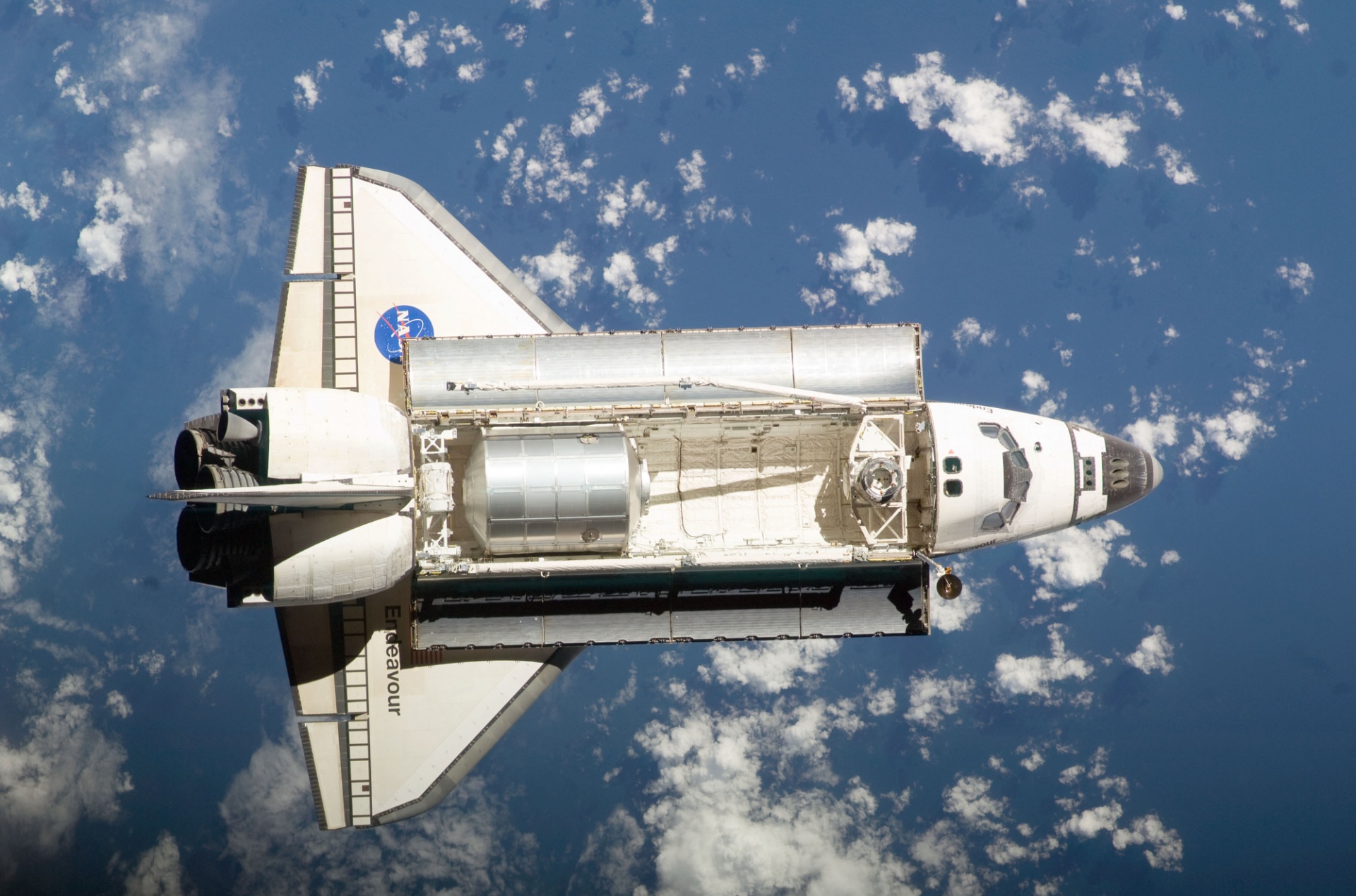
Almost five years ago, United States President Donald Trump signed the National Defense Authorization Act enshrining the United States Space Force into law. < Back Reaching for the Stars: Exploring Astropolitics in the New Space Race By Alexandra Iliopoulou April 30, 2024 Almost five years ago, United States President Donald Trump signed the National Defense Authorization Act enshrining the United States Space Force into law. The Space Force , an armed service focused on developing a competitive edge in space, will ensure national security from the “ultimate high ground,” according to Trump. Little did Trump know, this decision would condemn him to an onslaught of criticism: the show Space Force , a satire of the sixth branch of the United States armed forces, was released on Netflix a year later. Despite the mounting criticism, government agencies and corporations were paying close attention, legitimately considering “ space as a warfighting domain .” The term “space race” is one that has historically referred to the politically driven standoff that took place between the United States and the USSR during the Cold War. This battle for ideological influence ushered in the creation of satellite technology, human space travel, and multi-planetary exploration. However, in recent years, a new space race has emerged, dominated by non-state actors seeking to expand economic opportunity through resource extraction and attempts of extraterrestrial colonization. Extraterrestrial colonization refers to the settlement of celestial bodies and has been the subject of discussion for lunar expeditions and Elon Musk’s ambitions to render Mars inhabitable. Tim Marshall, author of The Power of Geography: Ten Maps that Reveal the Future of our World , declares that future geopolitical disputes are no longer limited to terrestrial boundaries and resources. Already, a new wave of innovation has found a foothold in space: agendas including moon colonization, strategies for meteorite space mining, and security innovations like Lockheed Martin’s Space Fence are already in place. Naturally, the expanded presence of state actors and corporations in outer space has also raised the issue of space governance. Everett Dolman, a political theorist and space strategist, conceived the idea of “ astropolitik ” to navigate space governance. In his book , Dolman describes astropolitik as the realist approach to space policy and conquest, where space becomes the center of the global hegemonic struggle. His conceptual framework divides space into zones, highlighting near-Earth space, or low Earth orbit, as the most critical domain to ensure national security. In recent years, near-Earth space has been the primary focus of space politics, as states have entertained ideas of extraterrestrial exploration but largely directed their commercial space efforts on a low Earth orbit economy (LEO economy). The LEO economy describes the commercial activity that is related to low Earth orbit, the space within 2,000 km of the Earth’s surface. The International Space Station is the primary spacecraft stationed in low Earth orbit, but the expansion of the LEO will include production and trade including a rising number of actors in the sectors of commercial space travel, telecommunications and satellite deployment. While the weaponization of outer space for political dominance began in the first space race, numerous instances during and after the Cold War have emphasized space as a setting for power politics. The Reagan Administration introduced the Strategic Defense Initiative (SDI) in 1983, dubbed the “Star Wars” program. Cold War tensions were still a prominent concern at this point, as the objective of the program was to combat the threat of nuclear attack by the Soviet Union in the waning years of the Cold War. While the SDI represents a case of space militarization, the International Space Station (ISS) has been a nexus of international collaboration for fifteen nations since its conception in the 1990s. Russia plays a significant role in the ISS, and its participation in the ISS signified improved relations between the United States and the Russian Federation at the end of the 20th century. Even today, international cooperation remains a relevant characteristic of outer space exploration, albeit in a more exclusive manner. Since 2020, a group of 36 nations, including the United States, the United Arab Emirates, and Japan, have signed the Artemis Accords , a set of nonbinding agreements governing lunar expeditions and resource extraction on the moon. Marshall likens the successful feat of moon colonization, the international effort to establish sovereign colonies on the moon, to the historical influence of maritime powers. This crucial aspect provides an explanation for why the Artemis Accords notably lack the participation of China and Russia. Instead, the two superpowers plan to build a joint research station on the moon in the coming years, offering an alternative approach to lunar exploration, further exacerbating the power struggle materializing in the race for moon resources . Excluding state actors and space agencies, Silicon Valley entrepreneurs such as Elon Musk and Jeff Bezos are also actively shaping the environment of the new space race, characterized as the “ Billionaire Space Race.” Bezos entered the commercial space craze with the founding of his company Blue Origin in 2001, which is now contracting for the Pentagon alongside defense companies like Lockheed Martin. Musk, chief executive officer of Tesla and X, started SpaceX as a way to revolutionize the aerospace industry by reducing waste with reusable rockets . However, in its 22-year lifespan, Musk’s SpaceX has not only accomplished the unprecedented feat of recycling rocket components and launching Teslas into space; it has also been altering the landscape of internet connectivity through SpaceX’s satellite network, Starlink. The satellite system, which is present in over 40 countries , consists of 5,600 active satellites in low Earth orbit, accounting for more than 50% of the Earth’s active satellites. Taking Starlink’s expansive reach into account, Bezos’ Blue Origin seems to be playing a game of catch-up with Musk’s established network. Starlink is a prime example of the increasing authority that non-state actors have amassed globally, where tech stakeholders have found themselves altering outcomes of armed conflict. Musk found himself at the center of a military escalation when he received a request from Ukrainian authorities to activate satellites in an offensive against Russian ships in Crimea. Since before the full-scale war in Ukraine began, antagonism in the celestial sphere has led to renewed tensions reminiscent of the Cold War. Sources suggest that Russia is developing a nuclear space weapon that would target satellites, signaling potentially catastrophic consequences for Starlink. While Biden assured the American public that this weapon does not present a current threat to their personal safety, Russia’s progress in developing a satellite-targeted space weapon remains largely unknown. Either way, such a weapon would remain a last resort for Russia, as it would pose a mutual danger to their own satellites among the foreign spacecraft. Ultimately, the power distribution in global politics has undoubtedly been altered with the venture into astropolitics. Peaceful governance, while possible, will require a de-escalation of weapons development and a more consolidated space policy. Overall, the new space race will be characterized by the manner in which a multitude of actors confront the challenge of creating an all-inclusive legal framework for space governance while also balancing an increasingly multipolar political landscape in the coming decades.
- Menton à Reims: Sciences Pistes Converge at Intercampus Model UN Conference
It all started on a Thursday morning — at the crack of dawn to be exact — when around 40 Sciences Pistes walked across Menton to reach the bus that would take them to the first intercampus event in two years. < Back Menton à Reims: Sciences Pistes Converge at Intercampus Model UN Conference By Angeliki Vytogianni December 31, 2021 It all started on a Thursday morning — at the crack of dawn to be exact — when around 40 Sciences Pistes walked across Menton to reach the bus that would take them to the first intercampus event in two years. In reality, preparations for the SPMUN conference had started back in August when MEDMUN Secretariat leaders members Celeste Abourjeili, Florian Heydecker and Basile Rochet collaborated with RIMUN executives to organize and give life to this initiative. It took months of work for this event to come together, but in the end, everyone agreed that not only was it worth the work, but that it was one of the highlights of the semester. The Mentonese spirit was alive even at 5 a.m. waiting for Michel the bus driver to pick us up. Even though some of us had to walk for almost half an hour to get to the pick-up spot, and we were about to experience a 14-hour bus ride across the country, the vibes were immaculate. The bus ride had long cig breaks, numerous snack stops, and top notch music. Several pauses later, we reached frosty, cold and foggy Reims. The regal town looked intimidating and captivating from the moment we stepped off the bus. The fog, the champagne, the fancy buildings, the cathedrals… walking through the city was a different experience — a lovely change of scenery after many months in our cozy Menton. Our hosts were lovely, having filled entire living rooms with blankets and mattresses for us. They even showed us around and took us for late night kebabs, as the Mentonese were hungry (the gas station pasta boxes proved to not be very filling). The next day, everyone was dressed fancy and chic: it was time for the opening ceremony. By far outnumbering the other campuses, and making much more noise than everyone else, the Mentonese were ready to start the conference. We applauded our secretary general and our chairs; we listened to interesting points by different guest speakers on the current climate crisis and COP26. Then it was time for the most important part of the conference: the club. The ride there was long and we were late, but nevertheless we all got drunk together and had a wonderful time, with good music and lovely people. Day two of the conference was equally interesting: with everyone going to their committees, the debates officially began. From meat industry shenanigans to fishing incidents, each committee was special. The Menton campus had a very strong presence in UNEP, ECOSOC, Security Council, the Brazilian Amazon Crisis, the American Meat Industry, and much more. The conference ended with a loud bang in the form of another 14-hour bus ride, from the north to the south of France this time. We were all extremely happy, satisfied by unforgettable memories of the royal town near Champagne. We made strong impressions in each committee’s debate, and left with the winners’ champagne bottles and congratulations wishes. We got to know brilliant people from all Sciences Po campuses and invited them to our own MEDMUN conference in Menton, which will take place in April. We look forward to these experiences so much and hope to make it the best time for all staffers and participants.
- These Six Environmental Developments Will Help Your Climate Anxiety
Here are recent environmental developments to help ease your climate anxiety. < Back These Six Environmental Developments Will Help Your Climate Anxiety By Lara Prakash and Titouan Huber September 24, 2022 Clean energy projects surge after Biden approves new climate bill. Since U.S. President Joe Biden signed the Inflation Reduction Act, a climate bill, this past August, large corporations have announced projects that promote sustainability. The bill provides financial incentives to companies that make their products more sustainable and accessible. In accordance with the act, Toyota will invest in a $2.5 billion electrical car parts factory. First Solar, a large solar manufacturing company, has pledged to build a factory in the United States. These initiatives will take a few years to come into fruition, and political leaders still want to “accelerate America’s transition away from fossil fuels and to reduce dependence on foreign suppliers, especially those in China.” As such, Biden aims to work on transmission projects in the meantime. These initiatives will be necessary for getting solar and wind power to states that want clean energy. With big corporations and political figures collaborating, slow but steady progress will be made in creating a more eco-friendly future for America. This summer, Solar power helped the European Union avoid €29 billion in gas imports. In the European Union, 12.2% of the electricity generated this summer was from solar power, the highest amount ever produced by this alternative power source. Natural-gas burning plants would have cost the EU approximately 29 billion euros, substantiating the claim that solar is beneficial for the environment and cost-effective. According to the think tank Ember, solar usage increased by 28% this summer compared to last year. The Netherlands and Germany were the two countries that used the most solar energy: 23% and 19% of the countries’ electricity expenditure, respectively. Between the rising gas prices and the increase in power costs due to the war between Russia and Ukraine, solar is greatly impacting the environment and helping citizens save money. Love coffee pods but hate the waste? This Swiss company has invented a green alternative. People all over the world say that drinking coffee is a central part of their morning routine. Many make their daily cup of coffee at home using single-serving coffee pods. Most coffee machines use aluminum and plastic pods, contributing to immense quantities of environmental waste. Migros, a Swiss company, has launched “Coffee Balls,” which are climate-friendly, dissolvable coffee grinds that will replace capsules. These coffee balls, known as Coffee-B, will work in a specific machine called the “Globe.” This innovative approach to making coffee may seem simple, but it will have a significant impact on the amount of waste produced if the majority of people using aluminum or plastic coffee pods make the transition. Marseille dévoile le premier ferry au monde n'émettant aucune particule polluante Lundi 5 Septembre, un engin très particulier à été dévoilé à Marseille: un ferry n’émettant aucune particule polluante! Cette première mondiale a vu le jour dans le but de faire face aux enjeux de protection de l'environnement, dans une ville où les habitants se plaignent souvent des résidus de pollution liés aux émissions des multiples ferrys circulant dans les eaux. Avec ce ferry, renommé le Piana, vous pouvez oublier la fumée noire et l’odeur de souffre des ferrys classiques qui détruisent l’environnement, Équipé d’un filtre à particules, unique au monde, il limite la pollution de l’air et de l’eau : une très belle avancée technologique. Et, cerise sur le gâteau, cette innovation révolutionnaire a lieu dans notre belle région. Google Maps veut faire économiser du carburant aux automobilistes français Depuis mercredi 7 Septembre, l’outil Google Maps a lancé une nouvelle fonctionnalité qui va réjouir de nombreuses personnes. Il est désormais possible de demander à l’application GPS un itinéraire “bis” pour se déplacer, permettant de faire des économies et de rejeter moins de CO2. Ces itinéraires, parfois plus longs de quelques minutes, seront le plus économe en essence possible, permettant de faire d’une pierre deux coups en réduisant notre empreinte carbone et en soulageant notre portefeuille. L'algorithme se base ainsi sur de nombreux facteurs comme la vitesse autorisée, les embouteillages, les côtes et les descentes ou encore le nombre de feux rouges. Testé depuis l’an dernier en Amérique du Nord et en Allemagne, la fonctionnalité aurait entraîné une réduction de plus de 500 000 tonnes d'émissions de CO2, soit l'équivalent de 100 000 voitures à moteur thermique retirées de la circulation. À Toulouse, 6 millions de litres d’eau récupérés dans une piscine pour arroser parcs et jardins Présenté comme le bassin le plus grand d’Europe avec ses 150 mètres de long et 50 mètres de large, la piscine Alfred-Nakache, construite dans les années 1930 à Toulouse, va servir d’exemple du changement que les “nouvelles” problématiques environnementales nous imposent. En effet, là où chaque année, en Septembre, la tradition voulait que le bassin soit vidangé, et où des millions de litres d’eau étaient gaspillés, une révolution s'amorce. Ces 6 millions de litres sont, cette année (et, on l’espère, pour les prochaines à venir), récupérés pour arroser les parcs et jardins de la ville, une grande première qui s’est mise en place dans le contexte de la sécheresse dont fait preuve le pays. Grâce à l’évaporation naturelle du chlore au contact de l’air, cette eau est totalement saine et va permettre de soulager de nombreux arbres victimes de la sécheresse. À l’avenir, la ville de Toulouse (et d’autres, on l’espère) renouvellera l’expérience et étendra son champ d’action à d’autres bassins.
- How to Delay the Inevitable: Remembering our Grandparents’ Stories
The Western era of peace, which has presided since the end of World War II, is entirely unprecedented. With today’s rise of fanatic leaders, the sheer mass of nuclear weapons available and an ecological crisis that is bound to increase tensions, this era of peace will inevitably come to an end, and, as always, the West will implicate the rest of the world. < Back How to Delay the Inevitable: Remembering our Grandparents’ Stories By Anonymous for Sciences Defense December 31, 2023 “Do you think we’ll see another world war before we die? Will the ecological crisis inevitably lead to mass-destruction as states are forced to fight for survival? With the plethora of nuclear weapons, could we even survive World War III without human extinction?” These are questions I ask myself weekly and that most in our generation have undoubtedly discussed. The Western era of peace, which has presided since the end of World War II, is entirely unprecedented. With today’s rise of fanatic leaders, the sheer mass of nuclear weapons available and an ecological crisis that is bound to increase tensions, this era of peace will inevitably come to an end, and, as always, the West will implicate the rest of the world. And how could we possibly be prepared for a war in an era with the existing nuclear capacity to wipe out humanity? Perhaps our best chance is to delay the inevitable for as long as possible. Perhaps the nature of people makes it impossible for us to live in an eternal state of peace and safety, so maybe the best way for us to stay safe is to prevent global war for as long as possible. However, with the rise of political and ideological extremism, it seems we have forgotten the stories our grandparents taught us about war. In a generation that has other major and valid concerns, such as global warming, inflation and systemic inequalities, the lessons of past generations on wars that seem distant have lost their significance. Whilst our parents may never see another world war, we will probably not be as lucky, and therefore, it’s up to us to prevent it for as long as possible. Perhaps the first step in doing so is remembering the stories our grandparents and great-grandparents have passed down through the generations about what they saw in times of war. I would like to share some of the stories I’ve been told, and therefore chose to remain anonymous for the sake of my grandparents' privacy. My grandfather often told me about hunger. An overwhelming, gut-wrenching, life-scarring hunger. As part of a large family, each had their daily ration consisting of a piece of bread meant to sustain them throughout the day. But starvation changes things we believe to be fundamentally human, even parental loyalty. One day, my grandfather found a piece of bread in the street. Overjoyed by this incredible discovery, which would slightly ease the hunger of a prepubescent child, he ran to his father to show off his discovery, who had been lying in bed for several days, too weak from hunger to leave. Without saying a word and with the swiftness uncharacteristic of a dying man, his father snatched it from his hand and stuffed it in his mouth. My grandfather never forgot this: starvation had caused his own father, a good and moral man, to steal food from his son. Another story I was told as a child was that of the parents of my French grandmother, who lived close to a phosphorus factory which Nazi Germans had requisitioned. My great-grandfather, who worked in the factory, would attempt to hide some of its production to send it to French resistance fighters. However, since phosphorus was highly flammable, it would often catch fire during its transportation, leading to my great-grandfather being arrested quite regularly during the war. Since he was deemed essential to the factory, he would be released, but his going missing became a regular occurrence for his family, who would not know if he was dead or alive for days on end until he would reappear. Due to the strategic location of this phosphorus factory, the families of my grandparents were often bombarded by British and U.S. fighter jets. Evacuation became a regular occurrence due to bombardment. Whilst my grandparents told me that the British tended to be quite accurate in their aiming and would cause minimal civilian casualties, this was not the case for the U.S. Since the Americans prioritized the safety of their pilots, the fighter jets would fly over their targets at maximal altitude, hence bombing the factory imprecisely, causing many civilian deaths, setting fire to the home of French inhabitants, and regularly completely missing their target. Once, my grandfather had to flee his house in his underwear, woken up by his mother as the first bomb came crashing to the ground. When they returned to their home, they found a crater in their kitchen and a hole in their ceiling. The damage of the war was psychological. The impact of constant evacuations, bombardments and Nazi occupation led to a complete distrust among citizens. Not only did you have to be cautious of German spies, but French people were sometimes also willing to denounce each other if it benefited them. My grandmother learned to distrust everyone. She told me, “We had to be neutral. We had to learn to be completely invisible, which was really difficult for us young children. We had to learn complete self-control very young.” Once, coming from school, she was stopped by a beautiful woman who chatted with her for several minutes. A passerby, who noticed this, immediately informed her parents that their daughter had been speaking with a spy, who then harshly scolded her. While my grandmother had simply admired the lady for her beauty and elegance in a time of war where this was so rare, she was reminded about the necessity of not trusting anyone. Three days later, when she walked home from school, an old man, whom she would chat to almost daily and sometimes give her half a sugar cube (a rarity in times of hunger and poverty), waved her over to talk. Coldly, she ignored him, even though she had known and trusted him for so long. She had learned her lesson well. No one was to be trusted. This left a lasting impression long after the war. However, “not everyone was so awful.” Nazi German soldiers had occupied my grandmother’s house throughout the war, and they had been confined to a room in their home whilst the soldiers inhabited the rest. My grandmother told me that it would have been easy and obvious even, to have hated them. Nevertheless, every time she speaks of these men who made her a guest in her own home and commandeered her house as if it were theirs, she had nothing but awe for them, as they had been respectful and polite. When they had leftovers, they would give them to my grandmother’s starving family, and once, they broke a dish and regretfully apologized to my great-grandmother. Confused, she found herself unable to hate those who had stolen her home from her. Today, it is easy to forget these stories; they seem so far in the past that they are easy to ignore. Politicians are quick to incite anger and hatred, and we are all too willing to denounce what we believe is wrong in extreme ways. My grandmother once told me that when she hears the speeches made by French politicians, it’s so obvious they know nothing about war. Even though we have the right to use our country’s power to fight for what we believe in, the impact of war is all-encompassing and devastating. Too many countries worldwide are either engaged in a war right now or have experienced one in the last decades, and although it sometimes seems distant, they have stories we need to listen to as well. When World War III comes, many of us will not survive, and those who do will have life-long trauma. Whilst we do not have the power to stop it from happening, we do have the power to delay it. I believe this starts by listening to our grandparents and great-grandparents' stories, the last generations who experienced World War II. Perhaps this way, we can remember to prioritize peaceful communication, diplomatic ties and tolerance with one another instead of hatred, anger and violence.
- Death by Design: Food Apartheid from Nunavut to Palestine
The word ‘desert’ creates an image of desolation and emptiness. These spaces are not empty; there is huge potential for growth, nourishment and vibrancy. It is rather the obstacles of settler colonialism, white supremacy and segregation that stand in the way of food justice. < Back Death by Design: Food Apartheid from Nunavut to Palestine By Huda Javed for Environnementon November 30, 2023 In Nunavut, North Canada, home to the indigenous Inuit communities, 70 percent of homes face severe food insecurity in one of the richest nations in the world. A liter of milk in Nunavut costs over CΑΝ$7 and a handful of fresh vegetables costs almost CΑΝ$40. The few grocery stores scattered across the territory predominantly sell unhealthy and non-nutritious food. The remoteness of the territory requires fresh produce to be flown in due travel restrictions by boat and road. By the time fresh produce makes it to grocery store shelves, it is often expired, sold at extremely inflated prices and situated amongst multiple rows of processed foods that are considerably cheaper and higher in caloric energy. Territories like Nunavut are often referred to as ‘food deserts’ – places where access to affordable, healthy and nutritious food is restricted by social and geographical constraints. The term ‘food swamps’ is often used alongside this to describe areas where highly processed ‘junk’ foods are densely concentrated, namely in low-income urban neighborhoods with majority racialized or minority groups. While these terms certainly recognize the pressing issue of food accessibility and adequacy, they are severely ignorant and passive to the fact that these so-called ‘deserts' and ‘swamps’ are not naturally occurring phenomena, but they have emerged through a discriminatory process and deliberate government policies. Even so, the word ‘desert’ creates an image of desolation and emptiness. These spaces are not empty; there is huge potential for growth, nourishment and vibrancy. It is rather the obstacles of settler colonialism, white supremacy and segregation that stand in the way of food justice. So, food apartheid seems the appropriate term. In the U.S., the majority of farming subsidies go to white farmers. White neighborhoods have at least four times as many grocery stores as African-American neighborhoods. Housing subsidies largely go to rich, white Americans, while ‘redlining’ policies have also restricted mortgage lending to minority homebuyers, preventing those in low-income areas from moving to neighborhoods with adequate access to nutritious food. This has created the knock-on effect of ‘supermarket redlining’ as companies view wealthier neighborhoods as more profitable and safer from crime. As with the spatial segregation of minority and racialized communities in the US, the isolation of the indigenous Inuit communities in Canada is a product of forcible expulsion and land theft. The traditional food systems, environments and ancestral crop lands indigenous communities depended on, were destroyed by settlers. Consequently, native communities were forcibly relocated to isolated reservations, which are currently being impeded upon as well. Offshore oil exploration in the Arctic by major companies, endorsed by the Canadian authorities, threatens marine life. In 2008, seismic testing caused the death of up to 1,000 narwhals . Rising global temperatures due to climate change are also impacting the migration patterns of these marine animals, which the Inuit depend on for food. The Navajo Nation, spanning 17 million acres and the largest reservation in the U.S., has a total of 13 grocery stores, where the average resident has to drive three hours one-way to reach a grocery store that predominantly sells processed and non-nutritious products. The USDA’s Food Distribution Programme on Indian Reservations supplies some food to indigenous communities. However, the products tend to be highly processed and have little nutritional value. Along with the few job opportunities and the rarity of affordable fresh food in indigenous reservations, this leads many to resort to cheap, unhealthy processed foods. It does not stop there. As a result of limited access to healthy and culturally appropriate foods, health issues, in particular type 2 diabetes, are becoming increasingly prevalent in Black, Indigenous and other minority and low-income communities. On top of this, harsh discrimination and negligence within healthcare systems are a regular occurrence for these groups, and as a consequence, they experience higher fatalities and poorer overall well being . Achieving food justice and sovereignty for communities of color is more than simply living near a grocery store, but rather about having agency over their local food systems. Similarly to Black, Indigenous and minority communities in the US and Canada, Israel’s system of apartheid has wholly denied Palestinians their right to food sovereignty. Forced displacement, land expropriation, restrictions on free movement or even access to markets have led to severe food insecurity. The control of 80 percent of West Bank water reserves is one crucial way that Israel enforces food apartheid upon Palestinians. Israeli authorities, between 2012 and 2021, demolished 572 Palestinian water structures in the West Bank. These structures are often small-scale traditional rainwater cisterns and wells. The demolition of an entire water system severely impedes the ability to cultivate land and create a sustainable food system. Other discriminatory policies include requiring Palestinians, under military orders 1015 and 1039 , to be granted permission to plant certain crops like eggplants, tomatoes, and onions. Additionally, Israeli agricultural policies enforce the use of commercial seeds in an effort to erase Palestinian agricultural heritage. The traditional Jadu’i watermelon has been lost due to this. Simply foraging for Palestinian diet staples, such as zaatar, sage and akoub, is punishable by fines and three years in prison . Taxing ‘legal’ requirements and restrictions are piled one on top of the other, not only creating huge economic losses but hindering even basic subsistence agriculture within Palestinian communities. In 2020, Israel rejected 73 percent of farmer permit requests to access their farmland and tend to crops. The crops that are able to grow in spite of all this, as well as the increasingly dry and scorching summers, are often ruined by Israeli military aerial spraying of herbicides . Simultaneously, cheaper, ‘second-class,’ and harmful produce is introduced by Israel into markets across the West Bank, undermining the efforts of Palestinian farmers. In 2020, 72 percent of vegetables sold to Palestinians by Israeli producers were found to contain high levels of harmful pesticides. The Israeli destruction of up to 1 million olive trees since 1967 and the continuous vandalism and theft of harvests defines the nature of food apartheid as the deliberate effort to occupy or erase a people and their cultural heritage, regardless of environmental damage. Israel has even banned the Union of Agricultural Work Committees, which protects traditional Palestinian heirloom seeds that have the potential to increase biodiversity and minimize the environmental impacts of farming. The examples are endless. Food apartheid is one of the most instrumental ways in which the Israeli government has been slowly starving Palestinians. There is no question that this is all by design, from every policy and legal measure to the outright destruction and expropriation of land, it is as deliberate as North America’s utilization of food apartheid against racialized communities. Efforts of localized agroecological organizations among these communities are growing – farmers markets, community gardens and food sharing are autonomizing marginalized populations from their oppressors. However, complete food sovereignty, the right to affordable, fresh and culturally appropriate food for African Americans, the Inuit people, Palestinians, and marginalized communities all over the world, cannot be fully achieved without recognition of their humanity first.
- COP 27 ou Déception n°27
La COP 28 de Dubaï, censée tirer un premier bilan mondial de l’action climatique, n’en sera que plus décevante et alarmante tant l'absence de ces mêmes actions est frappante. < Back COP 27 ou Déception n°27 By Environnementon Guest Writer December 31, 2022 « Les COP sont un peu des machines à décevoir » déclarait François Gemenne scientifique, chercheur, membre du GIEC et professeur dans notre cher institut, à l’issue de la vingt-septième Conference Of Parties le 20 novembre. Une fois de plus, les 197 parties signataires de la CCNUCC se sont réunies dans l‘objectif de renforcer leurs engagements afin de lutter contre le réchauffement climatique.Ils se sont contentées, une fois de plus, du minimum demandé. Certes, un accord « historique » a été signé. Gemenne le souligne lui-même. Certes, la mise en place d’un fond pour compenser les « pertes et préjudices » , soit les dégâts irréversibles causés par les pays du Nord, est une victoire indéniable pour les pays les plus vulnérables. Certes, les pays industrialisés, les pollueurs historiques, reconnaissent enfin leur responsabilité et leur devoir d’indemnisation des dégâts. Certes. Des années de revendications de la part des pays les moins industrialisé s sont ainsi actées sur papier et, bien que seul le contenant en soit établi, cet accord est historique : une justice climatique ressort de Sharm El-Sheikh. Pour rappel, les zones les plus exposées au changement climatique sont également les moins responsables de ce même changement, à l’image du continent africain, responsable de moins de 4% des émissions mondiales de GES et continent le plus à risque selon le GIEC. Mais, et il est nécessaire de le préciser, cet accord n’est qu'un contenant. Laurent Fabius, président du Conseil constitutionnel et président de la COP 21, nuance ainsi la réussite de Sharm El-Sheikh : « Si on est honnêtes, on doit remarquer qu’on ne connaît ni le montant, ni les bénéficiaires, ni ceux qui vont payer » . Le texte de l’accord n’apporte donc pas de précisions sur ces sujets, qui devront attendre d’être déterminés par un comité spécial d’ici à la COP 28. Cela constitue tout du moins une avancée. L’échec qui ressort de Sharm El-Sheikh ne vient pas de là. Notre déception découle de l’ incapacité à produire une avancée véritable sur la question de la réduction de gaz à effet de serre, principal danger auquel l’humanité doit faire face et supposé objectif de ces conférences. Depuis 2015 et l’accord de Paris, avec son aspiration à parvenir à un monde climatiquement neutre d'ici le milieu du siècle, aucune avancée concrète ne s’opère. Le refus de reprendre la discussion sur la sortie des énergies fossiles, apparue à Glasgow en 2021, témoigne une nouvelle fois du poids des lobbies des entreprises fossiles. Le présent que ces derniers défendent est, de fait, plus attractif que les efforts colossaux qu’il faudra déployer en vue de garantir un futur stable. L’objectif de 1,5°C de Paris, quasiment impossible à l’heure actuelle pour Gemenne, s’éloigne davantage à chaque COP, présentée chaque année comme celle de la dernière chance. L'absence de référence à la COP 15 biodiversité tenue à la mi-décembre, quelques semaines après Sharm El-Sheikh, constitue un autre signal désastreux. La question de la biodiversité, pourtant étroitement liée à celle du climat, a été, une nouvelle fois, malencontreusement « oubliée » . Les déceptions sont ainsi nombreuses à l’issue de cette COP, notamment de la part des hauts dirigeants. Contrairement au président de la conférence, Sameh Choukri, qui déclare « nous avons finalement rempli notre mission » , déclaration déroutante au vu du manque de progrès, l’UE, le secrétaire général de l’ONU, Antonio Guterres, ou encore la France se disent déçus de cette COP et de son manque d’ambition. L’accord final qui en ressort n’appelle ainsi qu’à une réduction « rapide » des émissions, sans grande précision sur cette rapidité et sans nouvelles mesures pour aller en ce sens. La COP 28 de Dubaï, censée tirer un premier bilan mondial de l’action climatique, n’en sera que plus décevante et alarmante tant l'absence de ces mêmes actions est frappante.
- European Parliament: A Plea for Uniformity in Electoral Regulation
Allowing citizens abroad to vote in European elections is not just a matter of convenience; it's a recognition of the evolving nature of citizenship in an interconnected world. < Back European Parliament: A Plea for Uniformity in Electoral Regulation By Selma Kaymakci for European Society November 30, 2023 As the 2024 European Parliament election, scheduled for June 6 to 9, approaches, the institution is at a crossroads, with pressing challenges of possible radicalization and ensuing need for effective functioning. Central to overcoming these challenges is fostering high voter turnout in the upcoming elections. Amidst its commitment to democracy and increasing voter participation via communication campaigns, a persistent issue casts a shadow over the electoral process in four specific member states: Czechia, Slovakia, Malta and Ireland. These four countries, by law, do not allow their citizens to vote from abroad. Despite 23 of the 27 European Union Member States allowing remote voting as a means to enhance accessibility and civic engagement, these four countries require their citizens abroad to return home to vote, with many citizens opting not to do so. While this may seem like a minor issue, in practicality, it has wider implications. Allowing citizens abroad to vote in European elections is not just a matter of convenience; it's a recognition of the evolving nature of citizenship in an interconnected world. The voting rights in the elections to the European Parliament extend beyond national borders, impacting not just the voters’ own national legislation but shaping the very mechanisms and policies of the European Union, hence indirectly impacting the laws and legislation of other member states. EU citizens living in a different member state than their origin are also highly relevant for the outcome of the elections. The first-hand experience of cross-border mobility abroad offers a tangible expression of the abstract idea of the European Union, reflecting a nuanced understanding of the benefits and challenges of European integration. Particularly amid growing radicalization in some member states , the votes of those who live abroad are likely to push for policies reflecting ideals of the current European Union, contributing to stability. Interestingly, the four countries in question present a different case on this matter. In Malta and Ireland, citizens living outside the country do not have the ability to vote in any state elections or referendums—however, both countries have different outlooks and solutions on the matter. In Malta, all elections have resulted in subsidizing airplane tickets for eligible voters, which was also done in the 2019 European elections. While this is admirable, it calls into question the need for such barriers in the first place. The idea of citizens having to board an airplane to exercise their fundamental right to vote appears to be rather obsolete, at least, in the 21st century. In Ireland, no solution is proposed to this issue, and at the heart of the matter is a lack of political will to address this problem. However, by limiting voting rights to those within the country's borders, Ireland inadvertently sustains a system that excludes a segment of its population in both European and local elections. Czechia is a different case, where citizens can vote in parliamentary and presidential elections from abroad, but are excluded from participating in European elections, senate and local elections. Slovakia also presents a similar policy, where nationals abroad have the option of voting by mail in parliamentary elections but not in presidential and European elections. While the absence of vote from abroad in local elections can be justified via constituency fragmentation, the countries stand as one electoral district in the case of European Parliament elections. Hence, they have no reason not to facilitate elections from embassies or consulates. This exclusion of voting rights, coming from a time when interest in voting for MEPs (i.e., Member of the European Parliament) was low, presents a democratic blind spot that requires immediate attention. Solution? An alternative choice for individuals living abroad in these states is to vote for their country of residence rather than their country of origin. This, however, comes with obstacles—and the more obstacles presented to voters, the greater the chance of non-participation. It requires citizens to be aware that they can vote in their country of residence, register, map out the political arena and cast their ballots. Even when a person is willing to run through these hurdles, the conditions vary across member states as to who can vote in European elections, not ensuring that one can vote at all if they cannot travel to their country of citizenship. One thing is certain—the European Electoral Act requires revision for a set of united election rules to occur, ensuring full accessibility, equity and legitimacy of representation. The European Electoral Act currently only outlines very broad common principles and lacks a uniform electoral system across EU Member States for European elections. While changes were introduced to this act, most recently in 2022, that sought to harmonize the electoral procedure in many aspects, for these changes to come into effect a long process including a unanimous vote from the Council and majority consent from the Parliament is needed. Most recently, a debate on this act was held in June of 2023, so for the 2024 elections, the train to pass the revised version of the act has long passed. At a time when political turmoil is present and every vote can influence the outcome of the election, this can prove to be a dangerous aspect of European legislation that has not been given sufficient attention. Examining and addressing these seemingly insignificant legislative issues is crucial as the European Union navigates the complexities of modern governance to combat extremism in the European Parliament and ensure that the democratic process remains reflective of the dispersed European population, guaranteeing voting rights to every citizen.
- Human Rights Deteriorate in Tunisia Under President Kais Saied
On Feb. 25, Saied released a public declaration calling for the expulsion of all illegal migrants in Tunisia. In the document, he blamed sub-Saharan African migrants for increased crime and violence. < Back Human Rights Deteriorate in Tunisia Under President Kais Saied By Peyton Dashiell March 31, 2023 Tunisian President Kais Saied provoked controversy in late February and early March after a series of inflammatory anti-migrant statements and increasingly authoritarian political actions. On Feb. 25, Saied released a public declaration calling for the expulsion of all illegal migrants in Tunisia. In the document, he blamed sub-Saharan African migrants for increased crime and violence. He alleged a “criminal plot” to change Tunisia’s racial demographics, mirroring the “Great Replacement” theory discussed by white supremacists in Europe and North America. In recent weeks, arbitrary detentions have surged in Tunisia. Saied aims to stifle dissent and opposition by imprisoning dozens of media figures, businesspeople, and political opposition members — particularly those connected to the Ennahda Party and National Salvation Front coalition — on tenuous security-related charges. Saied’s anti-immigrant rhetoric has gravely endangered sub-Saharan Africans living in Tunisia, emboldening racist attacks both in-person and online. Ange Seri Soka, president of an Ivorian advocacy organization in Tunisia, has stated that some of the 5,000 Ivorians in Tunisia have been driven out of their homes and forced to sleep in rural olive groves. The Ivory Coast, Mali and Gabon have cooperated with the Tunisian government to voluntarily repatriate 1,300 citizens who wish to return home. Tunisian universities have also begun offering a virtual class option for those fearing racist attacks. Already grappling with a political crisis and economic downturn, Tunisians have begun to protest in the streets against Saied’s actions but face suppression from local authorities. Citing a plot against state security forces, Tunis officials denied protest permits to the National Salvation Front and threatened organizers with legal action. However, this did not halt demonstration plans. On Feb. 25, around 1,000 Tunisians gathered in Tunis to protest Saied’s racist attack on migrants. Additionally, the National Salvation Front and the Tunisian Labor Union (UGTT) mobilized approximately 3,000 supporters in Tunis to condemn Saied’s authoritarian measures and governmental failures, particularly the targeting of unions, arbitrary detentions, and general economic impoverishment. They specifically called for the release of Anis Kaabi, a UGTT official detained since February for participation in strikes. While protesters were met with verbal threats from police, the demonstrations were not stopped by force. Unfortunately, the current developments follow a concerning pattern of human rights violations under Saied’s leadership. Prior to recent events, Saied has come under fire for violating freedom of speech, targeting opposition and using military courts to jail his political enemies through opaque sham trials. Leading the country once hailed as the only democracy in the Arab world, Saied enacted a successful self-coup in July 2021, suspending the parliament and dismissing Prime Minister Hichem Mechichi from his post to seize almost absolute power. Throughout the past two years, Saied has continued to consolidate his rule. In July 2022, Saied initiated a referendum on a new constitution to replace the document enacted in 2014. The new constitutional draft expanded presidential power drastically weakened the judicial branch and threatened the secular nature of the government by characterizing Tunisia as an Islamic country. Many criticized the constitution drafting process for lack of transparency and non-inclusion of civil society groups and non-governmental organizations. While the constitution passed with nearly 95 percent of votes, a mere 30 percent of eligible voters appeared at the polls – groups like the Free Constitutional Party explicitly boycotted the election to avoid legitimizing Saied’s power grab, while other individuals failed to vote due to apathy and a lack of faith in the democratic process. While Saied’s government defended his recent remarks, with Interior Minister Taoufik Charfeddine calling accusations of racism “unjustified” and saying Tunisia equally applies the law to all who violate it, Saied has responded to public outcry by offering several protections for migrants and assuring that Tunisia is “proud to be African.” He relaxed visa policies for migrants, extending visa-free stays from three months to six months, and will allow migrants who overstay their visas to leave the country without paying fines. Additionally, a medical and psychological hotline has been set up for migrants to receive assistance and report violations of their rights. However, the damage of Saied’s rhetoric has been done, and the outcry against Saied’s racist sentiments has extended far beyond Tunisia’s borders – many multinational bodies and civil society organizations have denounced the repressive measures of his regime. On March 7, Agence France-Presse reported that the World Bank plans to halt cooperation with Tunisia on its Country Partnership Framework due to Saied’s “racially motivated harassment and even violence.” Additionally, the African Union condemned Saied’s “radicalized hate speech” and postponed the “Pan-African Network Conference on Fighting Illicit Financial Flows in Africa,” which was scheduled to take place in Tunis from March 15 to 17. Saied’s racist remarks represent a common tactic among unpopular politicians to distract from their failing policies — utilizing nationalism to unite their citizens against an “other” rather than their government. However, the public response to his statement shows that most Tunisians have not taken the bait. Amnesty International stands with the Tunisian people in calling for an end to Kais Saied’s racism, arbitrary detentions and authoritarian seizure of power.
- Letter from the Editor
Besides our ambitions to keep students informed and to make room for our photographers and journalists to exercise their talents, the Menton Times also has a mission to give a voice to all students on campus. < Back Letter from the Editor By Celeste Abourjeili September 30, 2021 Dear SciencesPistes, Welcome to the first ever (teaser) issue of the Menton Times ! I am beyond excited to see where the Menton Times team of 2021-2022 will take this newspaper and where it will settle for future generations of Mentonaise students to come. The goal of the Menton Times — and its parent organization Menton Policy Review (MPR) — is to get information to students in a quick and reliable manner. With that goal in mind, the Menton Times is proud to publish news monthly and on a consistent schedule. Journalism, in its many forms, is a pillar of democracy. Journalists are empowered to dictate the global narrative and shape public sentiment. As students of politics, and as citizens of the uncensored world, we have a duty to support free press and enjoy as much news content as our students are willing to produce. With that, I gladly announce that the Menton Times is committed to reporting breaking news, whether as part of our monthly issues or as social media publications. The Menton Times is also thrilled to bring photojournalism to the Menton Campus. Besides our ambitions to keep students informed and to make room for our photographers and journalists to exercise their talents, the Menton Times also has a mission to give a voice to all students on campus. By that I mean that the Menton Times is glad to report and maintain archives of campus affairs via our photos and articles. We also look forward to working in collaboration with other associations and guest contributors to make more voices heard and to tell the stories of the SciencesPo Menton community. I encourage all SciencesPistes to give it a try — there are no qualifications for story-telling. Finally, I started the Menton Times in order to bring conventional news reporting to Menton. This traditional but modern newspaper hopes to serve the SciencesPistes in Menton, and to that end, I welcome you to a wonderful year of reporting! Happy reading. Celeste Abourjeili Editor-in-Chief The Menton Times Chers SciencesPistes, Bienvenue à la toute première édition du Menton Times ! Je suis impatiente à l'idée de voir où l'équipe du Menton Times de 2021-2022 va emmener ce journal et où elle s'installera pour les futures générations d'étudiants mentonnais à venir. L'objectif du Menton Times - et de son organisation mère Menton Policy Review (MPR) - est de fournir des informations aux étudiants de manière rapide et fiable. Avec cet objectif en tête, le Menton Times est fier de publier des nouvelles mensuelles et selon un calendrier cohérent. Le journalisme, sous ses nombreuses formes, est un pilier de la démocratie. Les journalistes ont le pouvoir de dicter le récit global et de façonner l'opinion publique. En tant qu'étudiants en sciences politiques, et en tant que citoyens d'un monde où nous pouvons nous exprimer, nous avons le devoir de soutenir la presse libre et de profiter d'autant de contenu que nos étudiants sont prêts à produire. Sur ce, je suis heureuse d'annoncer que le Menton Times s'engage à rapporter les informations de dernière minute, que ce soit dans le cadre de nos numéros mensuels ou des publications sur les réseaux sociaux. Le Menton Times est également ravi de mettre en avant le photojournalisme au Campus de Menton. Mais outre nos ambitions de tenir les étudiants informés et de permettre à nos photographes et journalistes d'exercer leurs talents, le Menton Times a également pour mission de donner une voix à tous les étudiants du campus. Je veux dire par là que le Menton Times est heureux de couvrir les actualités du campus par le biais de nos photos et articles. Nous sommes également impatients de travailler en collaboration avec d'autres associations et chroniqueurs invités pour faire entendre plus de voix et raconter les histoires de la communauté de SciencesPo Menton. J'encourage tous les SciencesPistes à essayer - il n'y a pas de qualifications requises pour raconter des histoires. Enfin, j'ai lancé le Menton Times afin d'apporter des nouvelles conventionnelles à Menton. Ce journal traditionnel mais moderne espère servir les SciencesPistes de Menton, et à cette fin, je vous souhaite de profiter pleinement de cette merveilleuse année de reportage ! Bonne lecture. Céleste Abourjeili Rédactrice en chef Le Menton Times
- The Icebreaker Putin, Biden and Jinping Are Playing
This climate-induced Arctic conflict demonstrates that the time has come for global warming mitigation to be placed at the heart of national security strategies and defense planning across the world. < Back The Icebreaker Putin, Biden and Jinping Are Playing By Lucy Lönnqvist for Sciences Défense October 31, 2023 The geopolitical dimension of the climate crisis involves a question of appropriation of land, sovereignty and security. The world is becoming hotter in many senses due to global warming, and in addition to melting ice caps and rising sea levels, the climate has become a threat multiplier for military spending globally. Today, this climate-driven military posture is culminating at the world’s peak, in the Arctic region. The shrinking Arctic has revealed the geopolitical battlefield of once-inaccessible shipping routes, kickstarting the race for potentially priceless minerals and oil deposits. What was once the world’s neutral ground, an undisturbed, barren white sheet of uninhabited land, has now become a hotspot for increased violence and potential conflicts between three invested powers : Russia, the United States, and China. An arms race has begun in the Arctic, and Western efforts are lagging behind. If governments cannot raise efforts to mitigate global warming for biodiversity’s sake, the question remaining is whether they will take greater action when global alliances are on the line. This climate-induced Arctic conflict demonstrates that the time has come for global warming mitigation to be placed at the heart of national security strategies and defense planning across the world. The Arctic Region encompasses eight states: Russia, the U.S., Canada, Denmark, Iceland, Norway, Sweden, and Finland, which sought to preserve the Arctic as a region of cooperation, low tension and respect for international law; an approach referred to as “High North, low tension,” one the Nordic countries were particularly partial too. However, hopes for pacificity between sovereign states in the region seem to be melting down along the ice sheets, as world powers U.S., Russia and China extend their grip on military presence in this new polar arena. Russia’s increased military presence and operations in the Arctic present one source of tension and China’s increased diplomatic and economic activities in the Arctic are another. Meanwhile, Russia’s war in Ukraine has only amplified friction in the Arctic’s competitive environment, as Russia’s exclusion from the Arctic Council incentivized the country to redirect collaboration towards China – a decision that will undoubtedly strengthen the dual powers. Russia has expanded military forces across their share of the Arctic frontier of 25,000 kilometers, amounting to 53 percent of the Arctic border. But why is the Arctic region so sought-after, and how has the region changed geographically due to climate change? Physical changes in the Arctic consist of melting permafrost, intense cyclones, warming sea ice and vegetation alterations. All of which have been driven by emissions and GHG-induced feedback loops within the atmosphere. A monitoring report conducted by the Arctic Council in 2019 concluded that “ the Arctic biophysical system is now clearly trending away from its previous state [in the 20th century] and into a period of unprecedented change, with implications not only within but also beyond the Arctic .” These changes raise questions of statehood sovereignty and national security, thereby proving the dire need for states to adopt a climate-defense portfolio in their military strategy. The melting Arctic has effectively opened a whole ocean entirely, with new navigation routes being explored for the first time in recorded history. The most highly disputed path is the Northern Sea Route , which has paved new transport circuits for containerships and Navy missions, cutting shipping distances by over 6,500 kilometers – roughly two weeks of travel time. Russia upholds its claim over the Northern Sea Route as an inland waterway that falls under its territory, whereas the U.S. defends the idea that the Northern Sea Route is an international route. For China, as the leading exporter of goods across the world, the Northern Sea Route is a pivotal passageway from the Pacific Ocean to the Atlantic Ocean, allowing the country to trade with enhanced efficiency. Alarmingly, Russia has already begun expanding its armed presence in the Arctic well beyond U.S. presence, through an abundance of airfields, missile systems and nuclear-powered icebreakers in the region. The new ocean demands the need to balance competing claims of sovereignty over international waters and maritime borders in the Arctic. Under current international law, the Arctic is not subject to any regulation , triggering a pressing need to determine the status of the region. The only regulation calming the Arctic waters is the 1982 United Nations Convention on the Law of the Sea ( UNCLOS ). Currently, Denmark, Norway, Canada and Russia use UNCLOS to lodge legal claims on the Arctic Ocean, however the U.S. is not a party to this treaty, placing the country further behind in the global contest over the polar North. If the U.S. is serious about playing catch-up, signing the UNCLOS treaty would prove worthwhile. However, the prospects of this actually occurring are highly doubtful based on traditional U.S. stance towards binding itself to international law ( the U.S. has not ratified any UN treaties since 2002 in fear that tying itself to international laws would make it vulnerable to potential legal sanctions before the ICC ). As opposed to signing the UNCLOS treaty, the U.S. has elected to ramp up military presence in the Arctic, with the White House committing to "enhancing the capabilities required to defend our interests in the Arctic," as outlined in the Oct. 2022 National Strategy for the Arctic Region. Consequently, there has been a soar in U.S. spending on ships, aircrafts, infrastructure and soldiers disguised under the title of ‘climate expenditure’. It is almost ironic to see that although there has been no bipartisan support to curb emissions, there is bipartisan support for responding to Russia and China’s presence on a melting Arctic. What this ultimately demonstrates is that as we look forward, the grip that the climate now has on national security strategies is only going to grow. The seriousness of potential climate threats are imminent and must be accounted for in state defense budgets and planning. Rising sea levels, extreme weather, the scarcity of water, loss of ice cover and other climate change drivers are impacting human security today through the spread of epidemics, mass displacement of people and conflicts over receding resources – all of which require a security response. Soon enough, we may be looking at an altered map of the world, one with military competition occurring in places they never had before. The Arctic is interconnected with the rest of the world through the circulation of water, heat and carbon both in our oceans and atmosphere. Not to mention, it is connected through human systems of transport, energy and mineral production, tourism, and security. In light of this information, disputes of sovereignty over the melting Arctic and invested military powers at bay are of utmost concern for the world at large, calling on a climate defense strategy that takes our environmental crises with utmost severity.