Search Results
Search this site
618 results found with an empty search
- Emmanuel Carrère, L’adversaire (2000)
In the end, maybe we are all a bit Jean-Claude Romand with all our fragility. < Back Emmanuel Carrère, L’adversaire (2000) By Francesca Di Muro December 31, 2023 ‘’In those days I didn't lie, but I never shared my true emotions, except to my dog... I was always smiling and I believe that my parents never suspected that I was sad... I had nothing else to hide then, but I was hiding this: my anguish, my sadness... Maybe they would have been ready to listen to me, like Florence after all, and yet I have never managed to speak... And when you get stuck in this mechanism, so as not to disappoint, the first lie leads to the second, and then you carry on your whole life.’’ – L’Adversaire (2002) Jean-Claude Romand: a serious man, esteemed, worthy of absolute trust. Believed to be a good husband, a warm father, and a highly prestigious doctor. In short, a calm, apparently normal man. Yet it appears that normality sometimes overwhelms, sucking in everything around it, being capable of submerging the very things on which it had been nourished shortly before, every single part from which it was composed. On January 9, 1993, Jean-Claude murdered his wife and two children, then went to his parents and shot them with a rifle. He also killed their dog. Nothing remains of the Romand family; everything was destroyed that January evening; not even Jean-Claude was saved from his fury, or at least the Jean-Claude that had gradually formed with one lie after another—a carefully cultivated persona that emerged after eighteen years of lies. On the whole, he never graduated, worked, and lived on the money that relatives and friends had entrusted to him to invest profitably in a solid French bank, which never took place. When the money ran out and the deception was about to be discovered, rather than revealing the truth to his loved ones, he preferred to kill them. As a Member of the Faculty of Medicine, he had not shown up for the admission exam for the third year — an easily remediable mistake. But to his father and his mother, companions, and Florence, who he would later marry, he lied, saying that he had passed it, that everything had gone well. Like a snowball rolling downhill, turning into an avalanche and overwhelming everything in its path, Romand started from a simple, repairable secret that became imposing, and grandiose, and ended up even overwhelming himself 18 years later in an apartment in the French countryside, submerging him and his family. Submerging him and everything he had become over time. Yet, his secret hid nothing. Under the false Doctor Romand, there was no real Jean-Claude Romand. There was nothingness, a nothingness built year after year, fed by anguish and sadness, a nothingness nourished by the perennial desire not to disappoint, by the ambition to be someone else, someone who didn't need to hide behind a white coat and a pair of sunglasses, one like many and at the same time like no one. In the end, maybe we are all a bit Jean-Claude Romand with all our fragility. If it were such a simple thing to live, if it were so simple to be in the world, to start a family, to find a job, to wake up every morning and smile at the faint light that makes its way through the tiny cracks in the roller shutter, we would certainly be men without any secrets. Or rather, we could not enjoy the privilege of having any. That very subtle balance created by what we hide would be missing, that precarious stability that most reveals who we are. It is not easy to define ourselves: who we are, what we pursue, who we would like to be, who we will be. Among the many masks we wear, among the many secrets we inhabit, so similar to our way of being, it becomes a very difficult task to discern what is a mask from what is not. I have the feeling that without the masks, there would be absolutely nothing left of us. Because we are all behind the masks together, at the same time, and behind the masks, we hide the black hole of nothingness. The same nothingness of Romand made of ambition and fear motivated by the feelings of dizziness and emptiness in our stomach. Ultimately nothingness is what tells us best because it translates in the same way what is not yet life, and what has ceased to be. If this is the case, what distinguishes us is the ability to know or recognize ourselves.
- News | The Menton Times
April 12, 2026 Eulogy to Joy In March 2025, the Atlantic’s editor-in-chief, Jeffrey Goldberg, revealed to the world that American national-security officers discussed highly classified information in a group chat in which he was accidentally included. While American media focused on whether the leak risked American lives, European leaders got the chance to see how America’s most powerful talked about Europe behind closed doors. Read More December 10, 2025 Iraq at the Ballots On Nov. 11 Iraqis went to the parliamentary election ballots to determine who gets the 329 seats on Iraq’s Council of Representatives. Read More October 31, 2025 What Happened to Freedom of Speech? Kirk’s murder came as a shock to many across the United States, sparking a wide range of reactions. Fellow right-wing activists and conservative politicians publicly grieved the loss of their friend and colleague, while left-wing politicians openly condemned the act of political violence, reiterating the need for gun reform in America. Online, however, the general reaction was much less mournful. People flocked online to criticize politicians for “martyring” Kirk, who spouted many racist, sexist and discriminatory views throughout his career. Many questioned whether this was a man who deserved to be honored. Read More October 23, 2025 General Debate in the UN Assembly Annalena Baerbock of Germany, the former Minister of Foreign Affairs until 2025, served as the President of the General Assembly and declared the theme of this year's debate as “Better together: 80 years and more for peace, development and human rights.” Baerbock began her remarks by highlighting the plight of children in Gaza, the war in Ukraine, and gang violence in Haiti. Moving on, she stated that cynics of the United Nations needed to realize that the “the [United Nations] Charter, our Charter, is only as strong as Member States’ willingness to uphold it,” encouraging the rest of the delegates to “act when action is needed.” Read More October 21, 2025 Le néolibéralisme à la française «La France est un enfer fiscal.» Cette expression fréquemment reprise dans certains médias appuie la critique d’un État où les charges et impôts étoufferaient l’initiative privée. Derrière cette formule se devine le cœur du discours néolibéral : réduire les fonctions sociales de l'État pour laisser libre cours au fonctionnement ‘naturel’ du marché. Read More October 21, 2025 ‘Will this recognition bring back my family?’ The recognition of the State of Palestine by France is not a sudden decision, influenced by other nations; rather, it is one that the state has been working towards since July. Read More September 30, 2025 3 Ans Après le Meurtre de Mahsa Amini, un Bilan sur la Situation des Femmes en Iran Le 16 septembre 2025 marque le troisième anniversaire du décès de Mahsa Amini aux mains du régime iranien. La politique répressive envers les femmes perdure. Cependant, l’Iran a connu d'importants bouleversements à la suite de cet outrage, notamment portés par le mouvement international Femme, vie, liberté. Ces mobilisations ont-elles réellement amélioré la condition des femmes ? Trois ans après, faisons le point sur la société iranienne depuis le soulèvement Femme, vie, liberté. Read More September 30, 2025 L'OCS ou la Peur a L'Occident Le 1er septembre 2025, lors du sommet annuel de l’Organisation de Coopération de Shanghai (OCS), Xi Jinping dénonçait une « mentalité de guerre froide » et des « actes d’intimidation » visant implicitement l’administration américaine. Ces propos, repris dans de nombreux médias occidentaux, renforcent une certaine inquiétude quant à la montée en puissance de la Chine. Read More April 30, 2025 Protests in Türkiye: The Fight for “Hak, Hukuk, Adalet!” The question emerged: if a regime could erase a diploma, why wouldn't it also erase an election? After İmamoğlu was detained, hundreds of protesters took to the streets. The first act came from Istanbul University, where students gathered in front of the main gates with banners that read “Diplomamı değil, geleceğimi çaldınız!” (“You didn’t just steal my diploma, you stole my future!”). Read More April 30, 2025 Change in the Republic of Moldova Whether the new governance delivered all they had promised is of secondary importance; what matters most is that in the last four years, the country has been more open to the West than ever before.; Let us hope it will continue like this and one day, they will be a part of the greater European family. Read More March 31, 2025 Recentering the Fight Against Climate Change from Innovation to Tradition Developed across millennia and passed down through generations, Indigenous knowledge carries “ancient and intergenerational wisdom that is flexible, fluid, and adaptive.” Read More March 31, 2025 The 51st State? Trump, Absorbing Canada, Sovereignty and American Foreign Policy Trump carried strict economic goals into his second term, imposing trade tariffs on Canada, China and Mexico to help stunt immigration into the U.S. While his economic nationalism persists, Trump’s threats of annexation peel back a new layer of his foreign policy plan. Read More February 28, 2025 Tug-of-War: Chinese and American Shared Interest in Greenland Greenland has become a focal point of strategic competition between the U.S. and China, with a mutual struggle risking triggering a new arena for great power rivalry. As China grapples with economic challenges and the U.S. seeks to reinforce its Arctic presence, it has become clear that Greenland could play a crucial role in shaping the future of international dynamics. Read More February 28, 2025 “Mom I arrived”: Two Years Since the Tragedy of Tempi I cannot help but be haunted by the thought that this could have been us—the idea that my family, my friends and even myself could have been the ones inside this train. Ever since then, every train that leaves the station bears with it a weight of terror, darkness, and silence… Read More February 28, 2025 The Implications of the Piraeus Port As Part Of The Belt and Road Initiative Although we cannot predict the outcomes of the significant Chinese ownership of Piraeus, the fact that Greece’s biggest port is owned by a foreign power will have an important impact on its future policies, as well as its relations with other countries. Whether Greece will be able to successfully balance in between, without completely becoming dependent on either power, is to be determined. Read More February 28, 2025 Introduction to the Cyprus Problem: History and Attempts at Solution President Christodoulides of the Republic of Cyprus and President Tatar of the TRNC agreed to meet in May of this year under the aegis of the UN to kickstart another round of talks for the reunification of the island. What has created what the leaders in both communities, despite their sizeable ideological gaps, see as an opportunity for reconciliation? Read More January 31, 2025 Can We Cope with COP? The first COP was held in Berlin, Germany in 1995; under a framework of international cooperation, with various required reduction targets for “developed country Parties,” COP stands as the singular format for climate negotiations in the global space. But it’s not enough anymore—if it ever was in the first place. Read More January 31, 2025 Is South Korean Democracy Threatened? Polarization of society and the rise of far-right rhetoric can very well be found in many other democracies, but South Korea is an example of two things in particular: an extreme attempt at suppressing the opposition and functioning democratic institutions. Read More January 31, 2025 The Syrian Question We all heard that the Assad regime toppled after 50 years of dictatorship. However, recent history taught us that such overthrows and their subsequent reforms are illusory in the end, seductive at first and inevitably and ultimately evanescent. Will this be the case for Syria? Will it repeat the history of its neighbors? And if not, will it become an Islamic republic, as the actual leaders seem to desire? Read More January 31, 2025 Embedding Sustainability Constitutionally What is a government saying to its people by enshrining the right to a safe, clean, healthy and sustainable environment? It marks this right as one that it will prioritize, as “the protection of the natural environment is an obligation of the state.” The difference this amendment brings, alongside pioneering cases in Europe, is that citizens can hold their governments accountable with regard to their actions or inaction. Read More
- Terrorism & Climate Change: A Collective Effort To Further Destabilize West Africa?
When thinking about global warming, one rarely associates it with terrorism. Nevertheless, when looking at the aims of terrorist organizations and the potential power and influence that climate change predisposes them to have in certain regions of the world, we understand both the disparity of the situation and the urgent need for it to change. < Back Terrorism & Climate Change: A Collective Effort To Further Destabilize West Africa? Victoria Krumova September 30, 2024 Our world is political. By virtue of our need to constantly showcase our individuality and unique way of thinking, we often stand strong in our beliefs. We debate topics like abortion, war, mental health and, basically, all that we can think about. We also debate climate change. And while some highlight that it has come as a result of human activity, others passionately argue that the influx of temperatures is solely a natural phenomena explained by the cyclic nature of the temperatures on our planet. One, however, has to pose a begging question that arises: does it really matter what causes climate change, when we see it is a fact and it is starting to kill our own? Because, at the end of the day, if we have the means to stop it, slow it down, or postpone it, shouldn't we all be united by the goal of self-preservation and the chance for prosperity for future generations? Surely, for the average UK resident, climate change is not going to radically alter their day-to-day life experiences. It might be two degrees hotter on a random Thursday afternoon, but that, for most people, is as far as the impact will go. The country having millions upon millions of pounds in its bank reserves, being relatively self-sufficient and being isolated from other countries means that it is unlikely to face consequences such as inability to invest in adaptation means, lack of goods it had previously been supplying itself with from other countries, or massive waves of migrants in a theoretical critical peak of climate change. But what about Tuvalu, a country expected to sink in under 100 years with the current rate of the rising of ocean levels? The country is the first ever to announce it is “going digital” and is being brought to the metaverse to preserve its customs and traditions. And, as heartbreaking as it is to say, this dystopia is our reality. Cities like Cairo and Alexandria are also at risk of sinking; coastal areas will be the first ones hit by tornados and there will be mass migration of millions of people to a limited number of cities with the most resources. There will be less agricultural land that is supposed to feed the same number of people, there will be overcrowding on the job market and housing options will be insufficient compared to the demand. And yet, these are the “expected” outcomes of climate change. They are the impacts the people of the future will have to deal with. No matter directly or indirectly affected by the crisis, all countries will suffer, regardless of the extent. But how does the situation look today, and more interestingly, what are the unexpected ways in which climate change shapes our reality? When thinking about global warming, one rarely associates it with terrorism. Nevertheless, when looking at the aims of terrorist organizations and the potential power and influence that climate change predisposes them to have in certain regions of the world, we understand both the disparity of the situation and the urgent need for it to change. So what are those terrorist groups doing? Where are they acting? And most importantly, what does climate change have to do with all of this? To be able to analyze these questions, we firstly need to look at where these organizations are prevalent. ISIS and al-Qaeda have been extremely active in West Africa—Mali, Burkina Faso, Niger. The answer to why, however, is far more complex. On the one hand, there is the issue of weak governments that do not have a strong military, by virtue of Africa’s lack of great wars in its history. This, in recent years, has meant that terrorist organizations could install themselves on the territories of those countries, without necessarily having a hard time doing so. Weak governments have also proven to be inadequate in dealing with local conflicts. These conflicts, often based on religious or ethnic divide, lead to the necessity of social services and the need for protection. Jihadist organizations then offer that protection to the people, thus spreading their ideology and influence. The U.N. and France have tried to battle this. In 2013 the U.N. sent a peacekeeping force in Mali, after the occupation of its northern parts by Islamist fighters. France too involved itself, by sending 5,000 soldiers, in an effort to stabilize the situation. However, the insurgency of violence in the region, despite the presence of said external powers, is an undeniable fact. Not only did deaths from armed violence in Mali increase by more than three times from 2015 to 2019, but the U.N. also lost more than 300 soldiers, making this what some have called the “deadliest peacekeeping mission in the world”. It remains uncertain whether the failure of this mission has occurred as a result of the soldiers not being ordered to launch active offensives against the militants, or because of the alleged interference of the Malian government with the operations that were being carried out. Nevertheless, both the U.N. and France decided to withdraw their forces in 2023 and 2022 respectively, with the latter doing so in response to the alienating shifting alliances the junta made with Russia and the growing anti-French sentiment among the local population. Climate change is making battling with the rebel groups and the terrorists even harder. As 70 percent of the population of West Africa is reliant on agricultural activities and livestock to make their living, even the slightest change in weather can mean famine, poverty and death. Thus, a certain demographic has chosen an alternative path for going through life: young men. More and more of them have been resorting to militancy, and by doing so, they have been making the situation for the civilians even more dire. The number of civilian fatalities in Mali has more than doubled in the span of just two years—from 2020 to 2022. In Burkina Faso, 223 people, 56 among whom were children, were massacred on Feb. 25 this year in the villages of Nondin and Soro. In a statement, Human Rights Watch Executive Director Tirana Hassan condemned the attack saying that "the massacres in Nondin and Soro villages are just the latest mass killings of civilians by the Burkina Faso military in their counterinsurgency operations.” She also expressed the need for international assistance to support an investigation into crimes against humanity. But with France and the U.N. already having only a bitter taste of failure from their last mission in Mali, Russia and China having criticized said mission and the UK and Sweden refusing to send troops, it may be said that the international community is intentionally choosing to avoid involving itself further in West Africa’s struggles. A lot of questions remain unanswered: what about the civilians that are forced into radical ideologies because of desperation; what about the kids that are being killed by rebel groups; what about the young men that seek a more stable future in the groups responsible for the unstable status quo? And with the droughts that leave those people without a land to live off of, how much worse will the situation become? With no peacekeeping missions currently present on the terrain, terrorists are continuing to wreak havoc in West Africa. Just recently, on Sept, 5 a jihadist group carried out an attack on civilians in Barsalogho. As of most recent claims, this group was Jama'at Nusrat al-Islam wal-Muslimin (JNIM), which has links to al-Qaeda. Because of their presence in the northern parts of the country, almost 90,000 migrants, most of them Christian, have sought refuge in the town of Barsalogho, hoping to escape the jihadist violence. However, this attack has proved that no place is safe when there is nobody to stop the advance of the jihadists into new territories. According to reports, between 200 and 400 people were killed in the attack. Moreso, the massacre took place while the civilians were digging defensive ditches to protect themselves from situations exactly like the one that followed. According to eyewitnesses, corpses were found lying near the shovels they had been using to dig. But Burkina Faso has been experiencing turmoil since long before Sept. 5. As stated in reports from May 2023, two million people have been displaced internally—the majority of whom are women and children. According to statistics cited by the Los Angeles Times , “one out of four people requires aid and tens of thousands are facing catastrophic levels of hunger.” Bringing this back to climate change and the need for water and fruitful agricultural lands, there is a silver lining. Despite the droughts that the region has been facing, international organizations have been present on the ground in countries such as Burkina Faso. Oxfam International has invested resources into spreading information to the local families on adapting to the new weather conditions, preparing nutritious meals from the food they have access to and have also trained people on proper hygiene in regards to both cooking and water consumption. Workshops on preventing malnutrition have been carried out in the village of Tafgo, water towers have been installed in other communities and crops that require less water to sprout have been found. However, this is not a viable long-term solution to the impend ing need for food. A local— Noaga Ouèda—shared with Oxfam International: "As there has been less rain than in previous years, we are suffering a lot. Before this, we didn't know hunger, but now we are forced to ration the to [flour] so that we can give it to our children." Therefore, the issue still remains, regardless of the efforts put in and the progress made. No matter our efforts to find crops that require less water to sprout, they require water nonetheless. So the question begs: How many more people will go to sleep hungry tomorrow compared to today and how many more will need to fall asleep under the sounds of yet another jihadist rebel group’s firearms rummaging through their city?
- Athenian Architecture and Urban Policy: Diffuse (Dis)Organization Or A New Sense of Cohesion?
Concrete, tall and monotonous, these “famous postwar apartment blocks” have for better or for worse forged Athens’ contemporary architectural identity, usually conveying a feeling of indifference or discontent to most of its residents. With their appearance dating back to the early twentieth century, their preponderance and widespread development in the following decades is intrinsically tied to the city’s historic path and the occurrence of various major events such as growing demographic pressures and the end of the military junta in 1974. < Back Athenian Architecture and Urban Policy: Diffuse (Dis)Organization Or A New Sense of Cohesion? Margarita Kopsia November 30, 2024 Debates on the issues of historic preservation, the rise and fall of architectural neoclassicism in European cities and contemporary methods for rapidly housing masses of population in developing urban areas all form crucial matters in the field of architecture and urban policy. One can find pieces of all these questions and perhaps even some bits of answers just by taking a stroll around their closest urban setting. It is not rare to be able to notice subtleties such as the concrete blending with other or with more aged materials, bearing witness to all the charming contradictions that cities are characterized by. Athens is no exception to this, as the Greek capital teaches whoever is attentive to its fusion of architectural styles and diffuse spatial planning the value of finding beauty where it is traditionally attributed, be it, for example, in the indisputable worth of the ancient monuments that the city is well-known for, but also where fewer are willing to inquire into. By this last point, I am more specifically referring to what has been the ambiguous result of Athens’ exponential growth in the second half of the twentieth century and the crisis that it was hit by earlier in that period, which tangibly influenced its unique and seemingly unattractive landscape. The latter is dominated by the polykatoikies (plural of polykatoikia ) , or “multi-residence” buildings, appearing to serve the sole purpose of housing as many people as possible at affordable costs. Often overlooking aesthetics by having had to keep up with the rapid urbanization trends they emerged from, they are commonly criticized for being too dull and soulless. Concrete, tall and monotonous, these “ famous postwar apartment blocks” have for better or for worse forged Athens’ contemporary architectural identity, usually conveying a feeling of indifference or discontent to most of its residents. With their appearance dating back to the early twentieth century, their preponderance and widespread development in the following decades is intrinsically tied to the city’s historic path and the occurrence of various major events such as growing demographic pressures and the end of the military junta in 1974. Given the specificities and fragilities of the process through which these apartment complexes proliferated, it can be very enlightening to ask ourselves what lessons can Athens teach us, from its “successes” as well as its “mistakes.” Can we rethink how we should tackle issues related to the interaction between architectural influences, challenging historic contexts and, in some cases, the neglected importance of valuing the past all while turning to the future? The roots of a perceived bitterness What constitutes today a major source of frustration and discontent among Athenian residents is in fact the striking disposal of nineteenth century neoclassical architecture in favor of these modern “condominiums.” Linked to the search for more state-of-the-art amenities, these were presented as means to maximize each building’s capacities. The neoclassical style of architecture, which signaled a “ revival of Classical architecture” by showcasing the development of a “new taste for antique simplicity” among Western powers, had in fact been exported to Greece in the 1830s at the time of the establishment of the Kingdom of Greece. King Otto of Bavaria had been chosen as Greece’s King by the great powers and strived to put into practice various aspects of his romanticized vision of the country. This had led to the involvement of European architects such as Theophil and Christian Hansen, Ernst Ziller and Eduard Schaubert, who pursued their works in the city alongside other Greek architects. Traces of their designs can still be found around the capital, as some of their leading works include, for instance, the Zappeion Megaron , the Presidential Mansion and the emblematic buildings that are part of the Athenian neoclassical trilogy in the center of Athens. The latter are comprised of the National Library of Greece, the National and Kapodistrian University of Athens and the Academy of Athens, which, no matter how significant and imposing they are, amount to only a small minority of the neoclassical constructions that were once scattered in various corners of the capital, as most did not survive in the face of the new pressures that governments and individuals were eventually faced with. There are multiple factors that represented major political and social challenges, inducing various demographic evolutions in the direction of dramatic increases through massive settlements or civil divides. For instance, one can cite the 1923 Greek-Turkish Population Exchange “that saw 1.5 million Greek refugees leave Turkey and settle in Greece,” the “Axis Occupation of Greece (1941-45)” and the “Greek Civil War (1946-49).” As such, the neoclassical architectural wave shortly found its end and the remains of that period are rather found in simple exterior building decorations and ornamentations that are adjacent to the “simplified classical” style of architecture. Paired at times with various Art Déco elements from the 1930s, such architectural interactions often add figures of stability and resilience to the elegant and timeless neoclassical character. It is interesting to note, however, that the fading of the neoclassical boom in Athens did not necessarily signal the end of all external architectural influences in Greece, as it is essential to note the prevalence of the famous French architect Le Corbusier’s principles in the design and construction of various other projects during the interwar period of the 1920s and 1930s. More precisely, it is important to discuss the substantial aftermath of the fourth International Congress of Modern Architecture held in Athens in 1933, which was illustratively titled The Functional City . Le Corbusier was remarkably a firm believer in functionalism in matters of architecture and urban planning; accordingly, he promoted “ such characteristics as clean geometric forms and open efficient spaces,” intrinsic to the values of the Modern Movement and the ensuing International style of architecture . Such principles undoubtedly paved the way for the development of modern architecture in Athens. Public schools, for instance, appear to have been heavily influenced by the modern ideals of open and efficient space, as one of their fundamental characteristics is their large horizontal windows providing “ even light and panoramic views.” The consequent prevalence of modern polykatoikia is therefore deeply tied to the development of the modern architectural and urban ideal. Last but not least, when it comes to understanding how such an extensive presence of polykatoikies was made possible, perhaps we should also take a closer look at the adoption of new laws that facilitated the purchase of buildings. This is the case of the “ governmental housing policy known as antiparochi ,” which favored the construction of buildings even by “non-professionals” in “informal” ways, without necessarily relying on too much capital. Consequently, contemporary Athenian architecture and urban planning resemble in essence a blending of various internal and external influences whose predominance was profoundly altered under the effect of major events of historic, political, economic, legal and social value contributing to the formation of its authentic landscape. Towards new symbols of cohesion and stability As mentioned previously, the generalized preference for polykatoikies over neoclassical constructions partly relates to the emergence of new needs for modern comforts, as “ the carefully decorated and carved façades, although beautiful and somewhat reminiscent of the (glorious) ancient Greek past, did not satisfy the needs of the 20th century Athenian.” However, the unintentional social implications of such a predominance also form part of one of these buildings’ strongest characteristics. It is not uncommon for polykatoikies to be attributed the merit of having laid the foundations for a new social organization which appears to be in favor of closer contact between people, often by bridging the gaps between social classes. Polykatoikies have in fact managed to become, more accidentally than not, home to different fragments of the Greek population, as “ in a typical polykatoikia, the ground floor would most likely be a shop, a café, a restaurant or a bar, then the first couple of floors would be occupied by the lower social classes while the upper floors would house wealthier families.” Consequently, polykatoikies could very well have turned into contemporary urban symbols of social unity, even resulting in relationships of greater trust and solidarity between groups. Thus, this urban model and the mechanisms it has put in place appear to have managed to curb the “ socio-spatial segregation” that can be often observed in contemporary European urban settings, by supporting systems of social diversity and the development of more networks among individuals. Still, the lack of proper urban policy and planning are increasingly forming part of Athens’ major sufferings, as its diffuse and unorganized nature fails to answer to the city’s contemporary concerns. Over the last decades, the city has been facing multiple environmental issues and various other contemporary challenges that can be traced back to these irregularities, like important traffic jams. As such, what can one conclude about the reality of the contemporary Athenian urban landscape? The modern polykatoikies oftentimes come out as the neoclassical architecture’s “unworthy” successor, with the neoclassical buildings’ short-lived and scarce presence potentially showcasing a decline of Greece’s own ancient architectural principles. That being said, the amenities and perspectives offered by polykatoikies —despite their mundane appearance—have also participated in Athens’ transformation into the modern metropolis it is as of today and have showcased patterns of social bonding. Their anarchical positioning and nature can however be quite frustrating, to the extent of having even been considered as one of the city’s greater flaws; they have served as evidence of Athens’ severe lack of urban planning in the aftermath of the city’s hasty reconstruction. All these elements are nevertheless shaping the hardships and struggles the country has had to face, alongside the evolutions these phenomena have accompanied. What is demonstrated at the end of the day by the Athenian case is the extent a city’s appearance is inherent to its historic roots and tumultuous times. In light of this, one could even argue that this is precisely where real cultural value lies: in the narrow space between our ideals and the material representation of all the unavoidable fluctuations and drawbacks that are increasingly forming part of the human experience. Perspectives for a better development of the Greek capital do exist, and carry with them the hope that urban policy in Athens will be able to better meet its residents’ wants and needs in the following decades.
- Afghanistan Two Years Post-Withdrawal: An Assessment
The Taliban's return to power in 2021 mirrors a troubling lack of change from their previous rule in the 1990s. < Back Afghanistan Two Years Post-Withdrawal: An Assessment By Elian Jorand November 30, 2023 “We have been fighting for this day for the last 20 years: to end this war and attack of foreigners on us and bring our own Islamic government,” declared Taliban spokesperson Zabihullah Mujahid on Aug. 17, 2021 at Kabul International Airport. The chaotic American withdrawal of Afghanistan signaled the end of an era, and the beginning of a new reality. For the first time in 20 years, the Taliban had seized complete power. One question was on everyone’s mind: what would a second Taliban regime resemble? Would it be one of traditional Islamist rule such as in the 1990s or did 20 years of guerrilla warfare impose a more pragmatic vision of power upon the Taliban? Two years later, the answer is clear: not much has changed. One of the most contentious issues surrounding the Taliban's return is the status of women's rights. International observers anticipated a rollback of progress made over the past two decades since the American invasion. They were right. Reports from NGOs suggest that restrictions on women's attire, mobility, and participation in public life closely mirror the policies implemented during the Taliban's previous rule in the 1990s. A U.N. expert stated that “t he situation of women and girls’ rights in Afghanistan has reverted to that of the pre-2002 era when the Taliban last controlled the country, effectively erasing progress on women’s rights in the intervening 20 years. ” The persistence of discriminatory practices clearly demonstrate the lack of change. This sex-based discrimination has a severe impact on education. Despite assurances from the Taliban leadership about allowing education for all, on-the-ground reports indicate a persistent lack of access to education for girls. Instances of girls being denied education or facing restrictions in certain regions echo the practices seen during the Taliban's earlier rule. The Taliban have implemented over 20 written and verbal decrees restricting girls’ education, on the ‘basis’ of sharia law. This again shows the initial promises of change that the Taliban boasted about to be untrue. In addition to imposing severe restrictions on girls' education, the Taliban has also exploited foreign aid intended for education. The Inspector General for Afghanistan Reconstruction (Sigar) revealed that the Taliban have taken control of $185 million in U.S. aid earmarked for education. In a country already grappling with poverty, famine, and drought, the Taliban's rule has instituted gender-based apartheid, leading to the departure of 81,000 female teachers out of a total of 226,000 educators. To counteract the educational setback, Afghan and international NGOs, with support from rural communities, have established parallel education systems with foreign funding, including community schools and distance learning programs. However, the Taliban has targeted these initiatives, imposing taxes on teachers' salaries, forcing NGOs to purchase from Taliban-affiliated stores, and diverting school materials for personal gain. The Taliban's exploitation of aid extends beyond education, with reports of forced hiring and the creation of sham NGOs to siphon international assistance. This alarming trend raises concerns about the diversion of funds meant for humanitarian purposes, impacting the already dire situation in Afghanistan. The resurgence of the Taliban has also brought questions regarding their engagement with neighboring countries and international actors. Recent reports reveal that China is discreetly pressing the Taliban to safeguard Chinese interests and investments in Afghanistan, particularly by preventing the country from becoming a refuge for Uighur Muslims critical of the Chinese government. Beijing's lobbying efforts are seen as part of a calculated strategy to secure international recognition for the Taliban-led government. China hosted the third ministerial conference of Afghanistan's neighbouring countries, emphasizing its increasing involvement in Afghan affairs. Diplomatic meetings, including those with Russia and the U.S., have seen China advocate for the inclusion of Afghanistan in the China-Pakistan Economic Corridor and call for an end to sanctions on the Taliban. This diplomatic maneuvering raises questions about the Taliban's compliance and its potential impact on the broader geopolitical landscape. This marks a departure in the Taliban’s previous strategy of total isolationism seen in the 1990s – presently, they are willing and even eager to interact with certain states. In conclusion, the Taliban's return to power in 2021 mirrors a troubling lack of change from their previous rule in the 1990s. Despite initial hopes that two decades of conflict might have tempered their approach, the reality is starkly different. The status of women's rights, a litmus test for societal progress, has regressed to pre-2001 conditions. The persistent denial of education to girls and the exploitation of foreign aid further illustrate the Taliban's unchanged stance. The group's actions not only undermine the well-being of Afghan citizens but also raise international concerns about their compliance and engagement with the global community. The parallel development of China discreetly pressing the Taliban to protect its interests adds another layer to the complexity of their governance. In this second iteration of Taliban rule, the evident lack of change highlights a disconcerting continuity that demands attention from the global community.
- Constructing a Technocratic Government in Post-War Gaza
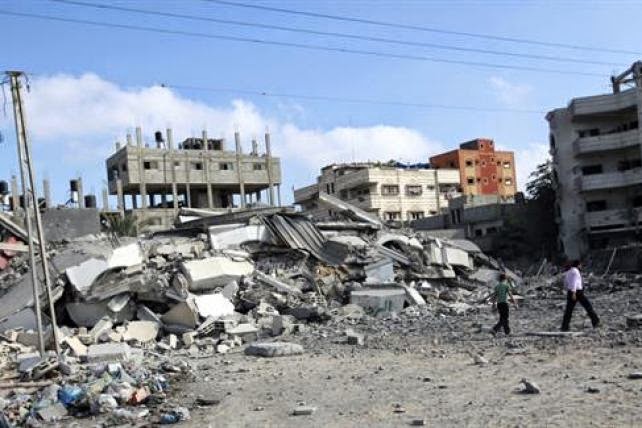
In the West Bank and Gaza, where de facto democracy has long been out of the question and the destructive implications of war continue to devastate, a technocracy may be the only viable solution to address the needs of a population in ruins. < Back Constructing a Technocratic Government in Post-War Gaza By Lara Harmankaya March 31, 2024 Amidst debates on democracies and their discontents, technocracies often appear as a viable alternative model of governance. In the West Bank and Gaza, where de facto democracy has long been out of the question and the destructive implications of war continue to devastate, a technocracy may be the only viable solution to address the needs of a population in ruins. The Palestinian Authority (PA), which was inaugurated following the Oslo Peace Process between the Palestinian Liberation Organization (PLO) and the Israeli government, governs the West Bank under the banner of Fatah, a faction of the PLO. Born from the Gaza-Jericho Agreement, which promised the Palestinian populations residing in both the West Bank and the Gaza Strip the future creation of an independent Palestinian state, the Palestinian Authority has lost any trace of domestic democratic legitimacy over the years. Following Hamas’ victory in the 2006 general elections and subsequent conflicts with Fatah, Gaza has been under the rule of the militant-terrorist group Hamas. This has led to the fragmented political system that is found today, where the two territories are under the control of two rival political groups. For many Palestinians, this fracture has been among the most harmful obstacles to the Palestinian cause, leading to disunity in the movement for nation-building. The potential for democratic rule in the PA, although promising at the start, has diminished tremendously over the years. The cancellation of the presidential and legislative elections in 2021 by the President of the PA, Mahmoud Abbas, is a recent example of the stymied space for political plurality. His four-year term was meant to have ended in 2009. Yet, with his rule by decree, strict control over the judicial system, dissolution of the legislative council and purging of rivals, he continues to dominate the PA and the PLO. To make matters worse, the opposition candidate for the 2021 elections, Nizar Banat, is said to have died in police custody, sparking popular outrage from within the Palestinian population. In general, the PA is viewed by many Palestinians with suspicion; according to a study by the Palestinian Center for Policy and Survey Research (PCPSR), more than half of the Palestinians surveyed in June 2023 were in favor of the dissolution of the PA. The proliferation of illegal Israeli settlements in Area C of the West Bank, alongside PA cooperation with the Israeli Defense Forces to repress internal Palestinian opposition, have been the final nail in the coffin for the PA’s popular legitimacy. With the Israeli government’s increasing control over the administration and civil affairs in Areas A and B as well, the PA has come to be perceived as complicit in Israel’s actions. In the eyes of many, it is no longer a real autonomous authority capable of governance. It is also dependent on international and Israeli funding, leading critics to wonder whether it can ever truly take a resolute stance against these foreign actors. Especially after the chaos that superseded Oct. 7, the PA has proven one thing: it is unable to effectively deal with Hamas and ease the plight of Palestinians. In the name of political survival, the PA has not remained as the one true representative of the Palestinian general public. The West Bank’s fragile democracy thus suffers from a double blow on legitimacy: it is ruled by an authority that is deemed ‘authoritarian’ by the Freedom House and is under Israeli occupation in certain territories. However, calls for a reform, emerging from both internal and external actors, seem to have resurfaced now with the resignation of the Prime Minister Mohammad Shtayyeh and his cabinet. This arrives at a time of “international orientation supporting the establishment of a single Palestinian Authority over all of the Palestinian territories,” according to Minister of Social Affairs, Ahmed Majdalaini. The United States’ vocal approval of such efforts to “reform and revitalize” evinces this, having long been preceded by pressures for political unity and the restructuring of the PA. It is still unclear whether the resignation is a move to preserve the existing structures rather than revitalize the system itself, but if the proposal for technocracy is truly meaningful, then the necessary reconstruction of the Palestinian Authority may follow through. Amidst the uncertainty of the current state of the Hamas-Israel war, envisioning reconstruction in Gaza under a technocratic government offers a glimmer of hope to the disillusioned populations of the Palestinian territories. The technocratic government would not only end the political and territorial split of the PA but could also overcome the problems of ‘corruption, nepotism and inefficiency’, in the words of former PA official Ghaith al-Omari, that it has been associated with over the past few years. Although sources offer varying visions of what the technocratic government would look like, or how long it would last for, the basic consensus is that the negotiation process would represent different factions and different regional players, including Egypt. It would operate outside the realm of politics and would be governed by nonpartisan experts until the time is right for elections. A popular example of a technocratic government in recent years was found in Italy, where the Prime Minister post was taken up by economist Mario Monti. His 13-month government has been applauded for plunging Italy out of a crisis of credibility through its decisive structural reforms. Technocracies have been deemed in a positive light in parliamentary democracies, especially when appointed for a limited time horizon to respond to emergencies. Despite lacking the legitimacy that comes with a democratic vote, these governments have proven to be successful in getting things done. Particularly in a place as embedded in failed governance as Gaza, the chance of depoliticizing administration and establishing a government that is not inherently attached to the complex politics of the region must be grabbed. More importantly, the civil and social rights of the residents of Gaza, which have been persistently violated, can finally be protected. Foreign minister Al-Maliki articulates the goals and needs of the Palestinian people in the following words, “We want to be accepted and engaging fully with the international community. We want to get contribution[s] that help in order for us to be able to provide first of all the necessary services to our people, emergency services, then to talk about how we can reconstruct Gaza after such devastating destruction." The technocratic government can re-establish international ties to bring these to life. The endorsement of the United States, Saudi Arabia and other Arab states for this technocratic government, however, does raise questions about sovereignty and the role of these foreign powers in its establishment. Moreover, it is uncertain whether Israel will be equally willing to relinquish control over Gaza at the end of the war; the Knesset recently voted against “unilateral” recognition of a Palestinian state. The very survival of the PA appears to be precarious. But it is worth noting that the talk of the formation of this technocratic government can itself be construed as part of a larger strategy of reaching a ceasefire. Politically uniting the leadership of Palestinians also brings them closer to the prospect of a Palestinian state in the years to come. It is undeniable that the stakes are high for the future politics of Gaza. The viability of a technocratic state can also be questioned. Nevertheless, it is now evident that the international community is prepared to conceive of scenarios for a long-term resolution. A plethora of points for contemplation arise from this new proposal, starting with: to what extent will the international community be involved in post-resolution Gaza? Will a true democracy follow the technocratic government? Or will it follow the precedent of Mahmoud Abbas’s 19-year presidency? Could collaboration in reconstruction efforts mitigate tensions between Arab states and the United States? Can stability ever exist in Gaza? A statement by the Chinese premier Zhou en-Lai, made when responding to what he thinks of the French Revolution of 1789, is equally valid as an answer to these questions: “It is too early to tell.”
- Protests Against Military Coup Ongoing in Sudan
Civilians have been demonstrating in the wake of the October 25 military coup. Though the military has reached a deal to release the Prime Minister and reinstate a technocratic cabinet, protests are ongoing. < Back Protests Against Military Coup Ongoing in Sudan By Cameron Sterling November 29, 2021 On October 25, a military backed-coup led by Abdel Fattah al-Burhan dissolved the power- sharing agreement between civilians and military leaders in the wake of Sudan’s 2019 revolution. According to Al Jazeera, al-Burhan’s coup was declared a state of emergency, dissolving the sovereignty council and transitional ministers, suspending work on the Constitution, and relieving governors of their positions. The military arrested a large group of government supporters and put Civilian Prime Minister Abdalla Hamdok on house arrest. In an interview with Vice News, retired general Fath al-Rahmen Muhyiddin claimed that the military executed the coup because the people have failed to see improvements in living standards since Bashir’s time in power. He continued that stagnation is evident of a failed system, which the military aims to fix. The October 25 coup did not come as a surprise for most Sudanese nationals; the military had attempted a similar operation on September 21, 2021, which many viewed as a practice run for October. Since this date, many civil society organizations have been demonstrating in fear of return to an authoritarian regime similar to that of Omar Bashir, the dictator ousted in 2019. Demonstrations have increased in scale and number since October 25, led by civilian groups such as Forces of Freedom and Change and the Sudanese Professionals Association. As Nazik Awad of Open Democracy wrote, these protests are uniquely grassroots, with organization coming primarily from resistance committees, youth groups, women’s groups, professional unions, and political parties. They have an impressively far reach in part due to the use of Rendok , a street language originating from rural migrants in Khartoum. The adoption of this language has engaged a class of people not usually included in civil society. The Coordinated Resistance Committees, one of the largest organizations, has established that it has seven demands and is looking to engage in civil disobedience until they are met. These demands are the following: Overthrowing the military coup and handing over full power to civilians. Handing over all members of the coup council to urgent and immediate trials on charges of the military coup. No dialogue and no negotiation with any member of the coup military council and all members of the security committee and the rejection of international inter-conversation. Dissolve all armed militias and reform the armed people’s forces according to a national belief that aims to protect the borders of the country and the rights of the people in freedom, peace, and justice. The removal of the systemic forces from the political process permanently, by criminalizing and preventing the practice of politics by the military. Formation of all structures of the transitional authority in a specific period, under the supervision of relevant professional and academic bodies. Total independence of the sovereignty of the Sudanese state in regards to all economic, political and security decisions. Though many members of the public support these demands and there is mass mobilization against the coup, Sudan’s future is unclear. Though it has denied it, the military has carried out violent crackdowns on peaceful protests, shooting tear gas and live rounds into crowds. As of November 21, the death toll has reached 40. As evidenced by Vice News, protestors and organizers also face the risk of arbitrary arrest and beatings by the police. Though, it seems that there is a degree of stability on the horizon; the Guardian claims that Prime Minister Hamdok has been released. He made a new deal with the military to establish a new technocratic cabinet, supported by the UN and United States, with the aim of restoring order to the nation. It is imperative to note, however, that most key resistance committees oppose this deal. They have vowed to continue to protest until a government is established without the involvement of the military.
- The Southern Preacher’s Goth Daughter
If the South is so deeply religious—it quite literally has been termed the ‘Bible Belt’ during cultural and political descriptions—why is it so drawn to horror? The answer lies in the paradox that envelops faith itself. To believe in heaven is to acknowledge that hell also exists. The belief in salvation is not complete without the recognition of sin. The South, with its religion and belief in divine punishment, has always and will always be a place where horror feels natural. < Back The Southern Preacher’s Goth Daughter Rebecca Canton March 31, 2025 The deep South: a cultural and geographical subregion of plains and bayous amidst a backdrop of Confederate history. A land of alligators, gumbo and sweet tea. Against this backdrop of ‘ma’ams’ and ‘sirs,’ there’s a deeply ingrained culture of American tradition, yet despite—or perhaps even because of this—the South has always harbored something darker. A place for rednecks, yes. But also, apparently, goths. Such an idea might seem absurd; the deep South is not exactly known for its accommodation towards the nonconformers. Nor do goths, with their rejection of mainstream culture, fit the ‘Southern Belle’ stereotype. Despite this, the gothic, in its truest form, has always belonged there. What exactly is gothic? It originates from something older than one might think. Although not classified as gothic, the plays of William Shakespeare, notably tragedies such as Hamlet, Macbeth, and Richard III, which all feature plots revolving around the supernatural, revenge and ghosts, were all a large influence upon early gothic literature. However, gothic fiction as a genre in itself first appeared with Horace Walpole’s The Castle of Otranto, published in 1764, depicting the story of the character Manfred and his family. The story starts with his son being crushed to death by a large helmet—gruesome, yet typical of the genre. In 1818, there was Frankenstein, which marked a shift in gothic horror, as the villain was not a supernatural creature, but an ordinary man—yes, Victor Frankenstein. In Europe, the Gothic thrived on the sublime of vast, mysterious landscapes and ruined castles. It was a rejection of industrialization—a celebration of the old. If we take Frankenstein, Victor was cursed for disrupting human nature, for experimenting where he shouldn’t have. Yet, when the Gothic established itself in the United States, it often took root in the South. Authors didn’t need fourteenth-century castles, or a region by the name of Transylvania—they had plantations. After the Civil War, it was these mansions of decay that became the location for gothic literature of sins and the equivocally evil history of the South. Whilst traditional gothic fiction relies on external horrors—vampires, ghosts, monsters—the Southern Gothic tends to reject this in favor of looking inwards. The terror is no longer supernatural, as seen in Frankenstein or Macbeth, but psychological. When talking about Southern Gothic, it's impossible not to mention Flannery O’Connor. Unlike the work of British or other European authors, O’Connor did not rely on traditional elements of horror. Her works are void of ghosts or demons. Instead, her stories feature deeply flawed characters, from criminals to religious fanatics. She depicts a myriad of lost souls wandering the dirt roads of the South. Her short story A Good Man Is Hard to Find , published in 1953, is one of her most famous works, perfectly exemplifying the ‘grotesque.’ The word has no true meaning, it is neither truly ugly or truly beautiful, but an unnerving synthesis between the two. From a literary perspective, characters that symbolize the ‘grotesque’ tend to invoke both empathy and disgust. If a character is simply disgusting, it is reduced to just a monster. Yet, the grotesque makes it more. Looking at O’Connor’s work, the story begins as an ordinary family road trip, yet quickly descends into horror when the family meets the ‘Misfit,’ an escaped convict. He is not a conventional monster, being polite, articulate and even philosophical. However, at the end of it all, he is a killer, and kills the whole family one by one. The grandmother is the last one alive, and begs the Misfit for redemption, discussing Christianity and the Misfit’s own thoughts on God. The Misfit seems engaged in conversation, all until the grandmother touches the Misfit, who promptly shoots her three times in the chest. From a Catholic perspective, what happens to the grandmother is called a ‘moment of grace,’ in which God fills her with supernatural love, enabling her to see the Misfit as a fellow suffering human. The Misfit recoils at her touch, which causes him to shoot her, yet she has already had her redemption and dies with a smile on her face. Despite this common analysis, there are no clear answers provided by O’Connor—there is no moment of triumph, no decisive victor between good and evil. Instead of killer clowns and evil dolls, the horror lies in the tragic realization that beauty and brutality exist side by side. This is where the grotesque and the Southern Gothic detach themselves from mainstream horror. It is not simply death and gore, but an entanglement between beauty and terror. It forces the reader to confront human nature. It unsettles and scares, but does not offer relief or a conclusion. Away from literature, it invokes the question of: why the South? If the South is so deeply religious—it quite literally has been termed the ‘Bible Belt’ during cultural and political descriptions—why is it so drawn to horror? The answer lies in the paradox that envelops faith itself. To believe in heaven is to acknowledge that hell also exists. The belief in salvation is not complete without the recognition of sin. The South, with its religion and belief in divine punishment, has always and will always be a place where horror feels natural. This becomes evident even in modern media, with Southern horror films, which take the themes of the Southern Gothic and then amplify them. For example, this can be seen in The Texas Chainsaw Massacre (1974). The film fits multiple criteria for the Southern Gothic: it takes place in rural Texas, with the Sawyer house filled with bones and rotting furniture. The family, especially Leatherface, embodies the grotesque perfectly. Even more recently, with The Devil All the Time (2020), the film surrounds faith and violence, the two things essential for the Southern Gothic. And then, of course, there is true crime. The region has produced some of the most infamous serial killers, from Henry Lee Lucas to Donald Henry ‘Pee Wee’ Gaskins. True crime documentaries have become modern gothic tales, with The Murdaugh Murders: A Southern Scandal becoming the number one Netflix show the day after it premiered. Further, despite an increasingly secular world, the Southern Gothic, especially in the form of religious mysticism, is making a resurgence. Take Ethel Cain’s Preacher’s Daughter , a concept album that tells the story of a Southern girl, raised in a deeply religious small town, who becomes consumed—both literally and figuratively—by faith, trauma, and ultimately, horrific violence. The final song on the album, Strangers , whilst initially seemingly a song of love, transcends into something entirely sinister. As Cain repeats, ‘Am I making you feel sick?’ in a haunting melody with the revolting revelation behind the protagonist asking such is because she is quite literally being eaten. The beauty of the melody, as is with the Southern Gothic, completely juxtaposes the horror of its meaning. It is a modern example of how the Southern Gothic is evolving, blending music and storytelling into something uniquely unsettling. Why is it that when a car crashes, those behind it slow down to look? Common sense would indicate a desire to look away, to be shielded from horror. Yet, humans, like moths to a flame, are drawn in by flashing police lights and the wailing cries of ambulance sirens. It is down to human nature. It is not out of morbid pleasure, but due to a deep, primal fascination with disaster. The Southern Gothic thus endures because of this instinct. We are drawn to horror not because we enjoy suffering, but because it forces us to confront truths and reassures us we are alive. The grotesque unsettles, yes, but it also fascinates us. This fascination is like the very topic, paradoxical. We want to look away, but something intangible will always bring us back. Photo source: Stock Image
- An “Insider’s” Perspective on Lebanon
Upon coming back from France, Lebanon no longer felt the same. I was no longer able to be an “insider.” I could no longer relate to the constant struggles of traffic and stress on the way to work or university. I was no longer able to answer the taxi driver with ‘yes, we’re all stuck here unfortunately.’ I was not stuck here. I felt like a hypocrite – a hypocrite for enjoying the liberty of calling myself Lebanese without the struggles of being Lebanese. < Back An “Insider’s” Perspective on Lebanon By Angela Saab Saade January 29, 2022 I grew up in an unstable household. My parents divorced when I was young and I struggled with inconsistency through much of my childhood. Yet, I never felt afraid in my own home. I found safety in my own comfort zone. I found that comfort in my native country, Lebanon. But, something changed upon moving to France for university. As students on the Menton Campus, many of us are familiar with the current situation in Lebanon. However, being a Lebanese citizen, born and raised near Beirut, I find it necessary to clarify a few things — a few things that I deem only an “insider” may truly understand. Despite what the media and statistics portray, Lebanon’s biggest issue is not the current economic crisis. Our biggest concern is not whether or not the inflation rate will decrease tomorrow. Though most of us have been conditioned to check the Lebanese Lira-United States Dollar exchange rate first thing in the morning, our collective suffering goes beyond that. Despite the garbage crisis, the corruption circulating our institutions, the confessional system that creates much damage, the unconstitutionality of our constitution, our poverty rate increasing drastically by the day, and our lack of access to basic needs, the Lebanese people suffer from a phenomenon that encompasses all those factors, and more. It would be belittling to reduce the populace’s suffering to those circumstances alone. The adversities of the Lebanese can not be limited to numbers or pictures or thousands and thousands of words describing the current situation. The Lebanese’s biggest dilemma is that they have been stripped of their dignity. It is that progressive gradual reduction of our collective dignity that makes us so numb to pain and agony today, so accustomed to constantly increasing destruction, and so exhausted of revolution, of protest, and of trying to bring about change. The trauma my ancestors held from previous wars, conflicts, and patterns of colonization live in me. The trauma my parents held from the 15-year Civil War equally lives in me. The trauma that the entire Lebanese population holds today from the August 4 2020 explosion of Beirut lives in me. The trans-generational trauma, developed from trust issues rooted in broken promises and false hope in figures of authority, lives in me. That trauma lives in each Lebanese. That trauma haunts our households and takes over our streets. I see it in the conversation I have with the taxi driver about the hopelessness of the nation. I see it in the smile of the old lady sitting on her balcony, in a half-demolished home (not yet recovered from the 1975 Civil War), sipping her Turkish coffee, smoking her morning cigarette, and watching over Beirut with a bit of nostalgia and a lot of regret. I see it everywhere. The worst part though is that I cannot unsee it. I am no longer able to ignore those issues of trust, of commitment, and of abandonment that the Lebanese collectively suffer from. What's worse, is that once you have noticed the collective depression, you cannot help but feel guilty for feeling content. That collective survivor’s guilt is not just felt by those of us able to flee, but also felt by those of us who stay; to be alive in this country today is just as much of a privilege as being able to escape it. I knew all of this before moving to France. I felt it, I saw it, and I coped with it. But, upon coming back from France, Lebanon no longer felt the same. I no longer felt safe. What’s more though, is that I was no longer able to be an “insider.” I could no longer relate to the constant struggles of traffic and stress on the way to work or university. I was no longer able to answer the taxi driver with ‘yes, we’re all stuck here unfortunately.’ I was not stuck here. I felt like a hypocrite – a hypocrite for enjoying the liberty of calling myself Lebanese without the struggles of being Lebanese. And so today, though I am giving you a glimpse of Lebanon as an “insider,” I feel as much of an “outsider” as the foreigners do. But this is not unique to me, nor is it new- the influx of Lebanese migrants has been massive since 1975. The new phenomenon that I noticed, however, is the creation of a new social class in Lebanon: the social class that has access to foreign currency, more notably the US dollar. The Lebanese have always been divided into separate social classes – those that live abroad and send remittances to the “insiders” and those that reside locally. But today, a new social class exists – the “dollar class.” And consequently, more inequality exists, a new form of discrimination emerges, and dependence on foreign parties increases. This trend has harmed Lebanese trust in their own people, their government, and their local resources. And so, the government not only “killed my people,” (August 2020 Beirut blast) but, it equally deprived them of achieving and maintaining trust in themselves and in each other. This is exacerbated when the politicians successfully manage to flip the table around and accuse us of “voting for them” — an act that I deem one of the worst forms of manipulation and gaslighting. But, as the reputation correctly affirms, the Lebanese people are resilient. And though I hate saying that, because it leads to all the more of romanticizing what should not be romanticized, I do strongly believe that we are resilient enough to regain and re-establish trust in each other. Despite our history and our reality showing otherwise, I do still have hope that Lebanon will get back on its feet. There is no possibility that substantial changes — be they economic, political or social – will be taking place any time soon. Anyone with basic knowledge of economics and politics would know that. However, what research and data do not forcibly reveal is the gradual collective change in mindset taking place today. According to psychological theory, thought cycles are not within one’s control. Hence, if one wishes to recondition themselves and influence their thoughts, they must make the conscious effort of changing their behavior to eventually develop a change in thought patterns. Lebanese civil society (from the protestors of October 17 to the non-profit organizations making cooperative progress) are consistently enforcing new behavioral patterns. Consequently, a new thought cycle within the entire Lebanese population is under the process of development. That new collective mindset will build stronger new generations that will witness substantive development. And so in the distant future, today's educated youth are expected to bring about effective change in Lebanese politics and society. Today's youth are expected to forge a new path for the generations to come.
- Egypt and Israel: Quiet Beneficiaries of the Energy Crisis
The global energy crisis began in October 2021 with the backdrop of resurgent demand from the re-opening of economies following the Covid-19 pandemic. There is no doubt that recent energy politics has certainly provided a fair wind for both Egypt and Israel. < Back Egypt and Israel: Quiet Beneficiaries of the Energy Crisis By Noor Ahmad October 31, 2022 The global energy crisis began in October 2021 with the backdrop of resurgent demand from the re-opening of economies following the Covid-19 pandemic. In 2021, China’s post-Covid recovery led to a demand for gas that is said to have risen by 8.4 percent. Gas imports are set to increase by 20 percent to satisfy this demand, resulting in less gas available for import to many European countries from gulf countries, such as Qatar, who could not ramp up natural gas supplies to Europe, as they were committed to their long-term contracts with Asian countries. The other major event that undoubtedly catalyzed the energy crisis was the Russian invasion of Ukraine. Russia supplied around 40 percent of the European Union’s gas consumption by pipeline, and the 75 percent cut to supply has significantly affected European countries which have relied on Russian gas for years. Russia started to reduce its supply of gas in 2021 on the pretext of maintenance to its major gas pipelines into Europe. This accelerated in the early part of 2022, when gas flow reduced by about 40 percent through the Nord Stream 1 pipeline, one of the major conduits of gas from Russia to Europe. By July of this year, the flow of gas through Nord Stream 1 was reduced to 20 percent of its capacity. On Sept. 30, a series of under-water explosions damaged both Nord stream 1 and 2 pipelines, most likely the result of sabotage. The union has not published its findings, but many suspect Russia to be the culprit. Amidst this chaos, two unexpected beneficiaries have been Egypt and Israel. The benefits have not only been economic but also political. Egypt, following the major discovery of offshore gas in 2015 by the Italian company ENI in the Zohr gas field, has been investing in its scope for exportation through the development of its gas liquefaction capacity. Liquefied natural gas has become a major method of transporting gas where piping gas is not possible. According to reports, Egypt now ranks in the top ten countries in the world with gas exporting capacity. Part of this success is due to its links with Israel through the Arab Gas Pipeline, which is used by Israel to export piped gas to Egypt for liquefaction and then is re-exported. Israel has become a significant gas exporter in recent years. It relies on its two major gas fields, Tamar and Leviathan, both offshore fields off its coast. Leviathan, which was discovered in 2010, has the capacity to supply Israel’s domestic needs for the next 40 years. Tamar gained significance around the same time. Most recently, in 2022, 60 billion cubic meters of gas was discovered in the Olympus Area, also in the Mediterranean. By some estimates, Israel, which currently exports 10 million cubic meters a year, has the capacity to more than double this in the coming years by investing further. For both countries, the rising price of gas and their export capacity have provided much needed hard currency to support their economies. Egypt’s economy has been severely impacted by rising commodity prices, particularly wheat, which is a mainstay for its population’s bread consumption. At the same time, sanctions on Russia have affected Egypt’s tourism industry, which relies on Russian tourists. In Israel’s case, a recent report published by the Ministry of Energy showed Israel’s profits from natural gas increased by almost 50 percent. Eleven percent of royalties from revenues from natural gas go directly to the treasury to fund state expenditure. Beyond this, Israel set up its own sovereign wealth fund, The Israeli Citizens’ Fund, to benefit from the increase in gas production; it raises its revenues from taxing excess profits. After a disappointing start, the fund, according to the Israeli Tax Authorities, was expected to collect between 300-$500 million dollars a year over the next decade. This turned out to be very conservative given that it raised 500 million dollars in less than three months in 2022. This fund will be invested for future generations, in line with how other sovereign wealth funds operate around the world. Beyond economics, the two countries’ geopolitical situations have also benefited. The European Union signed a trilateral Memorandum of Understanding between Egypt, Israel and itself in June 2022 to increase the export of Israeli gas. What has surprised many has been the union’s silence on the values it has held so dear for many years. Both Egypt and Israel have been targeted for various humanitarian issues – the Egyptian military regime’s treatment of dissenters is well documented. Moreover, the union has been historically vocal about Israel’s settlements and occupation of Palestinian territories and. It has been widely noted that the memorandum signed was the first in which the union failed to mention the Palestinian territories. A question was raised on the matter in the union’s parliament to the European Commission on the subject. A response on July 28, 2022 to the question, given by the Vice-President of the commission, Borrell Fontelles, stated that as this is a non-binding agreement, no territorial clause was deemed necessary. And while the union recommitted to abiding by United Nations Security Council resolution 2334, which calls for its member states to distinguish between the territory of the State of Israel and the territories occupied since 1967, the omission in this instance is unusual. There is no doubt that energy politics has certainly provided a fair wind for both Egypt and Israel.
- From Hobby Lobby to Iraq: The Historic Repatriation of Ancient Objects Restores Collective Memory
How the repatriation of 17,000 ancient objects can restore collective memory in a war torn country. < Back From Hobby Lobby to Iraq: The Historic Repatriation of Ancient Objects Restores Collective Memory By Lara-Nour Walton October 30, 2021 You may think that the connection between the craft store chain, Hobby Lobby, and the ancient Mesopotamian Gilgamesh Tablet could be tenuous at best. But you would be mistaken. In 2017, the Evangelical Christian owner of Hobby Lobby, Steve Green, opened the Museum of the Bible, a project that seeks to document the history of the Holy Book. Up until recently, many of the institution’s collections featured ancient Near Eastern art with questionable provenance. In 2010, Hobby Lobby combatted smuggling allegations after sneaking clay cuneiform slabs and seals (falsely labeled as Turkish tiles) into the United States. Green was warned prior to the purchase of these artifacts that they were most likely unlawfully looted from Iraqi historical sites. However, this warning went unheeded and Hobby Lobby became subject to a civil complaint. In 2019, one of the museum’s highest profile acquisitions, a fragment of the Dead Sea Scroll, was found to be a forgery. And now, the company is yet again under national scrutiny as it atones for its art-collecting sins in a major repatriation campaign. Amid power vacuums during both the Gulf War and American invasion, Iraqi museums, unexcavated caves, and monuments were looted. These thefts fueled the antiquities black market and resulted in the displacement of thousands of ancient objects. To return these objects to their motherland is, according to UNESCO Director General Audrey Azoulay, a triumph “over those who mutilate heritage and then traffic it to finance violence and terrorism.” But, the return of these ancient artifacts means so much more. It represents the restoration of Iraqi history and the rehabilitation of our collective memories. Since August of this year, some 17,000 looted artifacts hailing from both Museum of the Bible and Cornell University collections have been returned to Iraq. Among the restituted objects is the storied Gilgamesh Tablet whose tumultuous journey back to Iraqi soil is emblematic of the unpredictable nature of antiquities trafficking. The clay fragment that recounts an ancient Sumerian tale of a bull-slaying demigod was stolen from the Iraqi museum during the 1991 Gulf War. UNESCO reported that it was then allegedly bought by a Jordanian antiques dealer, who passed it onto a coin dealer in London. Later, it served as the centerpiece of a Museum of the Bible exhibit in Washington, D.C. before being seized by homeland security agents. Today it resides in the Baghdad Museum. For many, the return of these ancient objects is not merely about “rightful” ownership. Rather, it signifies a reunion between Iraqis, whose heritage has been subject to immense erasure over the last three decades, and their cultural pasts. U.S. ambassador to Iraq, Fareed Yasseen, described the repatriation as “a culmination of years of effort to heal Iraq’s cultural heritage wounds.” But many of these wounds cannot be mended. Several archaeologists discourage research into potentially looted objects because it deprives countries of origin from the opportunity to study the pieces themselves. However, the artifacts returned by Cornell University have been thoroughly studied without the consultation of Iraq. “We missed this great opportunity to study our tablets, our heritage,” lamented Hassan Nadhem, the Iraqi minister of culture, tourism and antiquities. “This is a kind of bitterness in our mouth.” Other wounds that emerged as a result of political instability and American neo-imperialism are manifested in the robust terrorist organizations that operate within Iraq. The destruction of Nineveh, the shameless rampaging of the Mosul Museum, and the dynamiting of centuries old Muslim and Christian shrines in recent years by the Islamic State are the most tragic cases of all. The art that was destroyed at the hands of extremists is irretrievable. Not even the repatriation of 17,000 Iraqi artifacts can restore the history that has been lost as a result of iconoclasm. The Gilgamesh tablet was returned on September 23, 2021. The repatriation was dubbed “a major victory” by UNESCO. But Hobby Lobby and Cornell’s return of these artifacts should not be viewed as a favor to Iraq or as some unforeseen joyous homecoming – it was simply a matter of national responsibility. The United States played an instrumental role in the destruction and pillaging of Iraq. During the 2003 invasion, U.S. soldiers were documented looting museums alongside disillusioned Iraqis. The de-baathification policies and America’s systematic dissolution of the Iraqi military directly led to the formation of the terrorist organizations that continue to chip away at Iraq’s already-dwindling cultural heritage. However, when news of repatriation campaigns hit media outlets, or when black clad men defacing lamassus appear on American television screens, it seems so far, as if the U.S. had nothing to do with the displacement of Iraqi objects or the subsequent defacement of ancient artifacts. But this is to be expected. Scholar Hamid Dabashi once said: “imperial cultures thrive on their intentional amnesia.” His words ring true as the U.S. feigns blamelessness, incredulity, or even sympathy when acknowledging the conflict in Iraq — a conflict that rages on as an immediate result of American disregard for the histories of other nations. Thus, it is art, the fight for its repatriation and its mere existence, that helps create the framework for collective memory. It is art that is the ultimate antidote to an empire’s amnesia.
- Turkish Opposition at a Crossroads with Leadership Race Looming
Turkey’s main opposition party is facing a post-election reckoning in the run-up to a leadership race that could radically alter the course of Turkish politics. The upcoming 38th regular congress of the Republican People’s Party will see incumbent Chairman Kemal Kılıçdaroğlu defend his position against a gamut of fresh faces, all of whom have pledged to reform the party in the hopes of ending a string of losses spanning 13 years and 10 election cycles. < Back Turkish Opposition at a Crossroads with Leadership Race Looming By Yasmin Abbasoy October 31, 2023 Turkey’s main opposition party is facing a post-election reckoning in the run-up to a leadership race that could radically alter the course of Turkish politics. The upcoming 38th regular congress of the Republican People’s Party will see incumbent Chairman Kemal Kılıçdaroğlu defend his position against a gamut of fresh faces, all of whom have pledged to reform the party in the hopes of ending a string of losses spanning 13 years and 10 election cycles. The Kılıçdaroğlu-led opposition bloc found itself plunged into turmoil after a humiliating defeat in the second round of the presidential elections in May. Their loss came at a time when any other party but President Recep Tayyip Erdoğan’s ruling Justice and Development Party would have collapsed: the country faced a disastrous economic crisis and the widely-publicized mishandling of a catastrophic earthquake. This was expected to turn voters away from Erdoğan and into the arms of the opposition coalition. Yet, the incumbent strongman walked away with an uncontestable victory, guaranteeing a further five years in power. This defeat was unlike any other in that it signaled a true turning point in the political discourse surrounding the opposition, chiefly because the aforementioned state of the ruling party had led to rhetoric from the opposition, which, in hindsight, can only be described as irresponsibly optimistic. Buoyed by the 2019 local elections, which saw a majority of the big cities in Turkey fall under opposition leadership and the political baptism-by-fire of current party heavyweights Ekrem İmamoğlu and Manur Yavaş, the mayors of Istanbul and Ankara, respectively, the opposition hoped to make use of the revitalized passions of voters to oust Erdoğan definitively. Their hopes were dashed, however, by an unfocused campaign marred by internal and external criticism that left Kılıçdaroğlu on the back foot more often than not. The poor communication and mismanagement of expectations observed during the campaign persisted into both election nights, with voters relying on periodic announcements from the ever-popular İmamoğlu and Yavaş, who often contradicted themselves from one statement to another. This culminated in an acceptance of defeat at the eleventh hour, a demoralizing statement from an opposition that had been assuring its voters that it was winning – contrary to all available data – until the very last minute. Voters were, of course, angry, but with Erdoğan back on his throne, there was only one place for this anger to go. And so, all eyes turned to Kılıçdaroğlu. A quiet man in his seventies, Kemal Kılıçdaroğlu is known affectionately among his young supporters as “Grandpa Kemal,” owing to his gray hair, old-fashioned wire glasses, and gentle demeanor. He has been head of the main opposition for 13 years, having taken advantage of a sex tape scandal involving the previous chairman to crystallize scattered support within his party into a successful bid for leadership. He has enjoyed a serene tenure, with only two somewhat serious challenges against his leadership. This placidity means he fades into the background next to the charismatic and colorful Erdoğan and also fades from the minds of voters who in Turkey are attracted to nothing more than a good bit of theater from their politicians. Seen as lacking in charisma since the beginning of his tenure, a compounding string of election losses has done nothing for his popularity or credibility. His last-minute announcement as the coalition candidate for the presidential elections brought about a wave of incredulity among the public, with theories abounding that the delayed announcement was designed to temper potential reactions. Popular figures within the party, such as İmamoğlu and Yavaş, were sidelined, ostensibly after intense negotiation with coalition partners and on semi-valid grounds. İmamoğlu’s pending trial could have seen him being banned from politics and thus out of the race during the campaign's peak, while Yavaş’s nationalist past was seen as a risk that did not measure up against the potential support from Kurdish voters. Kılıçdaroğlu’s selection as the candidate up against Erdoğan precipitated a significant shift in the rhetoric surrounding the election, which opposition officials now tried to transform into a sort of referendum: Turkey is either with Erdoğan or against him. Kılıçdaroğlu was no longer a candidate but a figurehead for the idea of a post-Erdoğan Turkey. Public favor was hard-won, however, and Kılıçdaroğlu consistently occupied last place in election polls, often lagging behind İmamoğlu by over ten percentage points. This provoked much debate about Kılıçdaroğlu’s suitability as a candidate and the legitimacy of his ambition. These enduring tensions within the opposition coalition boiled over shortly before the first round, as the leader of the nationalist İyi Party announced that she could not accept Kılıçdaroğlu as a coalition candidate. She accused Kılıçdaroğlu of ‘koltuk sevdası’, literally meaning ‘being in love with his seat’ and announced her support for the two mayors as candidates. After a veritable media circus, which included multiple highly-publicized official visits to both party headquarters on the leaders’ part, the İyi Party was eventually brought back into the fold. However, the whole episode further showcased the clashes within the seemingly unified opposition. Kılıçdaroğlu came out of the situation with some goodwill, owed to his delicate touch in handling opposing forces within his coalition. This goodwill would evaporate into nothingness in the eventual aftermath of the elections, which in the nation's eyes, proved decisively that Kılıçdaroğlu was not the right man. His post-election behavior further sank his image, as his response to his 11th consecutive failure was to unequivocally reject the notion that he would resign, replace his executive board, and post nothing but tweets congratulating various and sundry on their victories in sports and so on. It now seems that Kılıçdaroğlu must finally face the consequences of 13 years of perceived failures. The party apparatus that exists outside of his own close circle has sprung into action–headlines were made in July when a meeting led by İmamoğlu, whose candidacy for the İstanbul election was supported exclusively by Kılıçdaroğlu, and attended by party higher-ups, was leaked on Youtube. The topic was how to force an extraordinary congress to oust Kılıçdaroğlu. While ineffective, these plans represent the internal political situation: ambitious upstarts have sensed blood in the water and are more than prepared to bite. In the aftermath of this small-scale crisis, İmamoğlu and Yavaş have, somehow, been convinced to stand down: their position in the big cities is perhaps more strategically important than a position as chairman. For now, the only significant candidate in a field of more than six is longtime member of parliament and parliamentary deputy group leader Özgür Özel. Known to be charismatic and with a gift for public speaking, he was firmly entrenched in Kılıçdaroğlu’s camp until just a few weeks ago, when he announced his candidacy and declared that his party had to change “from tip to toe.” Since then, he has soundly criticized the handling of the election and the aftermath by top party brass, though most campaigning seems to have taken place internally. Internal sources indicate that two separate factions, one which supports Kılıçdaroğlu and another fittingly named ‘the changemakers’, have formed. Their existence was made clear at the Istanbul provincial ordinary congress, which took place on Oct. 8 and saw a candidate supported by party headquarters run against one of aforementioned “changemakers.” It has been widely interpreted as a kind of trial run of the actual congress to take place in November. Local media reported a tense atmosphere, with intermittent interruptions to speeches for chanting both in favor of and against Kılıçdaroğlu. The congress also saw violent brawls and the eventual walkout of mayor İmamoğlu in protest of incitative statements in some speeches. Even so, the congress ended favorably for the changemakers with a solid victory for their candidate. Party officials told media that the conception of Kılıçdaroğlu and his entourage as an unshakeable entity at the head of the party had been destroyed and that they expected those still on the fence to now join their faction in the voting, which they hoped would end Kılıçdaroğlu’s reign. If Kılıçdaroğlu does lose his grip on power, it will be difficult to interpret this shift as anything but a net positive. He has long been smeared for the gentle nature that he carries into every part of his work, but now he has run out of even the scant sympathy this image afforded him. Those who have taken off their election-tinted goggles now see him as unforgivably mediocre rather than carefully moderate and worst of all, power-hungry and even dictatorial. Turkey’s political culture, or what has become of it in the past 20 years under Erdoğan’s rule, has contaminated even the opposition of the country: Kılıçdaroğlu and his retinue hold, as of now, unprecedented and uninterrupted power over the party whilst believing that elections are insufficient to bring them to account. Erdoğan too has grown habituated to a passive opposition led by his longtime rival, who he is aware that he outperforms. Kılıçdaroğlu’s legacy of continued failure is a chain around the neck of the opposition, for which this may be the last chance to reposition itself as a formidable bulwark against the rise of a one-party state. The future of Turkish politics hinges on the choices made in the upcoming leadership race, and only time will reveal the path that lies ahead.
- The Artistic Enigma: What Does Innovation Mean in the Context of Art?
While some argue that innovation is a fundamental component of art, others contend that tradition and repetition have their place in the creative realm. < Back The Artistic Enigma: What Does Innovation Mean in the Context of Art? By Rozy Betrosian November 30, 2023 Art is thought of as inherently innovative, original; and personal. While this statement may hold truth, art often includes recycling, emulating, echoing, and homage. However, a pessimistic viewpoint asserts that there is no true innovation in art, everything is always connected to a predecessor — is art merely repetition? One may ask, if this negates its artistic nature? In the realm of fashion, two creators, the brand of Louis Vuitton and Iris Van Herpen, embody this dichotomy. The former, a global luxury brand, relies on the repletion of old ideas, while the latter, a boundary-pushing designer, is a paradigm of true originality in a contemporary context. This article explores the relationship between repetition, commercialization, and artistic innovation, questioning whether homage and echoing can be considered art forms themselves. Repetition As An Artistic Philosophy Louis Vuitton – an iconic name in the fashion industry — has mastered the art of repletion. The brand's design philosophy often involves revisiting its archives, drawing inspiration from past collections, and reinventing classic designs. The conflation of tradition and modernity is evident in each iteration, creating a sense of continuity that resonates with consumers. On the other hand, Louis Vuitton creative directors’ aim is creating couture that has appeal and respects the legacy of the brand. This can be construed as a limitation on artistic expression, rendering the product, a mere product, A potent argument asserts that this approach leans towards commercialization. The question arises: can repetition be an art form in itself? Homage or Commercialization? Louis Vuitton's repetition of old ideas raises the question of whether it is a form of homage to Vuitton himself, preserving his heritage, or merely a commercial strategy. Some argue that paying tribute to past designs is a way of acknowledging the brand's heritage and creating a sense of nostalgia, which can be considered an art form. Others, however, view it as a calculated move to capitalize on established aesthetics, potentially diluting the essence of true artistic expression. The blurred line between homage and commercialization challenges our understanding of what constitutes art in the context of the fashion industry, and incites the overarching question of what we view as art in a broader sense. The Quest For True Innovation In stark contrast to the repetitive nature of Louis Vuitton, Iris Van Herpen stands out as a designer who embodies true originality. Van Herpen stands at the forefront of fashion innovation, weaving a narrative that transcends the conventional boundaries of the industry. Her avant-garde approach is a symphony of technology, unconventional materials, and hands-on experimentation. Integrating technologies such as 3D printing and laser cutting, Van Herpen pushes the limits of what fashion can achieve. Her use of unconventional materials, from liquid resin to transparent acrylics, redefines the very fabric of clothing. The collaboration with scientists and artists enriches her creations, drawing inspiration from diverse sources. Nature serves as her muse, with designs mirroring and transcending organic beauty. Van Herpen's avant-garde aesthetic challenges traditional notions of beauty, sparking conversations about the limitless possibilities of fashion as an art form. In her hands, couture becomes more than garments; it transforms into sculptures that tell unique stories, urging a reconsideration of the essence of fashion itself. Her work not only sets her apart as a designer but also sets a transformative precedent for the future of fashion innovation. Is Art Inherently Innovative? The exploration of Louis Vuitton and Iris Van Herpen's approaches begs the question: is art inherently innovative or can repetition and homage also be considered valid forms of artistic expression? While some argue that innovation is a fundamental component of art, others contend that tradition and repetition have their place in the creative realm. Although historical accounts frequently highlight revolutionary developments and original works of art, as seen in the case of Van Herpen, a critical analysis indicates that artistic expression occasionally seems bound up with established artists from the past. The idea of unrestrained invention appears to be challenged by the very nature of creativity becoming entwined with cyclicality, where established forms and ideas resurface. Repetition and innovation in the fashion world, as exemplified by Louis Vuitton and Iris Van Herpen, reflect the broader dialogue within the realm of art; how does one define art and what is considered artistic? Whether repetition is seen as homage or commercialization, and whether true art must always be innovative, these questions provoke thought and challenge our understanding of creativity. As we navigate artistic expression, the tension between tradition and innovation continues to shape the ever-evolving world of fashion and art.
- Politicizing the Heartland: The Conservative Instrumentalization of Country Music
Given country music’s association with the American South and its conservative majority, it is difficult to ignore the correlation of country music's revival with the rise of the far-right in the US. However, can one link these phenomena? Is country music inseparable from conservatism? < Back Politicizing the Heartland: The Conservative Instrumentalization of Country Music Loowit Morrison September 30, 2025 “Baptize me in a bottle of Beam, put Johnny on the vinyl.” The lyrics of Zach Bryan’s “Revival” speak to the soul of rural America: whiskey and country music. Lines of musical sessions, religious footnotes and Johnny Cash evoke emotions of youthfulness, small-town life and human connection. However, when Bryan, a 29-year-old country music artist, plays “Revival” for a packed crowd of over 50,000 fans, the song becomes more than lyrics; it becomes a revival of country music in and of itself. Bryan’s self-titled 2023 album, Zach Bryan , received over 141 million streams within the first week. This is not an isolated occurrence across the country music genre – artists such as Morgan Wallen, Luke Combs and Bailey Zimmerman have been topping the charts at rates unseen in decades. In March 2023, Wallen’s “Last Night” became the first solo male country music song to top Billboard’s Hot 100 charts since 1981. A few months later, Combs’ cover of Tracy Chapman’s “Fast Car” peaked at number 2 on Billboard’s Hot 100, trailing only Wallen’s “Last Night”. These “new” artists are positioning country music at the forefront of the American music scene, blending traditional beats with modern themes and diverse influences. Despite its decades of latency and unpopularity, being seen as a “shabby farmer genre”, country music is making its comeback. Given country music’s association with the American South and its conservative majority, it is difficult to ignore the correlation of country music's revival with the rise of the far-right in the US. However, can one link these phenomena? Is country music inseparable from conservatism? Country music does not have a discernible root from a certain location or demographic. Instead, it is a conglomeration of diverse genres, including those of Brits, Scots, Polynesians, Evangelical Christians and African Americans. Instruments typically associated with country music also have diverse origins, from the Hawaiian steel guitar to the banjo, which originated in West Africa. Until the 20th century, country music was not affiliated with a specific political ideology. Instead, it was a genre popular amongst the working class, African and Mexican Americans and rural citizens. For most of its history, the base of country music has been rooted in class, not in race or party. The political charge of country music did not actually arise until the late-20th century. Up until this point, the American South, the cradle of country music, was not dominated by the Republican Party. In fact, most white, blue-collar southerners were members of the Democratic Party, which had begun to factionalize over issues of segregation and federalism. The Republican Party’s Southern Strategy capitalized upon this schism, effectively mobilizing white southerners to hop ship. Country music’s nonpartisanship began to shift in President Richard Nixon’s 1972 reelection campaign, taking inspiration from George Wallace, the infamous segregationist governor of Alabama, who instrumentalized country music in his 1968 presidential campaign. Nixon worked to pull working- and middle-class white people in the South from the Democratic to the Republican Party. To do so, he recruited Merle Haggard, integrating “Okie from Muskogee” into his campaign, a song which criticized hippies, counterculture and the anti-war movement. By affiliating traditional country music with the Republican Party, Nixon and Haggard effectively infused a previously apolitical genre with acutely political tones: conservative masculinity, white nationalism and anti-immigrant sentiments. Ever since Nixon’s landslide 1972 victory, country music and conservatism have paralleled each other. In 2001, they fused further. Post-9/11, the U.S. experienced a wave of white nationalism, shifting farther politically right. Country music reflected this: songs with themes of simple living, marginalization and conflict with authority became songs referencing the ‘rally around the flag’, beer-drinking and romanticization of small towns – something that inherently alludes to white nationalism and anti-immigrant policy, upholding the concept of a “simple” and “neat” white America, cleansed from the crime, homelessness and poverty which the far-right blames on cities’ diversity. Given country music's and conservatism's twin history, is the former’s recent resurgence reflective of the latter’s rise? A New York Times article by Tressie McMillan Cottom stated that the current conservative political climate in the U.S. “makes country music [...] a good fit for the moment”. Cottom argues that the far-right is scrambling to create a political pop culture to rectify their lack of cultural institutions, and is claiming country music as a part of that culture. Although the claim that the far-right and the Make American Great Again movement lack cultural power is debatable, the far-right’s annexation of country music as a cultural artifact is a clear demonstration of the conservative nostalgia which is settling over the U.S. today. There is a deep yearning across the U.S. to ‘return’ to an America unplagued by the economic and cultural crises that the nation witnesses today, according to The Federalist editor Samuel Mangold-Lenett. “Cultural Backlash: Trump, Brexit and Authoritarian-Populism” by Pippa Norris, British-American political scientist, describes the idea that the rise of populist authoritarian politics can be described by a sense of threat to tradition, felt acutely by traditionalists who feel alienated as society changes without them. We see this phenomenon today, as American farmers and blue-collar workers are dubbed unintelligent, unworthy and distasteful, while politicians in the Democratic Party turn their attention to doctoral students and urbanites. Country music offers a safe haven from these rapid social changes. Songs such as Oliver Anthony’s “Rich Men North of Richmond” sing of a world that is no longer “ for people like me, people like you” , yearning for a nation in which “politicians would look out for miners”. Thus, country music is instrumentalized by the far right, as they empower populist figures such as Donald Trump. This movement can be seen across the nation through trends such as Tradwives and the fetishization of small towns. Situated within the context of the far-right’s rise in the U.S., it would appear that country music is conservative. But looking beyond the songs about tractors, the military and the nuclear family, country music is not inherently conservative. In fact, “Rich Men North of Richmond” is not conservative at all. After it was played at a Republican Party debate in 2023, Anthony stated , “ I wrote that song about those people,” and, “I do hate to see that song being weaponized.” Despite the fact that country music is “adopted” by conservatives, many artists, such as Anthony, do not recognize this claim. And while the globally recognized face of country music is conservative, low brow whites, country music has much more diversity to offer. Considering country music’s multicultural influences, especially those from African Americans, many artists today are pushing to reclaim the Black history and culture of country music. As mentioned before, country music is deeply intertwined with African American musical traditions and instruments, having been brought to the U.S. by slaves. A key character in this reclamation is Lil’ Nas X, whose country-trap music, with songs such as “ Old Town Road ”, attest to country music’s diverse history and presence. Alongside this, Beyoncé’s album Cowboy Carter challenges the stereotypical associations of country music with whiteness. In April 2024, Cowboy Carter positioned itself at No. 1 on Billboard’s Top Country Albums, making her the first Black woman to have led this list. Despite its clear country music influences, Cowboy Carter has received backlash, with many fans claiming that it is not ‘real’ country music. Big Country, the corporatist industry based in Nashville, seems to agree that Beyoncé does not belong in the genre, demonstrated by the refusal to give her radio airtime and her lack of nominations at the 2024 Country Music Association Awards. Country music is seen as for and by white people, creating an invisible barrier to people of color who want to enter the industry. Executives, often white men themselves, would rather cater to white consumers than honor the diversity that country music is rooted in and is demonstrating today. However, country music has never been about conservatism. Throughout its history, it has always been infused with the theme of conflict with authority, poverty and exploitation. Country music sings to the margins, not to a political party. Despite its nonconservative past, the rightward shift of country music is a signal of a larger cultural shift occurring in the U.S. A return of conservative values regarding masculinity, religion and race, has characterized American political culture since President Trump’s 2024 victory. And, thanks to political history and a current lyrical shift in the genre, country music has been roped into this conservative revolution, becoming intertwined with the far-right. I do not believe, however, that country music equals conservatism. From The Dixie Chicks to Tim McGraw and Mickey Guyton, progressivism, too, holds a place in country music. And disregarding the diverse, multicultural past and present that have shaped the genre as we know it today is a disservice to country music and all who have helped it become a cornerstone of American culture. As an avid country music fan myself, I find solace and nostalgia in its comforting rhythms. Even in Menton, nearly 9000 kilometers from my hometown, Tracy Chapman’s Fast Car replants me in my backyard with my sister, or to my mother’s childhood farm in North Carolina. To me, country music doesn’t represent division and hate; rather, it stands for family, tradition and simplicity. No matter the political charges associated with country music, it is, at its very core, a genre created by humans and for humans. Photo Source: Public Domain, Picryl
- La Chapelle Saint-Pierre: Un Chef d’Oeuvre à Villefranche-sur-Mer
Jean Cocteau est inextricable de l’héritage artistique de la Côte d’Azur. Après un brunch dans un des petits restaurants sur le bord de mer, la chapelle Saint-Pierre est un incontournable de toute visite à Villefranche-sur-mer. < Back La Chapelle Saint-Pierre: Un Chef d’Oeuvre à Villefranche-sur-Mer By Maria Azadian April 30, 2022 “Car il ne s'agit plus de créer une belle oeuvre, mais de créer la plus belle des œvres et que sa puissance secrète rayonne avec une douceur pareille aux rages dévastatrices d'un explosif (...) Toutes les courbes doivent être des arcs qui tirent directement leurs flèches dans le cœur." -Jean Cocteau Tout a commencé quand une enseignante d’arts de mon école s’est débarrassée d’un vieux tas de cartes postales. Ayant commencé ma collection depuis quelques semaines seulement , cette pile de supposés détritus m’a attirée. J’en ai piqué deux ou trois, un peu au hasard. L’une des cartes postales représentait l’affiche du Testament d’Orphée : le dernier film du réalisateur Jean Cocteau. Je l’admets, celle-ci est restée affichée sur mon mur pendant quelques mois, sans que j’y pense réellement. Ceci, jusqu’à un fameux jour l’an dernier où j’ai pris la décision que ma quarantaine passée à visionner The Office pour la onzième fois m’ennuyait un peu trop. J’ai jeté un autre coup d'œil à ma carte postale, et j’ai tapé les mots “ Jean Cocteau Orphée” sur le clavier de mon portable. Depuis, comme j'ai eu la chance de m'installer sur la Côte d'Azur, je tiens à visiter ses traces dans la région où il a passé la dernière partie de sa vie. La visite de la Chapelle Saint-Pierre est une étape essentielle pour mener à bien cette mission. Mais qui est Jean Cocteau? Pour commencer, il faut dresser un portrait de Jean Cocteau. Un homme de haute moyenne classe qui a perdu son père par lesuicide, homosexuel dans une societé qui ne l’acceptait pas mais également apolitique pendant une periode où il ne fallait peut-être pas l’être: Cocteau est un personnage compliqué. L'artiste publie son premier recueil de poèmes, La Lampe d’Aladdin , inspiré des Mille et Une Nuits, à l’âge de 20 ans. Au début de sa carrière, il se lie d'amitié et participe à la création des Six, un groupe musical néoclassique d'avant-garde. Cocteau et les six musiciens se font connaître pour passer de nombreuses soirées au cabaret-bar parisien Le Boeuf sur le Toit . Cocteau devient un artiste extrêmement prolifique. Dans ses livres, films, et pièces de théâtre, son style néo-classique le démarque et le révèle comme anti-moderniste. Un thème récurrent dans ses œuvres reste l’intersection entre le désir et le pouvoir, surtout à travers ses représentations de l'homme "idéal", “héroïque” – des représentations naïves – qui font écho à l’art grec classique antique. Il passe également du temps au Moyen-Orient. Sa tournée de trois mois, de mars à mai 1949, pour la représentation de plusieurs de ses pièces l'amène, entre autres, à Beyrouth et en Égypte. Il documente son voyage dans un journal, qu'il publie plus tard sous le titre de Maalesh . Sa trilogie Orphique, composée de Le Sang d’un poète (1930), Orphée (1950) et Le Testament d’Orphée (1960), qui met en vedette Jean Marais, constitue une merveille du cinéma avant-garde du vingtième siècle. Un mélange magistral du mythe et de la réalité au point que l'un ne se distingue pas de l'autre, une étude de la logique du rêve, alliés à une esthétique irréprochable font de ceux-ci des classiques du film français. Cocteau est décédé le 11 octobre 1963 dans son château à Milly-la-Forêt, quelques heures après avoir appris la mort de son amie proche, Édith Piaf. Il est enterré sous la Chapelle Saint-Blaise dans cette même ville. Jean Cocteau à Villefranche-sur-Mer Cocteau a séjourné plusieurs fois à l’hôtel Welcome , à Villefranche-sur-Mer. Son ami Albert Lorent, délégué au tourisme de la ville, l’invite d’abord à exposer une œuvre à l’entrée de la chapelle. Pour ceci, Cocteau dessine un visage en face de la fameuse rue Obscure. Suite au grand succès de ce dessin, Lorent lui offre la chance de décorer la Chapelle Saint-Pierre, qui deviendra par la suite l’une de ses œuvres les plus remarquables pendant ses années sur la Côte d’Azur. Il repeint cette ancienne chapelle de pêcheurs datant de la fin du 16ème siècle en 1957, alors qu’elle était encore utilisée comme remise à filets. Aujourd’hui, à moins d’une dizaine de minutes de marche de la station de train de Villefranche-sur-Mer, elle représente un des plus grands chefs-d'œuvre de la Côte d’Azur. Bien que l’entrée soit quelque peu coûteuse – trois euros pour une visite qui dure à peu près une vingtaine de minutes – soyez rassuré ! Celle-ci en vaut réellement la peine. Malheureusement, vous ne serez pas autorisé à photographier l'intérieur de la chapelle. Par contre, dès l'instant où vous poserez les pieds à l'intérieur, vous serez transporté dans une réalité autre et lointaine, séparé de la rue animée seulement par un mur d’une épaisseur de quinze centimètres. Les yeux dorés et présents à chaque côté de la porte sont répliqués sur deux chandeliers sur l’autel, se trouvant eux-mêmes à chaque côté d’une statuette d’un oiseau en envol. Ils vous donnent l'impression d'être observé pendant que vous vous promenez dans la chapelle. Ils vous tiennent responsable des endroits où vous choisissez de vous arrêter, de ceux que vous choisissez d'examiner plus en détail comme ceux que vous manquez. Les murs sont décorés de fresques représentant des scènes de la vie méditerranéenne et de l’apôtre Saint Pierre. Le plafond, quant à lui, est recouvert de représentations hypnotisantes d'anges. Les couleurs douces et les lignes peu définies des fresques sont intentionnelles, pour donner l'impression d'être dans un paradis nuageux, brumeux - comme dans un rêve. Le style de Cocteau est simple, presque naïf - représentatif de la mentalité de l’artiste. Cependant, il reste évocateur et puissant. Jean Cocteau est inextricable de l’héritage artistique de la Côte d’Azur. Après un brunch dans un des petits restaurants sur le bord de mer, la chapelle Saint-Pierre est un incontournable de toute visite à Villefranche-sur-mer.
- The End of Culture as We Know It
Will our hands remember how to take up a pen to write without the assistance of a keyboard and Grammarly? Will our eyes be able to adjust to words on paper rather than illuminated on a computer? Will we ever create an outline again without the assistance of ChatGPT? The words of my cousin’s “gyatt” echo into eternity, a siren call of the society we’ve become. < Back The End of Culture as We Know It Maia Zasler November 30, 2024 I will never forget the day my 10-year-old cousin shouted “gyatt” over FaceTime. Her text message rendition manifested in “gyattoose.” When I sit on the train, stand in extended airport security lines, or futilely try to pay attention during lectures, I can see those around me engage in the never-ending consumption of internet content: manufactured, tailored, pixelated images and videos that please the synapses in our brains (re: something more scientifically accurate). I too have fallen victim. My vocabulary seems feeble, easily influenceable. I am ashamed to say I am entertained by some of the most ludicrous content produced in the name of “pop culture,” a means of garnering views. Why did I watch that video of Nara Smith in what can only be described as a ball gown making gum from scratch for her husband? I, along with countless others, consider what is mainstream to be normalized; beyond the beauty standards and gender gap implications that have been heavily critiqued and theorized, respectively, I have to wonder, is the culmination of human intellectual and artistic achievement really the streaming of Keeping up with the Kardashians ? Is it staring at TikTok or Instagram reels for hours on end? In the social media realm, or performative virtual world, we are all audience members and performers. Can we, the masses, be trusted to spearhead culture creation? I would posit, after observing the consequences of the last decade, that the answer is an unequivocal no. A quick Google search will provide a rudimentary definition of “culture”: the ideas, customs, and social behavior of a particular people or society. So, what has gone deeply wrong in the broader, global society in terms of the deterioration of our ideas, customs and social behavior? I fear that the first catalyst has been a descent into digital absurdity. I have no defense for the two hours I spent (wasted?) watching Amadeus on TikTok. The laughter of young Mozart will forever haunt me. Or perhaps, more embarrassingly, I can refer to the videos displayed side-by-side, staying online to view clips of shows I’ve never even watched as in the parallel window somebody randomly unboxes miniatures or makes slime. I share this because I know mine are not singular experiences. The internet lingo that has encroached on our daily lives pervades beyond our phone screens, a product of oppressive collectivity. And that is part of the issue; we are eroding individualism. We are becoming our greatest obstacles in the production of quality content. We repost and remake existing trends, regurgitating that which we’ve heard too much of and seen too much of (arguably taking away from the voices of individuals who are pioneering culture development and sharing stories worth listening to). The linguistic evolution (or rather, devolution) of the “new generation” is yet another element of concern, a battlefront in this war to safeguard culture. The domination of nothing-words such as “skibidi” or “fanum tax,” or even worse, when combined to form nothing-phrases such as “skibidi Ohio rizz,” render centuries worth of linguistic maturation mute. We are inching closer and closer to a reality in which communication occurs solely through emoticons and TikTok dances. As Sciences Po students, we must ask ourselves: what if the future of diplomacy hinges on the mastery of the “Renegade”? You may think it extreme (it is), but at such an elevated rate of change and international exchange, it is a possibility. We engage more with content creators than Nobel prize winners; Mr. Beast videos supersede poetry and eloquent prose. We constantly have audio playing in the background—“Get Ready with Me” videos roll while we pick out outfits for the day. Our lives are played back to us on Instagram and Snapchat stories. Perhaps we may not all want to go viral, but we are making a conscious decision to give our attention (a valuable thing!!) to actors and general content that is not worthy. Maybe we should consider exploring the idea of a “Cultural Detox Camp;” we’ll read Dostoyevsky and listen to symphonies until we’re cleansed and inspired. Or are we too far gone? Can we reform that which has already been unleashed? Will our hands remember how to take up a pen to write without the assistance of a keyboard and Grammarly? Will our eyes be able to adjust to words on paper rather than illuminated on a computer? Will we ever create an outline again without the assistance of ChatGPT? The words of my cousin’s “gyatt” echo into eternity, a siren call of the society we’ve become.
- Once Again, the Palestinian Story at Risk of Being Silenced: Netflix’s Farha
Upon arrival in Menton, I enjoyed the scorchingly hot summer weather and the sunshine that the Côte d’Azur is renowned for. As the seasons changed, though, I found myself disappointed by the lack of “gold and saffron and red” leaves, pumpkins and the other autumnal accouterments that I become accustomed to back home. < Back Once Again, the Palestinian Story at Risk of Being Silenced: Netflix’s Farha By Ghazal Khalife December 31, 2022 Rarely is there a movie about Palestine that does not receive political backlash. The Israeli state has been trying to dominate the country’s narrative since the Nakba, especially in the Western world. The Israeli perspective on the Palestinian conflict has often been singled out as the true one. While many question the state’s ongoing aggression (nowhere near as loudly), they rarely question its legitimacy and origins. This is where the movie Farha comes in, using the perspective of a 14-year-old girl to describe the horrors of the Nakba and the atrocities committed by the Israel Defense Forces (IDF). Farha is a movie based on actual events set in a small Palestinian village before the Nakba. Nakba in Arabic translates to “catastrophe,” and no film has been able to exude such a strong connotation of the word disaster. The movie shocks us through its raw illustration of the trauma faced by Palestinians as their villages were destroyed, their families killed, and their lives upturned completely. The film is written and directed by Darin J. Sallam, a Jordanian award-winning director and writer who chose to spotlight Palestinian suffering through the perspective of a young girl seeing her dreams crushed and witnessing the destruction of her people. In this film, we witness the upheaval created by the battles for Israel’s creation; the director transports us from an ambiance of hope with a looming danger to that of absolute tragedy, and since we know how history plays out, we already dismiss the prospect of a happy ending. Sallam enriches the film with the symbolism of a fig tree, gold earrings, and, most importantly, a school registration paper. It makes us ache for what could have been: what Farha’s future could have been and, on a grander scale, what Palestine could have been. It overcomes any filters and showcases the sheer violence, and utter dehumanization of the other as the IDF soldiers raid villages, burning all that stands in their way. Hence, it was predictable that when a film like this was streamed on Netflix, it was received with strong condemnation from the Israeli state. For Israel, this film threatens its legitimacy and version of history and dismantles the power of having a single story. As a result, the film has been subject to immense criticism, manifested as calls to ban it and boycott its streaming network. “The dangers of A single story” To explain why Farha has been met with such hostility and why some have called on Netflix users to cancel their subscriptions, I will use a quote by the novelist Chimamanda Ngozi Adichie: “Stories matter. Many stories matter. Stories have been used to dispossess and to malign, but stories can also be used to empower and to humanize. Stories can break the dignity of a people, but stories can also repair that broken dignity… When we reject the single story, when we realize that there is never a single story about any place, we regain a kind of paradise.” To establish one’s story in stone, it is sometimes necessary to neglect or silence alternative ones. Farha being streamed on a global platform risks deconstructing the story propped up by the Israeli state for so long. For the first time, a marginalized narrative reaches: the trauma of a people often misunderstood and misrepresented. The film’s subject matter can be compared to other stories of oppression — many have compared Farha to Anne Frank, with both little girls witnessing extreme and life-altering aggression. A popular Israeli influencer rushed to denounce the movie, calling it “blatantly anti-semitic” and a distortion of history. These claims have no ground in reality, but all they do is serve the Israeli narrative, preventing people, most importantly Israelis themselves, from breaking the barriers of the single story and approaching the other side. Boycotting the movie is boycotting the other, limiting them to a box of prejudice and stereotyping. One might disagree with the film’s brutalist portrayal of IDF soldiers, but it remains crucial to allow it a chance to remain willing to hear another perspective, one of pain. It is impossible to deny that the 1948 Nakba was a time when massive breaches of human rights were committed, where people refused to listen to one another, where one nation was annihilated for the other to survive .
- Le Mouvement en Iran: Un Phénomène à la Mode Pour la Communauté Internationale
La jeune femme iranienne, Bahar, semble alarmée face à l'idée qu'un mouvement qui la touche de si près puisse tout simplement s'évaporer, comme c'est souvent le cas de la plupart des mouvements à vocation humanitaire qui deviennent viraux à l'échelle internationale sur les réseaux sociaux. < Back Le Mouvement en Iran: Un Phénomène à la Mode Pour la Communauté Internationale By Amalia Heide November 30, 2022 « Le mouvement tend vers une tendance » . Ce terme, chargé de méfiance, a été employé par Bahar (pseudonyme) pour décrire ses craintes quant à l'avenir du mouvement d'émancipation des femmes en Iran. Cette jeune femme iranienne semble alarmée face à l'idée qu'un mouvement qui la touche de si près puisse tout simplement s'évaporer, comme c'est souvent le cas de la plupart des mouvements à vocation humanitaire qui deviennent viraux à l'échelle internationale sur les réseaux sociaux. Les utilisateurs passent d'une obsession fiévreuse et passionnée pour une cause à l'indifférence et à l'oubli. Et tout cela en un clin d'œil. La viralisation excessive d'une cause génère donc une saturation et un ennui chez les utilisateurs qui ne sont pas directement concernés. C'est pourquoi, au cours d'une semaine, on assiste à un défilé sans fin de posts sur les réseaux sociaux sur un sujet précis, partagés automatiquement et sans réelle réflexion. La semaine suivante, les mêmes utilisateurs, qui semblaient si engagés, se lassent de voir le même message encore et encore et deviennent obsédés par une autre campagne. Mais qu'implique également cette viralisation démesurée ? Elle réduit une réalité très concrète à quelque chose d'abstrait ou de « symbolique » , en détournant l'attention des personnes réellement concernées par le problème. C'est pourquoi Bahar a l'impression que les utilisateurs des médias sociaux actuels accordent plus d'attention aux paroles et aux actions des influenceurs occidentaux qu'aux femmes iraniennes, dont la liberté est limitée à son expression minimale par le régime. Même lorsque les actions de ces influenceurs sont plus importantes que le simple partage d'un post, la signification de cette action ne sera pas la même ni aura le même poids que si elle était réalisée par une femme iranienne. Prenez, par exemple, les femmes qui ont rasé leurs cheveux en signe de soutien aux femmes iraniennes. Les implications d'un tel acte ne sont pas les mêmes pour une femme occidentale vivant dans un État de droit que pour une femme iranienne qui met sa vie en danger. Il est vrai, cependant, qu'il s'agit d'une forme de sensibilisation et de faire prendre conscience au plus grand nombre, ce dont Bahar est très reconnaissante. Il est indéniable que l'effet positif est très fort. Cependant, il faut toujours être conscient des limites de ces campagnes de sensibilisation. Surtout quand, une fois les cheveux coupés par exemple, les influenceurs occidentaux estiment que leur rôle a été fait et passent à un autre sujet pour divertir leurs followers. Ont-elles coupé leurs cheveux pour soutenir une cause noble ou pour créer du sensationnel et des visuels sur leur page ? Mais alors, comment pouvons-nous, en tant que membres de la communauté internationale, contribuer à changer cette réalité concrète dans laquelle vivent des millions d'iraniennes ? Selon Bahar, l'essentiel est de s'informer avant de partager sur le sujet et non de publier aléatoirement afin suivre une tendance, surtout pour ne pas laisser une vision occidentale et anti-islamique du problème s'imposer à l'opinion publique. Ce n'est pas la religion musulmane qui génère le problème actuel en Iran, ni le port du voile lui-même, mais la répression autoritaire, violente et systématique d'un régime qui ne permet pas aux femmes de décider du cours de leur vie ni du rapport qu'elles souhaitent entretenir avec la religion. Dans le même temps, les membres de la communauté internationale peuvent aider les femmes iraniennes en faisant pression sur les autorités de l'État afin qu'à leur tour, elles fassent pression sur l'ONU pour que le régime iranien actuel commence à respecter les droits fondamentaux de ses femmes. “The movement tends into a trend ” . Este terme, cargado de recelo, fue utilizado por Bahar (seudónimo) para describir sus miedos con respecto al futuro del movimiento de emancipación de las mujeres en Irán. Esta joven irani parece alarmada frente a la posibilidad de que un movimiento que la toca tan de cerca se evapore en el aire, como suele pasar con todos los movimientos de reivindicación social que se viralizan a nivel internacional en las redes sociales. Los usuarios pasan de sentir una obsesión febril y pasional por una causa a la indiferencia y el olvido de la misma. Y todo en un abrir y cerrar de ojos. La viralización excesiva de una causa genera por lo tanto saturación y hastío en los usuarios que no se ven afectados de manera directa. Es por eso que a lo largo de una semana, hay un desfile interminable de publicaciones en las redes sociales sobre un tema específico, compartidas de manera automática y sin una reflexión real. La semana siguiente, los mismos usuarios, que tan comprometidos parecían, se aburren de ver la misma publicación una y otra vez y pasan a obsesionarse con otra causa, volviendo a producirse el mismo proceso. Pero que implica además esta viralización excesiva? Se reduce a algo abstracto o “simbólico” una realidad sumamente concreta, quitando el foco de las personas que están verdaderamente implicadas en la problematica. Es por ello que Bahar tiene la impresión de que actualmente los usuarios de las redes sociales le prestan más atención a las palabras y acciones de influencers occidentales que a las mujeres iranies que ven su libertad limitada a su minima expresion por el regimen. Inclusive cuando las acciones de dichos influencers es mas significativa que el simple partage de una publicacion, el significado de dicha accion no va a ser el mismo ni va a tener el mismo peso que si lo hiciera una mujer irani. Tomemos como ejemplo raparse el pelo como muestra de apoyo hacia las mujeres iranies. Las implicaciones de dicha accion no son las mismas para una mujer occidental viviendo en un Estado de derecho que para una mujer irani que pone su vida en peligro al hacer lo mismo. Es verdad de todas maneras de que es una forma de spread awarness, algo que agradece Bahar, pero hay que ser conscientes de sus limites. Sobretodo cuando, una vez la mecha de pelo cortada, las influencers occidentales sienten que su parte ya fue hecha y pasan a otro tema para mantener entretenidos a sus seguidores. En el fondo se cortaron el pelo por apoyar una causa justa o para crear sensacionalismo y vizualicaciones en su pagina? Pero entonces, como podemos en tanto que miembros de la comunidad internacional contribuir a que esta realidad concreta en la que viven millones de mujeres iranies cambie? Segun Bahar, lo principal es Informarse y luego compartir sobre el tema y no unicamente publicar por seguir una moda. Informarse es esencial, sobretodo para no dejar que una vision occidental y anti-islamica sobre la problematica se imponga en la opinion publica. No es la religion musulmana la que genera problema, ni el port du voile en si, sino la represion autoritaria, violenta y sistematica de un regimen que no da lugar a que las mujeres decidan sobre el curso de sus vidas ni sobre la relacion que desean tener con la religion. A su vez, es importante hacer presion sobre las autoridades estatales para que, a leur tour, estas hagan presion en la ONU para que el regimen irani vigente comience a respetar los derechos fundamentales de sus mujeres.
- Women in Sudan Caught in Conflict
When conflicts arise, the most vulnerable members of society—women and children—are impacted disproportionally. As a global society, global organizations such as the United Nations need to ensure that every person within the Sudanese community is protected and their rights are upheld during such conflicts. < Back Women in Sudan Caught in Conflict Nil Çelik September 30, 2024 “My family did not leave. I was sleeping with a knife under my pillow for months in fear of the raids that lead to rape by RSF. Since this war started, it is not safe anymore to be a woman living in Khartoum under RSF.” Reports from Human Rights Watch and the UN indicate that during periods of conflict and mass displacement, the risk of gender-based violence, sexual exploitation, issues concerning sexual and reproductive rights (SRHR) and the concern regarding access to education increases in drastic amounts. The ongoing conflict in Sudan began on April 15, 2023, in its capital, Khartoum. A sequence of armed confrontations between the Sudanese Armed Forces (SAF) and the Rapid Support Forces (RSF) has incurred at least 14,600 deaths and 26,000 injuries. Nearly eight million people have been displaced , and more than 19 million children are out of school. UNICEF describes the deteriorating situation as the “world's largest child displacement crisis.” Based on the findings of the UN Population Fund, more than three million women in Sudan are at the moment under threat of sexual violence and exploitation. This has disrupted women from accessing fundamental medical care such as reproductive health assistance for pregnant women. There has been extensive raiding of healthcare buildings and humanitarian organization storage impacting the availability of medical resources. It has been found that 28 medical buildings have been targeted and demolished, resulting in eight fatalities and 18 injuries. Approximately 479,000 women need immediate and fundamental reproductive health assistance. The lack of services has led to pregnant women and their babies facing vital threats to their well-being. The fatal strike of the maternity hospital in Khartoum indicates the destructive consequence of the conflict on Sudanese women. Furthermore, the attacks have led to a shortage of medical supplies and a blockage of international aid. Healthcare facilities in Khartoum are in extreme lack of medical supplies, consisting of medications for life-threatening conditions and chronic diseases. The expansive devastation of healthcare facilities in the capital of Sudan, the blockage of medical aid, and assaults directed toward health professionals have significantly played a role in delaying survivors of sexual violence from receiving the necessary care. Human Rights Watch issued a statement by a 20-year-old woman in early 2024: “I have been living in this RSF-controlled area since the war started.” Women, girls and occasionally men and boys have been subject to sexual violence, mostly by the RSF in Khartoum, who are in control of residential areas throughout the city. Human Rights Watch interviewed 18 healthcare providers from the emergency response units. Numerous interviewees have stated that survivors who had been raped by the SAF seemed more hesitant in reporting incidents involving the SAF. The interviewees stated that they supplied direct medical care, offered psychosocial support and oversaw individual cases. Between April 2023 and February 2024, these 18 aid providers delivered assistance for 262 survivors of sexual violence. The majority of the sexual assault victims revealed being raped and sexually violated by the RSF. Also in 2024, nine cases of rape by the SAF were disclosed when the SAF seized possession of regions of Omdurman and North Bahri. Human Rights Watch stated in a report released on July 28, 2024, that the RSF in Khartoum perpetrated widespread acts of rape, such as gang rape, and enforced illegal marriages such as forcefully marrying women and young girls without their consent in order to maintain control of the areas. Remaining in their own homes does not ensure security for women, as some families have been removed from their own houses by soldiers. Simultaneously, some members of the community who have been displaced in Khartoum have been obliged to share their houses with RSF fellows. These RSF members are exposing women and girls to potential abuse. This case of armed groups engaging in violence, as previously mentioned, is constructed from the historical use of CRSV in Sudan when the country faces conflict, notably the use of rape as means of war. Specific groups such as young girls are at an extremely heightened threat of gender-based violence and further infringements on human rights. The following groups comprise IDPs and refugees residing in overpopulated, insufficiently lit housing centers with minimal security. The conflict's impact on access to education has raised the risk of early marriage and gender-based violence for young girls. Despite the fact that health risks are rising, including the present cholera outbreak, women and girls face a decline in access to fundamental healthcare. The lack of menstrual hygiene products also harshly impacts their dignity. The ongoing conflict in Sudan has profoundly influenced the safety and health of women and girls, and has also resulted in notable shortages of critical resources like medical supplies, fuel and life-saving medications. This has caused delays in providing healthcare and protection for women, leading to major healthcare risks that could cost them their lives. Similar challenges can be seen in Gaza where women are faced with risks to their wellbeing due to the ongoing conflict between Palestine and Israel. In Sudan the international community has been more dominant since there has not been such a powerful blockage to aid coming in, and because the borders of Sudan have not been closed off. Although women have been faced with obstacles that acutely affect their bodily and mental health and development during the conflict in Sudan, they have not given up fighting for their rights and are still striving for peace. 49 women-led peace, humanitarian, and civil initiatives have been developed, named the Peace for Sudan Platform , in reaction to the civil war. This initiative is supported by the UN Women Sudan office which establishes communication for women-led advocacy movements. When conflicts arise, the most vulnerable members of society—women and children—are impacted disproportionally. As a global society, global organizations such as the United Nations need to ensure that every person within the Sudanese community is protected and their rights are upheld during such conflicts.
- Lebanon’s New Government
Lebanon forms first government after 13 months amidst a severe economic crisis < Back Lebanon’s New Government By Emilia Kohlmeyer September 29, 2021 Lebanon’s president Michel Aoun and prime minister Najib Mikati signed a decree issuing a new government on Friday the 10th of September, 13 months after the resignation of former Prime Minister Hassan Diab in the wake of the Beirut explosion, which left Lebanon without a government. The new cabinet consists of 12 Muslim as well as 12 Christian members in line with Lebanon’s sectarian politics, and it only includes one woman and one independent candidate. Prime Minister Najib Mikati, who is assuming this role for a third time, was designated prime minister in July after both his predecessors failed to form a government during the last year and resigned in consequence. Mikati, a multi-billionaire facing multiple accusations of corruption, is tasked with forming a response to the severe economic crisis Lebanon has been facing, which catapulted a large portion of its population into poverty. While the new government has been able to secure a long awaited rescue package of just over $1 billion dollars from the International Monetary Fund, it has not yet expressed how it will use this money. Furthermore, the government has been on a path to decrease fuel subsidies, hiking up the prices by 66% during the last month and again by 38% on Friday the 17th of September, posing further constraints on the poverty-stricken population. As the state electricity grid is rationed to two hours of electricity daily, the population depends on fuel-powered generators to maintain essential services such as hospitals and grocery stores. Western countries such as France have expressed optimism in the formation of a new government, but the general public response has been skeptical. The new government is a reflection of the sectarian parties which scrambled over influence during the last year, further destabilizing the country. Furthermore, there is skepticism over the integrity of the figures in the Lebanese political class. EU parliamentarian Christophe Grundler, heading the resolution enabling sanctions on corrupt political leaders in Lebanon, told Al Jazeera, “we know who is responsible for the political and the economic crisis: all factions, most ministries, many corrupted MPs,” — a view widely represented by the Lebanese population. The Lebanese pound has lost 90% of its value alongside massive fuel and medical shortages, leading to massive price hikes in goods such as foodstuffs, making basic sustenance either unaffordable or entirely inaccessible to the average Lebanese citizen. The largest non-nuclear explosion in history hit Beirut last August after ammonium nitrate was stored in the port facility under dubious security conditions, claiming more than 200 lives and injuring and displacing thousands more. The population is still waiting for an independent inquiry into the figures responsible for the tragedy.