Search Results
Search this site
618 results found with an empty search
- 7shuma Fronteras: A Reflection on a Ceuta Parcours Civique
Had I not gone, I would never have realized up to what point my country’s hands are covered in blood and shame. < Back 7shuma Fronteras: A Reflection on a Ceuta Parcours Civique By Bianca Carrera Espriu September 29, 2022 What did your Parcours Civique entail? I did my Parcours Civique in Ceuta, a Spanish enclave in Northern Morocco. There, I served as a border violence reporter for the NGO “No Name Kitchen” (NNK), which operates in different hotspots of the European border system, but mainly in the Balkans. As a border violence reporter, I worked hand in hand with my colleagues at the legal pole, getting to know and leaving a written record of the violations of human rights that people on the move — essentially unaccompanied minors of Moroccan nationality — reported to us. This entailed not only physical abuse but, what is more present in Ceuta, institutional and psychological abuse. Reporting and leaving a written record of these events allowed other poles of the NGO to build their legal cases against the incompetent authorities and raise awareness through social media and the press. Outside of my reporter work, I was just another NNK volunteer. As such, I had to help with general tasks like assisting unaccompanied minors living on the streets. Currently, there might be around 50 unaccompanied minors — all of whom are of Moroccan nationality — living without shelter. Although the local authorities deny it, these children are ignored, stigmatized and neglected. The NNK tries to provide necessary relief to these minors with emotional support and with material supplies like blankets, food, clothes and hygiene products. As part of my work as a border violence reporter, I also had the chance to write about this concrete situation for the international news platform ‘Al Jazeera,’ which can be found here . Why did you choose this Parcours Civique? I chose this Parcours Civique for two main reasons: the location and the role. I chose the location because of a series of words that stuck with me during my first Parcours Civique orientation. The 2A facilitator’s words, “sometimes, you do not have to go too far to have an impact and to help people in need. Often, in your country, city or neighborhood, there might be places where you can help, and you might be more useful there than in Greece, for example,” made me think. I wondered if there were places in Spain where people find themselves in a situation of desperate need where I can be useful?” It turned out that there were, and the situation was worse than I could have ever imagined. There are different border points in Spain, but the ones where human rights abuses occur without impunity and with the complicity of the governmental authorities are Ceuta, Melilla and Canarias. I headed to Ceuta because No Name Kitchen was operating there. I also went there because, in May 2021, n early 12,000 people crossed into Ceuta. This was a direct response to Moroccan authorities turning a blind eye to illegal crossings as relations between Morocco and Spain deteriorated. About 1,500 of them were minors. While some were pushed back illegally, others remained stuck in the Spanish enclave without any assistance from local authorities. This leads to explaining why I also chose the role. No Name Kitchen is one of the few NGOs with an extensive and well-established reporting pole, which helps make this information available to the general public. For me, this task is fundamental because what is not told is not known and hence, not remembered. As a freelance writer, I thought this was the best way I could contribute, which is what I did. Bonus track reason: Something important that No Name Kitchen does that not many NGOs provide is accommodation. Unfortunately, many of these organizations have turned solidarity into a business and volunteering into voluntourism. No Name Kitchen is an NGO, not a business, and thus provides volunteers with accommodation — a flat for all volunteers — and a little stipend for standard food supplies. Without NNK’s support, I would not have had the resources to afford it — given the little to no aid from Sciences Po. Did you have trouble finding your Parcours Civique? I heard about the NGO from a friend who had previously volunteered with them. She recommended it to me, and from there I directly contacted No Name Kitchen via their website. Once you do, they start the application process, which is easy and straight-forward. I remember starting it during December, and it took a maximum of a couple of weeks until I had my place confirmed. Sciences Po’s admin did not help in the process, but I also did not ask for it. Was your Parcours Civique paid or unpaid? Unpaid — it was a volunteering job. Even so, I was lucky to be assisted by the NGO regarding accommodation and a small food stipend. Did you get a lot out of your Parcours Civique? It has been one of the most enriching experiences I have had in my life and a turning point in my professional career. Had I not gone, I would never have realized up to what point my country’s hands are covered in blood and shame. Sadly enough, as a Spaniard, you never hear anything in the news about these border cities, and even less if it comes to the local administration’s abuses. This has made me realize how important it is to expose what is happening in my country. As someone already starting a professional path in journalism and as a Middle East politics student, I thought my professional future would turn to the Eastern part of the region. I still would like to experience that. However, being in Ceuta and looking at the direct results of Spanish diplomatic performance with Morocco and Algeria, I have realized that it might be more beneficial to cover this reality first, as it hits close to home and where coverage is sorely needed. Professional topics aside, this experience has filled me both emotionally and personally. It has made me more aware of realities that we often ignore. It has taught me to be even more critical of authority. It has made me go through uncomfortable situations that have strengthened me and, most importantly, given me the chance to meet some of the strongest, bravest, most determined, honorable, fun and beautiful people. I left Ceuta with many more friends. I can only wish the best in their endeavors and remain at their full disposal for anything I can help with virtually. Daiman maakum drari! If you could offer one piece of Parcours Civique advice to a 1A, what would it be? I would advise them to look at their local surroundings and contexts and find out how they can be more helpful. Of course, it is not harmful to choose to volunteer abroad --- however, sometimes doing it in your country makes you far more connected with the cause, closer to the situation that you are dealing with, and feeling better because you know the impact that you have had. At least, this has been my case.
- Association Feature: Alwanat
In just ten months, Alwanat evolved from a group of friends bonding over similar experiences to a widely-known campus association engaging students in much-needed discourse surrounding race and racism on our campus. < Back Association Feature: Alwanat By Ismaeel Yaqoub January 31, 2022 In just ten months, Alwanat has evolved from a group of friends bonding over similar experiences to a widely-known campus association engaging students in much-needed discourse surrounding race and racism on our campus. This year, 2A Sania Mahyou and I had a tough act to follow after Moira Shoush and the rest of our now-3A founders left Menton for their third year adventures. We spent a long time thinking about the direction in which we wanted to take the association: an activism body? a safe-space? a networking opportunity? an educational tool? Our conclusion, unsurprisingly, was to combine all of these aims within the mission of our association. One thing that we wanted to stress from the beginning was a horizontal approach to leadership. We opted against a board with poles as is typically done in SciencesPo associations. This horizontal format creates an environment where there are no hierarchies – either actual or implicit – which enables everyone in the association to contribute as much or as little as they want. This has, of course, created logistical and organisational obstacles, but it is worth it. This framework allows for members of the association to feel able to act on their own prerogative 100 percent of the time. This is important because we all have different ways of processing and navigating our experiences and there cannot be a one-size-fits-all approach. Participating in anti-racism activities requires effort, but should not be treated as an obligation. The work we are doing necessitates an internal motivation. Furthermore, our recruitment campaign was informal and involved a simple chat to ensure the aims of the association were understood and that there was a shared interest with the applicants. Alwanat is a bilingual association, and we have one president from each track in hopes of creating an environment where there is no francophone or anglophone hegemony over our actions or mindset. These were all intentional steps taken to ensure that our new members were open and motivated enough to take over when the current leadership is no longer here. Alwanat’s meetings are apolitical, typically consisting of dinners and conferences. This is a deliberate choice — we do not want to politicize anti-racism. We do not participate in debates or polemics– there is more than enough opportunity for that within Sciences Po and its existing associations! We finished last year with an ambitious cycle of conferences, and the first guest was renowned author of “Le Triangle et L’Hexagone,” Maboula Soumahoro. In the conference, she exposed the reality of a being a Black Muslim woman in France and provided a rich reflection of the articistic, political, and literary tradition of the Black disapora in France. This was followed by a conference by Rim-Sarah Alouane which grappled with the rise of Islamophobia in France and the weaponization of laïcité in the political arena. We finished the year on a high with a celebration of people of color (POC) talent in the arts. We invited a panel of diverse artists, musicians, writers, and photographers to discuss their work, inspiration, and experience navigating their fields as POCs. This year, we began with several organizational meetings to improve our structure before we embarked on the challenge of creating a campus-wide anti-racism training session which was to be held in October. Unfortunately, due to administrational incompetency, it was cancelled at the last minute and our hard work sadly did not yield the sessions we had envisioned. We had hoped to give general talks on anti-racism, as well as present the testimonies and data from our campus wide survey (all available on our Instagram page!). Understandably, there was low morale within the team after the administration blocked our efforts, as we had spent weeks preparing and organizing ourselves for the anglophone and francophone training sessions . We took a little hiatus but came back with one of our best events yet – our Alwanat safe space dinners. These are an opportunity for students to come and talk over good food and company. But, it also affords members the chance to share their experiences of racism in a safe space where what they say will not be trivialised or debated. We can all empathize with each other given our shared experiences. We also welcome allies to come and learn more about the lived experiences of POCs and talk about how they can help the movement. We also worked with different associations, co-organising the Arab Student Organization x Alwanat x Sciences 360 HAFLA party which was a celebration of Middle Eastern food and music with henna, shisha, and good vibes all round. The semester ended with our first ever in-person conference with the author of “Illegitimes,” Nesrine Slaoui, a former Sciences Po student herself. She talked about her book and navigating environments such as our university as a Brown, Muslim woman from a low socioeconomic background. This semester, Alwanat is hoping to build on the momentum we have already created and have more dinners, parties and, of course, conferences so that we can share fun, exciting, and informative spaces with the entire campus community. We want to continue engaging the campus in important conversations about everyday racism on and off campus-as well as topical issues for us as students of the MENA region. We are always open to anyone interested in our activities, so if you want to join us please feel free to approach any member of the board to chat!
- Frosh Survey: Meet The Newest Generation of Sciences Pistes
As first years assimilated through Integration Week at Sciences Po, 113 responded to a Menton Times survey about their backgrounds, beliefs, lifestyles and career goals. The data can be found here. < Back Frosh Survey: Meet The Newest Generation of Sciences Pistes By Colette Yamashita Holcomb September 30, 2022 Amidst heatwaves, lost luggage crises and seas of tourists, the Class of 2025 has arrived in Menton. Each student brings unique personal stories and aspirations. Despite being composed of over 34 different nationalities, the incoming class shares the challenging experience of navigating high school and college admissions during a pandemic — and, of course, the trauma of the French banking system. As first years assimilated through Integration Week at Sciences Po, 113 responded to a Menton Times survey about their backgrounds, beliefs, lifestyles and career goals. The survey explored topics ranging from nationality to political ideology to alcohol consumption. (Due to rounding, reported statistics may not total 100 percent exactly). Demographics The Class of 2025 is the largest in Sciences Po Menton’s history, yet it is still predominantly female. Among respondents to the survey, roughly 71.7% identify as female, 27.4% as male and 0.9% as nonbinary. With nearly 25% of students from more than one nationality and the majority speaking more than three languages, the demographics of this year’s new class serve as further confirmation of the Menton campus’ diversity. As in years past, over 60% of students come from outside France; 33.6% are of Middle Eastern and North African heritage. However, the class is not as diverse in its socioeconomic background as in its nationalities. When asked to describe their socioeconomic level, 67.3% reported theirs as middle, 16.8% reported theirs as high, 9.7% as low and 6.2% did not respond. Religion & Politics Survey results show that the incoming class is primarily secular; 47.8% reported that religion has no role in their life. However, 25.7% consider themselves somewhat religious, 13.3% very religious and 9.7% moderately religious. Politically, students tend to lean left — 58.9% declared their political persuasion as left compared to 17.9% reporting center, 7.1% extreme left and 5.1% right. The Path to Sciences Po For nearly 95% of respondents, Sciences Po was their first choice. Only 8.8% of students have family members who are alumni of Sciences Po. 21% of students are in one of the seven offered dual degree programs — programs where students attend Sciences Po and a partner university and graduate with two Bachelor’s degrees. 76% of dual degree students will attend Columbia University in the City of New York after their first two years, making it the most popular program. Programs with the University of California Berkeley and the University of British Columbia tied for second, involving 8% of dual degree students each. The program with University College London makes up roughly 4% of dual degree students. Beyond Menton The incoming class appears to be primarily in agreement regarding life beyond Menton. The majority of students, 75.2%, plan to complete their master’s program through Sciences Po, likely thanks to the guaranteed admission. Unsurprisingly, many students, roughly 43%, plan to work in government after graduation. Other popular choices included non-governmental organizations (23%), law (9.7%), business (8.8%), academia (4.4%) and journalism (3.5%). The remainder stated they were still undecided.
- Beautiful Brooklyn Brownstones: Why We Should Live Near Our Friends
Drunk on camaraderie and laughter, we mill about the shops we’ve been to hundreds of times before; we argue about the state of the world and how much more heavy cream should be added to our pasta dishes; we soak in the time winter break has allowed us, because for now, that’s all we have. < Back Beautiful Brooklyn Brownstones: Why We Should Live Near Our Friends By Marly Fisher January 31, 2024 Drunk on camaraderie and laughter, we mill about the shops we’ve been to hundreds of times before; we argue about the state of the world and how much more heavy cream should be added to our pasta dishes; we soak in the time winter break has allowed us, because for now, that’s all we have. My friends are my home. So why did we all leave it? In the age of the modern family, we are quick to move. For school, for careers, for our partners… my own mother (albeit reluctantly) traded her community of friends and familiarity in the suburbs of New York for the empty tumbleweeds of New Mexico and my father’s career. The Land of Enchantment is its motto. The Land of Entrapment is what she (perhaps not so) affectionately calls it. It seems that in a world of constant motion, our friends are the first to be left behind. Not truly, of course — technology makes for an easy way to stay in touch — but the physical location of the people closest to us is no longer as important. Living with companions — roommates in college, apartment-mates during internships and first big jobs — are a cherished stage of life. But it is seen as nothing more than a liminal space between childhood and the real world. There is a kind of time limit on these types of living spaces, at least until the purported love of our lives comes around to sweep us off our feet and we can create our true homes together. Our lives and purpose are structured around the love we build. So why don’t we live with our friends? At the very least, why don’t we make an active effort to be near them? One of the purest parts of the university experience, as profoundly demonstrated by the construction of the living spaces in Sciences Po, is its community. We cook together, we swim together, we laugh and talk until the sun is up. There is a unique sense of togetherness here, a promise that your favorite conversationalist is right next door. It is when college ends that separation begins. We leave the bonds we’ve created in search of the vague and inevitable next step. It is — was — what I’ve been preparing for my whole life. But I don’t want to. My best friend and I have a pact that we call the Brooklyn Brownstone, a promise that if we are unmarried by age 40 we will buy the most lavish brownstone in the city and live out the rest of our lives in companionship. But it rests on the assumption that our future would require a separation in the first place. I want to live near my best friend always. I want to live near all of my close friend always. It would make me happy. And statistically, happiness spreads, according to Atlantic writer Adrienne Matei: When one person becomes happier, their next-door neighbors' chances of also growing happier rise by 34 percent; friends living within a mile of each other are 25 percent more likely to feel happy, and their friends have a 10 percent chance of feeling happier too. Moving away from our chosen families does not just affect our personal wellbeing, however; we have lost kinship in the workplace, as well. Modernization and industrialization have taken away time as an entity that belongs to us. Where leisure and labor were once intermingled, where the workday ended on the family farm with the sunset, now an employer's time is acutely different from that of those who are employed. those. In the words of historian EP Thompson, the “employer must use the time of his labor, and see it is not wasted: not the task but the value of time when reduced to money is dominant. Time is now currency: it is not passed but spent. ” Existing with my friends need not not be temporary. When, or if, I do begin to raise a family of my own, I want to be surrounded by a community I have built myself. I want my children to know and love my companions the way I do. Especially after having lived with a roommate for the past few months, I have little desire to live alone. Ever. What good is independence if we are lonely? If we miss those we love the most? At the time that this article is being written, I’m sitting in the airport returning home after visiting my best friend at her college. Mark my words: in fifty years, a cluster of beautiful Brooklyn brownstones will be deemed the happiest square mile in America. We will change the world together.
- Demolishing Dignity: The Eviction of Migrants in Ventimiglia
Ventimiglia, with its stunning natural beauty, becomes an ominous backdrop to a crisis that demands profound reflection on our collective priorities and values. The postcard landscape starkly contrasts with tired faces and stories of vulnerability that struggle each day to emerge from the dust and contempt. It is insufficient to justify the denial of hospitality with political rhetoric; it reflects a system that ignores the suffering of many in the name of false security. < Back Demolishing Dignity: The Eviction of Migrants in Ventimiglia Violetta Pepe for SPRH Menton November 30, 2024 A humanitarian crisis is currently unfolding in Ventimiglia, a town in the province of Imperia nestled between the blue Mediterranean and the Ligurian Alps. Known as the Western Gateway of Italy, Ventimiglia is the last Italian city before the French border. It has become a central hub in Europe for migrants heading towards France, Switzerland, Germany, the United Kingdom, Belgium, the Netherlands and Scandinavian countries.The migration trend was initially spurred by the Balkan crises in the 1990s, followed by a significant influx of Kurdish and Albanian migrants in 1996. This pattern intensified with the Tunisian wave during the Arab Spring in 2011, and subsequent years brought increased migration from Eritrea and Syria, especially during the European migrant crisis of 2015. The situation worsened with the COVID-19 pandemic in 2020, which exacerbated vulnerabilities and led to a surge in homelessness among migrants. In 2015, the humanitarian situation escalated with the closure of the French border, the start of evictions and the use of force to disperse migrant camps. Combined with a widespread campaign of defamation and criminalization of solidarity, the space for civic action was stifled . The latest eviction on October 10, 2024, carried out by the provincial committee for public order and security of Imperia, targeted the tent city set up on the banks of the Roya River through a joint operation by police and carabinieri. This eviction affected migrants traveling along the Balkan and Mediterranean routes, coming from Africa and from the Greater Middle East. The events of October 10th unfolded through a series of coordinated actions by authorities that, within just a few critical hours, completely upended the already fragile living conditions of the migrants sheltering under the bridge. At 7:30 a.m., the first excavator arrived at a parking lot on Via Tenda, accompanied by two municipal workers who announced that the eviction was set to begin at 8:00 a.m. Thanks to advance rumors, the team from No Name Kitchen (NNK), a grassroots organization providing support to migrants, along with local activists, managed to notify those sheltering under the bridge without causing panic. Ten minutes before the operation began, four activists entered the camp to wake residents, giving them a brief chance to collect their belongings. Many were still asleep or engaged in their morning prayers as dawn broke. At 8:00 a.m., authorities arrived in force, including heavily armed police units such as the Carabinieri and Digos, as well as local police, the mayor, the prefect and various journalists. One Digos officer filmed the operation as police forces entered “The Bridge” from both sides, effectively enclosing the residents. The event was marked by shattered hopes and the systematic destruction of the migrants' few possessions. Throughout the day, law enforcement dismantled a camp that, although precarious, served as a haven for hundreds of migrants. Heart-wrenching images show tents torn and destroyed, personal belongings scattered like leaves in the wind and piles of goods reduced to rubble; each abandoned item tells a story of hope, escape and despair. In total, around 40 to 50 individuals were evicted on the 10th of October, all of which had been asking for asylum. Some were sent to Caritas in Ventimiglia, despite it being well-known that the shelter only serves women and children. "Despite an initial attempt to provide the individuals under the bridge with a dignified housing alternative, the situation remains unresolved and the eviction will leave dozens of people without even a fragile shelter, with no choice but to sleep on the streets," stated Dr. Maria Cristina Daniele of Doctors of the World in Ventimiglia. "All of this fails to take into account the individual situations and the physical and mental vulnerabilities they suffer from. We at Doctors of the World strongly demand that these individuals be properly cared for in equipped centers, as the centers adhering to the SAI network for vulnerable individuals should be, in accordance with the Guidelines on Vulnerabilities created and disseminated by the Ministry of the Interior in April 2024." A video of the eviction has been proudly shared by the local newspaper in the name of the mayor of Ventimiglia ,Flavio Di Muro, who justified the eviction by stating that "many migrants refused to be accommodated in specific centers." His words echo a distorted reality, as he mentioned: "We have offered various migrants who applied for international protection access to the network of extraordinary reception centers (CAS) in the province. There are available beds in other cities, but many of them shun any form of integration, hospitality and placement." However, the truth is quite different. The absence of effective integration and reception policies makes the migrants' choice an act of self-defense rather than mere reluctance. Last year, Interior Minister Matteo Piantedosi visited Ventimiglia , promising to create a Distributed Reception Point to host close to 300 people, providing a humanitarian response to those in transit. Officials identified a site at the former Ferrotel, the railway workers' hotel located in the station square, to serve this purpose. Yet, a year later, no progress has been made. The reduced flow of migrants in recent months has been used as an excuse to question the necessity of this reception point, with some considering the expense unjustified. Migrants have thus not been offered a real and dignified alternative, and the lack of adequate and ready centers makes their refusal a response to a failing system that has denied basic rights for years. While the mayor speaks of security for residents, migrants continue to live in a limbo of vulnerability. Ventimiglia, with its stunning natural beauty, becomes an ominous backdrop to a crisis that demands profound reflection on our collective priorities and values. The postcard landscape starkly contrasts with tired faces and stories of vulnerability that struggle each day to emerge from the dust and contempt. It is insufficient to justify the denial of hospitality with political rhetoric; it reflects a system that ignores the suffering of many in the name of false security. The words of Di Dato, coordinator of Doctors Without Borders, resonate strongly : "The situation in Ventimiglia reflects the direction of European migration policies, focused on containment rather than protection." Yet, Italian and European institutions continue to turn a blind eye, trapped in a web of bureaucracy and indecision. What is needed is a radical paradigm shift, putting humanity and people's needs at the forefront instead of an obsession with border control. The brutality of migration management is a warning sign we cannot ignore. The images of migrants huddled around makeshift fires in the cold embrace of the winter season can no longer simply be watched and forgotten. In the script of an unending crisis, a collective response becomes essential , demanding an informed and active public opinion seeking justice. The call to dignity is an urgent anthem that must remain alive.
- SPMUN 2024 takes over Menton
From November 15 to 17, the Ummah hosted the 2024 edition of the Sciences Pistes Model United Nations on our sunny Mediterranean campus. Participants from all corners of France that Sciences Po spans across—Paris, Reims, Le Havre, Poitiers, Nancy and Dijon—arrived in Menton for a dynamic engagement with the theme of “Defending Democracy: Institutions at Work.” < Back SPMUN 2024 takes over Menton Saimi Hartikainen December 31, 2024 From November 15 to 17, the Ummah hosted the 2024 edition of the Sciences Pistes Model United Nations on our sunny Mediterranean campus. Participants from all corners of France that Sciences Po spans across—Paris, Reims, Le Havre, Poitiers, Nancy and Dijon—arrived in Menton for a dynamic engagement with the theme of “Defending Democracy: Institutions at Work.” The several months of hard work and dedication of the MUN teams were rewarded when over 200 participants enjoyed a weekend of insightful encounters and fruitful debates, all with a splash of limoncello and the fresh breeze of the sea. Source: MEDMUN Press Team On Friday, November 15, the weekend was kicked off with an impeccable atmosphere at the welcome cocktail and opening ceremony. Attendees were immediately immersed in the vibrant Menton experience, with touching musical performances, refreshing drinks and Mediterranean delicacies. The cheery crowd then settled to listen to the anticipated opening speech by Monsieur Jean d’Haussonville, Ambassador of France to Monaco. The ambassador highlighted the importance of cultural diplomacy, a field in which he has an impressive record, through his work relating to the Louvre in Abu Dhabi and the national domain of Chambord. The MEDMUN team welcomed all participants to our little lemon town, without forgetting to remind them to enjoy the Mediterranean sun, a rare opportunity for our envious northern colleagues. Friday ended with a bar night at the iconic Menton beach spot, Les Incompris, where Sciences Pistes mingled before getting some well-deserved rest before an early Saturday morning. After spending the nights at benevolent hosts’ houses around Menton, the delegates were guaranteed an energized start to both Saturday and Sunday. Sciences Pistes enjoyed a delicious breakfast in the sunny Mediterranean weather, where the scarcity of pain au chocolats was the only worry in sight. The beloved Boulangerie Jean Luc Pelé treated hungry participants to fresh and mouth-watering meals throughout the entire weekend, offering a large variety of choices, including pizza, pichade, quiche and sandwiches. The vegetarian dishes even received an honorary mention from attendees. The meals and breaks were definitely a highlight of the Menton spirit, allowing dedicated delegates to relax and enjoy each other’s company. There was something for everyone as music was heard in English, French, Spanish, Italian and Arabic— sparking excitement for dancing and singing! After a nutritious meal and an energizing dance, delegates returned to committee sessions to discuss themes such as the Catalonian Independence Crisis at the European Council, and the Siege of Baghdad, 1258 and Digital Democracy in Tiktok in Crisis committees. Weddings, trivias, brat interventions, coups d’état, protests, dance battles, arrests and fraud were some key crisis moments that we are sure delegates will forever remember. Other committees, such as the historical committees, were highlighted as well because of their topics; even if they were set on events of the past, bringing them back for discussion highlighted their modern echoes in current political debates. Saturday, November 16, provided participants with the perfect intermission to the intense committee sessions. At night, Sciences Pistes were packed at Inky Bar, one of the Menton spots that guarantees an overload of fun! Cultured Menton students were definitely aware of this, as the intense fight for extra tickets had them sold in less than a minute. Dressed in the SPMUN colors of red and white, Sciences Pistes instantly created a party-appropriate atmosphere where music and dance brought together people from all over France and the world. The efficient MEDMUN team took care that everyone had a good time, and some Menton students even introduced other Sciences Pistes to the privilege of being able to walk to the Italian border in the early hours of the morning after a wild beach party…Surely well-rested and relaxed, delegates kicked off Sunday with a morning of committee sessions before ending the conference at the closing ceremony. The Sunday, November 17, closing ceremony brought the SPMUN 2024 conference together one last time. The occasion was honored by an insightful speaker, Madame Isabelle Rosabrunetto, Director General of the Ministry of Foreign Affairs and Cooperation of the Principality of Monaco. She enlightened the attendees with a presentation on diplomacy and democracy, giving an inspiring demonstration of the more abstract political challenges of the modern day and of the profession of the diplomat. This was a spot-on conclusion for the conference of aspiring diplomats and this year’s theme, “defending democracy.” The ceremony lightened the mood for the delegate awards distributed by committee chairs. Finally, MEDMUN Secretary General, Éléonore Blanchet, pronounced the final words, and participants were ready to head on their long journey back home. The tireless effort of the MUN teams yielded enthusiastic and rapturous feedback from delegates who acquired great memories for the whole weekend’s worth from our little lemon town.
- The Illegitimate Detention of Two Brazilians in Germany and the Current Approach to Security in Airports
What was supposed to be a once-in-a-lifetime opportunity to travel across the globe and encounter a culture and civilization parallel to their own quickly became 38 days in prison, thousands of kilometers away from their home country. < Back The Illegitimate Detention of Two Brazilians in Germany and the Current Approach to Security in Airports By Catarina Vita for Sciences Defense January 31, 2024 What was supposed to be a once-in-a-lifetime opportunity to travel across the globe and encounter a culture and civilization parallel to their own quickly became 38 days in prison, thousands of kilometers away from their home country. Jeanne Paolini and Katyna Baia, both in their forties and married for twelve years, were flying from Goiania, Brazil to Frankfurt, Germany, to celebrate Paolini’s veterinary residency in one of the best universities in Brazil, the University of Brasilia. Upon arriving in Frankfurt, the two women were detained in the airport’s prison, accused of carrying forty kilos of cocaine in their baggage. The cocaine, however, was proven not to be theirs. One day later, they found themselves outside the airport, but in the city’s prison for women. It was found that the name tags in their baggage were displaced to luggage filled with drugs, by the Brazilian airport staff. Their case was a gateway to a massive scheme of drug trafficking from Brazil’s biggest airports to European metropoles. The Case The couple flew from the capital of their Brazilian state, Goiania, to Frankfurt, for a connecting flight to Berlin, but their bags were intercepted in one of Brazil’s biggest airports, the Guarulhos Airport in São Paulo. The couple would only revindicate their luggage in Berlin, their final destination. Upon disembarking from their flight to Frankfurt, they were detained and imprisoned on March 5, 2023. They stayed in custody for 38 days. The couple alleged mistreatment by the German police, and were denied access to the winter garments in their hand luggage despite -3 degree temperatures in Frankfurt. Preceding the interception of Paolini and Baia’s luggage, two employees at the Guarulhos Airport were caught on security footage examining each of the women’s suitcases and removing them from the rest of the luggage reaching Frankfurt. In sequence, two women with cocaine-filled luggage encountered the employees and helped with placing the couple’s name tags in the new drug-filled suitcases. Paolini and Baia’s luggage was still sent to Berlin, but without their name tags. It is important to note that airlines, not airports, are responsible for employees handling baggage. As the Brazilian Federal Police (PF) became aware of the case, allied to the Brazilian Public Ministry (MP), they compiled a total of 200 hours of security footage which enabled these bodies to identify the ones responsible for displacing the name tags. The couple’s lawyer highlighted that the trip was booked months before their departure date, and both women had health insurance, showing that they did not have a profile of a drug mule. These people, who have the role of smuggling drugs often through high security scenarios (especially in between international borders), are often not provided with health insurance or plane tickets bought in advance, since they will only be in the country of destination for a short amount of time and only to deliver drugs. On April 5, 2023, the women were heard in German court in face of the evidence provided by Brazilian authorities. They were found to be innocent, but the German authorities requested evidence incriminating the airport staff for having exchanged Paolini and Baia’s suitcases, as the Brazilian government alleged. When this was presented around eight days later, Paolini and Baia were released. The Operation Collateral Effect Paolini and Baia’s case introduced the Operation Collateral Effect by the Brazilian police. As stated previously, Paolini and Baia’s luggage were apprehended by employees at the Guarulhos Airport. The Brazilian Police Force noticed that similar cases occurred in 2022 and 2023 in the same airport to Portugal and France, respectively. The Operation culminated in “14 mandates of temporary prison, two mandates of preventive detention and 27 mandates for search and apprehension,” according to G1 Brazil . The Brazilian police commenced their operation by questioning the airport employees involved in Paolini and Baia’s case. Out of the six questioned, five of them denied their involvement in the crime and one of them confessed. All six of them were arrested with supporting evidence. The Brazilian Police Force was able to trace the cases of drugs being smuggled to Portugal and France to the same group of employees, but also identified other cases of cocaine smuggling also from the airport of Guarulhos with the same modus operandi as the smuggling to Germany, nonetheless without evidence that the group had responsibility. Upon increased investigation on how the group thought and acted to smuggle drugs from Brazil to Europe, the police authorities discovered that they divided themselves into working at the airport, to observe in whose name they would send drugs to. Another subgroup simulated a check-in, but in the domestic flight part of the airport, with the actual drug-filled suitcase, but the other members of the group that worked at the airport made sure the luggage did not pass the metal detector. Continuing, the drug luggage was smuggled into the international section and then the name tag displacement process initiated. What This Means for International Security Katyna Baia and Jeanne Paolini’s illegitimate detention showed Brazilian and international defense authorities the extent to which the drug trafficking business has adopted in the present, and how this can come at the expense of innocent tourists’ rights. It also showcased how the drug business is everywhere, even hidden inside airport staff. What was perceived to be one of the most secure places in Brazil, the country’s biggest airport in the largest city in Latin America, was responsible for at least three massive 20 kilogram smuggling operations of illicit drugs. Airport authorities are shown to be keen on security checks on passengers and even in migration control, but this case shows that there is corruption from within the system as well. While being interviewed by G1 Brazil , Brazilian PM Officer Felié Faé Lavareda said (contextualized translation from Portuguese): “The link in the Guarulhos Airport to Europe (in drug trafficking) was dismantled today.” In fact, the Guarulhos Airport implemented a few measures to attempt to keep the security in the restricted areas of the airport, in which the criminal group displaced name tags and smuggled drugs, such as prohibiting cell phone usage. Nonetheless, nothing indicates strict background checks on airport employees, or a further investigation on the drug smuggling cases the PF could not trace back to the criminal group. The Guarulhos Airport communicated to CNN Brazil that the airlines, not the airports, are responsible for luggage-dealing employees and are thus supposed to be held accountable for anything relating to luggage. However, especially when it concerns tourists from your own country leaving for Europe, a shared effort between airport authorities, airlines, and even government authorities is fitting — particularly because the criminal group acted under surveillance cameras and nothing was noticed. In light of this illegitimate detention and according to CNN Brazil, Brazilian authorities aim to implement a new regulation: photographing the dispatched bags with the passenger’s respective names. The efforts from the Brazilian authorities and police to investigate Katyna Baia and Jeanne Paolini’s case is a result of disciplined work ethic and intricate scrutiny in the gathered evidence. However, taking pictures of suitcases and the passenger it belongs to barely scratches the surface of the problem. Baia and Paolini’s case surrounds the lack of surveillance in airports and the omnipresence of drug smuggling in Brazil – their experience exemplifies that further scrutiny and security measures in airports must be implemented in conjunction with airlines and national authorities.
- Ugandan Parliamentary Bill Continues LGBTQ Crackdown
This bill represents the latest step in Uganda’s hostile agenda towards the LGBTQ community, a sentiment strongly linked to the nation's colonial history. < Back Ugandan Parliamentary Bill Continues LGBTQ Crackdown By Peyton Dashiell September 27, 2023 After a nearly unanimous vote on March 21, the Parliament of Uganda passed a set of sweeping anti-LGBTQ legislation, continuing a brazen crackdown on homosexuality in the East African nation. While homosexuality is already illegal in Uganda, the new legislation is harsh and vaguely defined — members of the LGBTQ community and others accused of promoting homosexuality may receive life in prison or the death penalty under the law. As international outcry mounts, the bill awaits a signature or veto from Ugandan President Yoweri Museveni, a longtime opponent of LGBTQ rights and recognition. This bill represents the latest step in Uganda’s hostile agenda towards the LGBTQ community. In 2013, the Ugandan Parliament passed the Anti-Homosexuality Act, which broadened legal penalties for homosexuality in Uganda, and permitted the extradition of Ugandans abroad accused of violating the law. The act was based on the 2009 Anti-Homosexuality Bill, which Member of Parliament David Bahati introduced. Before the act, individuals convicted of homosexual acts could face prison sentences of up to 14 years. While the act faced an intense outcry from the international community and was annulled on procedural grounds a year after its passage, anti-LGBTQ sentiments and legislation attempts have continued within the Ugandan Parliament. This anti-LGBTQ sentiment is strongly linked to Uganda’s colonial history. Before British colonialism, homosexuality was socially acceptable among the Baganda, Uganda’s largest ethnic group. Additionally, the Lango people recognized a third gender, mudoko dako. Laws prohibiting homosexuality were first enacted by British colonial authorities in 1902, later enshrined in the Penal Code Act of 1950, and remained even after Uganda gained independence in 1962. In the late 19th century, Christian missionaries began to proselytize in Uganda under British colonial authority. While this arrival was relatively late compared to other African nations, Christianity rapidly took root, countering the existing spread of Islam among the Ugandan population. Today, around 85 percent of Ugandans practice Christianity — Roman Catholicism represents the largest denomination, but there are also significant populations of Anglicans, Pentecostals, Jehovah’s Witnesses and Baptists. If the new legislation is signed into law, Uganda will become the only Christian-majority nation to punish homosexuality with the death penalty. In recent decades, Evangelical Christian organizations from the United States have played a key role in shaping Ugandan attitudes toward homosexuality. Their campaigns have linked homosexuality to pedophilia, accused LGBTQ organizations of “recruiting” children and vulnerable populations for sexual exploitation, and characterized homosexuality as a Western import aiming to destroy the traditional Ugandan family. Evangelical missionary Scott Lively has spearheaded these efforts. Lively has advocated for the criminalization of homosexuality globally, pushing for harsh anti-LGBTQ legislation in Russia, Latvia, and Uganda. Additionally, he authored the conspiratorial 2007 book “The Pink Swastika,” which asserts that gay people held prominent roles in the Nazi Party and exacerbated Nazi Germany’s militarism – a grave historical denial, especially considering that gay people were among those sent to concentration camps in the Holocaust. In 2009, Lively traveled to Kampala, Uganda, along with Don Schmeirer and Caleb Lee Brundige to host a conference on the dangers of the purported “LGBTQ agenda.” Thousands of Ugandan government officials, police officers, and teachers attended, and the meeting heavily influenced the 2009 draft of the Anti-Homosexuality Act. But despite the imperialist origins of this legislation, anti-LGBTQ sentiment has become incredibly widespread among Ugandans today. A 2013 poll from the Pew Research Center found that 96 percent of surveyed Ugandans believed that homosexuality should not be accepted by society. In a notable reversal of Western trends, older people displayed higher rates of LGBTQ acceptance than younger generations — seven percent of people over 50 believed that homosexuality should be accepted compared to a mere three percent of those 18 to 29. Efforts to advocate for the LGBTQ community have faced intense government opposition in Uganda. In 2004, activist Victor Mukasa founded Sexual Minorities Uganda, quickly becoming Uganda’s top LGBTQ human rights organization. However, Mukasa’s home was raided by police, prompting him to flee to South Africa, and Sexual Minorities Uganda was ordered to halt all operations in August 2022. Other independent events have been interrupted and brutalized by police, and Pride Uganda was canceled in 2017 after threats from the government. International human rights organizations and intergovernmental bodies immediately condemned this new legislation. According to the United Nations, including the death penalty in this bill constitutes an arbitrary killing. It is, therefore, a violation of the International Covenant on Civil and Political Rights. UN Human Rights Council appointed experts urged President Museveni to “tread a new path towards respect of human rights and acceptance of difference, and reject the proposed law,” while the United States has threatened broad economic sanctions if the law is enacted. Additionally, a group of large multinational companies, including Google and Microsoft, rallied against the bill, citing potential damage to the Ugandan economy. According to the coalition, Uganda’s neighbor Kenya loses 1.7 percent of its GDP annually due to business withdrawal based on anti-LGBTQ discrimination. While President Museveni is known for his socially conservative leadership, he has expressed concern for the effects of social policy on the Ugandan economy in the past. The international condemnation of this bill may succeed in halting the legislation. The outcome of a singular bill will not reduce the pervasive anti-LGBTQ ideology in Ugandan society nor repair the widespread effects of Western imperialism that caused these ideas to fester. However, stopping the discriminatory legislation could be a step in the right direction for activists. Additionally, attitudes within the country may shift if local actors — rather than just international, especially Western, actors — can reestablish operations.
- Sanctions: The Key to a Longstanding, Powerful, Authoritarian Regime
Sanctions do more than empty out grocery aisles and indirectly kill the innocent recipients. While the proposed intention is to combat autocratic regimes through economic means, rather than traditional uses of violence, the effect is often counterintuitive, propping up the very regimes they aim to weaken. < Back Sanctions: The Key to a Longstanding, Powerful, Authoritarian Regime Isabella Suels for Amnesty Sciences Po Menton April 30, 2025 We have entered a new era of warfare. Rather than tanks, bombs and guns, sanctions have become the weapon of choice. Unlike the aforementioned tools of destruction, sanctions do not cause direct harm. Rather, their harmful nature is disseminated through food shortages and inflation, which are de trimental and, in some cases, deadly. Nevertheless, sanctions do more than empty out grocery aisles and indirectly kill the innocent recipients. While the proposed intention is to combat autocratic regimes through economic means, rather than traditional uses of violence, the effect is often counterintuitive, propping up the very regimes they aim to weaken. Autocrats feed off sanc tions. Financial penalties are often the glue that holds a nation together. They create the perfect launching-point for the creation of the rally ‘round the flag : a period of increased short-run popular support of a country's government or political leaders during periods of international crisis or war. This phenomenon compels us to look at the imposition of sanctions as an indirect attack on a country; leaders use the implementation of these sanctions to forge a strong sense of national identity, often placing themselves as a figure of unity and strength for their people. For instance, in Iraq, during the reign of Saddam Hussein, the U.S. imposed heavy sanctions on Iraq. The side effects of these sanctions included the usual suspects: food insecurity and malnutrition, which continued through the thirteen years of sanctions. However, the effects of U.S. sanctions spanned far beyond that period. The effect of ongoing malnutrition, specifically among children, resulted in long-term health problems and cognitive deficits. The suffering experienced by children and vulnerable communities in Iraq during this period changed Iraqis’ perception of the West. As the spread of disease throughout the population came as a consequence of the sanctions imposed by the West, it became clear that Western powers were to blame for the humanitarian crisis. With sanctions as the main perpetrators, pressure was taken off Saddam Hussein and his track record of enforced disappearances, killing, torture, execution, and more during his tenure. Although the sanctions were framed as “denying Saddam access to funds,” their reach went far beyond that, denying ordinary Iraqis access to basic rights. Therefore, resulting in an onset of hyperinflation, the government could not provide people with livable wages, and critical government institutions crumbled. Hence, the detrimental effects of Western sanctions strengthened Saddam Hussein’s argument that the West was the enemy of the Iraqi people. The primary goal of Western sanctions was to create enough pressure to oust Saddam Hussein from power. However, his reign would persist until April 2003, following the United States’ invasion of Iraq. Years after his demise, the legacy of Saddam Hussein is complex and the negative memory of the sanctions remains unchanged. This is why countries must be cautious of the power their economic sanctions hold. There is a fine balance between political pressure and human rights violations that gets buried under the sanctions. Once that line is crossed, it is hard to jump back to the other side, and it leaves a vacuum that gets filled by newfound alliances. Sanctions breed isolation as countries are discouraged from trading with sanctioned countries in fear that Western countries will cut ties, thereby motivating countries under heavy sanctions to forge alliances with each other. Alliances built on the common trait of isolation are not uncommon and hinder the original goals of sanctions. If the point of this economic weapon is to ostracize, it completely falls short when countries join forces to keep themselves above water in the midst of economic turmoil. As was best highlighted between the relationship of the U.S.S.R. and Cuba during the Cold War, the heavy U.S. sanctions placed on both these countries allowed them to craft a strategic alliance that kept Cuba afloat during the reign of Fidel Castro. Even today, decades after their initial relationship blossomed, Cuba and Russia benefit from one another. For instance, since late 2023, Cubans have even been lured to fight in the Russian army with the prospect of high pay and a Russian passport as a reward for their services. This renaissance of Cuban and Russian relations further demonstrates how the consequences of sanctions outlive presidents, governments and, in this case, even countries. With the ongoing trade war between the United States and countries around the globe, it remains to be seen how these current events will influence our world today. As the United States unloads its economic arsenal, it is only a matter of time until it resorts to sanctions. The only thing that remains for certain is that sanctions are an extremely powerful tool, and if used without caution, they could aggravate rather than tame. Photo source: Unsplash
- New Year and New Plans for the Mediterranean Model United Nations: What Should We Expect?
MEDMUN’s President and Vice-President, Inès Jabri and Maria Azadian, respectively, have been unequivocally toiling away to put together a schedule and a plan so that you, dear Sciences Pistes, can get excited about the newest SPMUN and MEDMUN conferences of 2022 and 2023. < Back New Year and New Plans for the Mediterranean Model United Nations: What Should We Expect? By Georgia McKerracher September 30, 2022 Well, it’s becoming more than clear that the summer break is officially over. Despite the straggling remains of tourist crowds traipsing through the streets of Menton, ice creams in hand, Menton’s Sciences Pistes are starting to smell the beginnings of a new academic year. Readings are already stacking up, various looming assessment deadlines are being discernibly placed in calendars, and the once-toasty temperature feels as though it may be beginning to drop at Sablettes. However, with the onset of this fresh new year, Menton’s student organizations are beginning to get their acts together. The Mediterranean Model United Nations is no exception — not only have interviews been conducted, but the board is coordinating two major events to be hosted in Menton this year. MEDMUN’s President and Vice-President, Inès Jabri and Maria Azadian, respectively, have been unequivocally toiling away to put together a schedule and a plan so that you, dear Sciences Pistes, can get excited about the newest SPMUN and MEDMUN conferences of 2022 and 2023. Now, ‘what is the difference between these two conferences?’ you may well be asking yourself. Fortunately, Jabri and Azadian took the time to let us all in on this information. SPMUN is a conference that “caters to people with interests in all regions of the world,” Azadian states. It offers an opportunity for all Sciences Pistes with passions “from the Americas to East Asia” to come together and get to know one another. A pivotal part of this conference will be drawing inspiration from our fellow students’ passion, learning from one another’s experiences, and considering what it means to be a globally-engaged citizen in an ever-changing socio-political environment. The theme for this year’s SPMUN on the Menton campus is “Reconstruction and Redirection: Imagining a Post-Crisis World.” Intrigued by the decisions behind the choice of such a compelling theme, I quizzed Azadian about some of the thought processes that underpinned the MEDMUN board’s final choice. “We had many discussions about the theme for this year’s conference,” she said, “[and] we noticed that the discussion often centers around the ‘why’ and the ‘how’ of conflicts today.” While deliberation about the current crises — the crippling consequences of climate change and the ongoing public health crises, to name a couple — were all taken into consideration, Jabri and Azadian considered how these everyday topics and questions “miss a part of the bigger picture.” “With the geopolitical, economic, environmental, political, social and judicial thematics,” Jabri says, “participants will get a multifaceted perspective of today’s global issues.” Instead, people need to think more openly of the disturbingly daunting question that humanity should be asking itself now: “how can we rebuild (our) world?” Under the umbrella of such a moving theme, SPMUN will bring together Sciences Pistes from all six of the Menton Campus’ neighbors — a unique opportunity for the Mentonese to get to know some of their otherwise distanced peers (and in some cases, rekindle a few close connections to other students from across campuses originally made in Reims last year). Moreover, for the first time in its history, the SPMUN conference will be trilingual — with committees discussing global issues in English and French and now in Spanish. MEDMUN also focuses on the Middle Eastern and Northern African regions, allowing for dialogue with delegates who either come specifically for the conference’s unique regional focus or who simply enjoy the opportunity to meet a few new faces and enhance their understanding of diverse worldviews and opinions. Jabri eagerly states that MEDMUN expects over 400 students from all over the globe to arrive in Menton, allowing for the “accomplishment of a year of teamwork,” which she reflects will “make our little city shine.” Regardless of some key differences in the content explored by the conferences, both will undoubtedly offer their participants a diverse number of unique and exhilarating opportunities. As Azadian puts it, “each conference, at the end of the day, creates its community of people passionate about debate and diplomacy.” Jabri further elaborates, saying that “having two MUN conferences on the Menton campus is an incredible opportunity” for all students to benefit from “not only… the intellectual aspect of these experiences, debating topical subjects in different committees,” but also to “share their culture, knowledge and advice.” Despite its poeticism, Jabri’s firm belief that “diversity and multiculturalism become the backbone of these events” rings true for all participants. Heads of Crisis, David Ederberg and Riwa Hassan, are also cooking up a storm. Ederberg emphasized his excitement at seeing “students from all campuses… use their different backgrounds and perspectives” to come to meaningful and insightful conclusions in their respective “captivating crisis” committees. Both conferences will offer Sciences Pistes some of the most fantastic opportunities to meet new and exciting people from France and the world. Menton’s upcoming MUNs create incredible opportunities to “learn about international relations,” and “expand network[s] and lifelong friendships,” according to Azadian However, aside from the cerebral rewards of conference participation, “debating with a stunning view of the Mediterranean right outside your window is not such a bad thing either!” Jabri correctly puts it when she states, “Get ready for the first intercampus event of the year, located on the beautiful Riviera, where you will have the opportunity to debate, create memories [and] share your experience!” SPMUN will be held in Menton from the 11th to 13th of November, 2022, and MEDMUN will be held from the 31st of March to 2nd of April, 2023.
- What Women Learn to Endure: How Early Socialization Shapes the Structural Roots of Intimate Partner Violence
On average, 24% of women within the EU face Intimate Partner Violence (IPV). In Finland this figure rises to 30% with Denmark being even higher at 32%. In the context of the Nordics, 28% and 27% of Swedish and Norwegian women experienced IPV respectively. These relatively high statistics are described as the Nordic paradox, which explores why countries that are often described as models of egalitarianism face the highest rates of IPV. < Back What Women Learn to Endure: How Early Socialization Shapes the Structural Roots of Intimate Partner Violence Elly Loiseau November 26, 2025 On average, 24% of women within the EU face Intimate Partner Violence (IPV). In Finland this figure rises to 30% with Denmark being even higher at 32%. In the context of the Nordics, 28% and 27% of Swedish and Norwegian women experienced IPV respectively. These relatively high statistics are described as the Nordic paradox, which explores why countries that are often described as models of egalitarianism face the highest rates of IPV. Understanding why this contradiction exists requires looking beyond numbers and into the social dynamics that shape behaviour. The Council of Europe defines sex and gender-based violence as “Violence founded on a gender-based power imbalance … deeply rooted in the structures, norms and social and cultural values of society”. Consequently, the coexistence of strong equality frameworks and persistent violence therefore suggests that the roots of IPV lie within these cultural, social, and structural foundations, not simply in the absence of legal progress. Some believe the Nordic paradox may be due to backlash effects, in which progressive gender-equality ideals provoke resistance from traditional norms. Given the comparatively high levels of equality in the Nordic region, this resistance may be magnified, helping to explain the paradox. Conversely, it is suggested that Nordic countries' advanced gender equality laws help destigmatize reporting and thus we see an increased rate of IPV, not due to a true difference between the countries but rather as there are increased reports. This would reveal, however, a darker truth that IPV is more prevalent in other countries, but due to under-reporting, we just remain ignorant of its fact. Devon Buchanan, flickr The existence of the Nordic paradox prompts a larger reflection on the limits of policy. Not just what we as a society put in place to combat inequality but also as to why IPV continues to persist regardless. Similar contradictions appear in global data. For example, studies in low and middle-income countries have found that women's improved economic or educational status can either protect them or increase their risk of IPV victimization, depending largely on cultural and interpersonal context. This supports the idea that IPV's causes are embedded in culture and society regardless of policy changes. These patterns begin shaping vulnerability at an early age. Kelly Liz, a professor of sexualised violence , states that the “underlying theme is that daughterhood as currently constructed sets women up to be victimized”. She emphasizes that vulnerability is not accidental, but produced. Reflecting on this, I first felt men’s eyes on me when I was 12, and by 13, I had already become hypervigilant of my surroundings. At 14, I was catcalled in front of a construction site on my way home from school; to this day, I feel uneasy walking past one. At 15, my friends traded stories about how men had driven by calling them “easy”, or tried to take pictures up their skirts or followed them home. Recently, one of my friends asked me whether it was normal that a guy at the club had put his hands under their clothes and kept touching them despite their objections while holding them in place. I highlight these moments because they are not anomalies; for every second woman, they are simply life. What may appear as isolated incidents for an outsider actually reflects broader patterns that shape how girls learn to move through the world. These experiences impact a woman's sense of boundaries; it warps inappropriateness into a normal part of growing up, and is an infringement of their human rights as women. This normalization of discomfort forms the backdrop against which women learn to manage, rather than confront, danger as it all fades into the background noise of becoming a woman. roga muffin, flickr After interviewing women on their experiences, Kelly Liz concluded that the reason behind women's non-reaction was typically for two reasons: fear of escalation and the inability to think of an appropriate response. I can say from personal experience that the impulse to ignore such behavior is both ingrained and normalized. Living with that persistent sense of fear becomes a form of violence in itself. It degrades boundaries and rewires reactions . The normalization of discomfort in girlhood may shape how women later interpret, tolerate, or respond to controlling behaviours in relationships. If so, these learned responses are not individual shortcomings, but reflections of a social environment and institutional practices that continue to reproduce the conditions for IPV. The West may have seen progress regarding the elimination of discrimination against women within a legal framework, yet, as the UN describes , “it is no accident that family law remains the slowest to change”. Family law shapes women’s rights around marriage and divorce. It is not enough to say that culture alone makes women vulnerable, but rather necessary to look at how institutions themselves reproduce this vulnerability. This gap between formal rights and lived reality. These dynamics become particularly visible when looking more closely at factors that shape a woman's decision to leave abusive relationships and marriages. The liberalization of divorce law is often presented as proof that modern states have already done their part for women. Many countries in the West have seen a shift from fault-based divorce, which studies show has consequently led to a decrease in female suicide, a reduction in reported domestic violence and fewer cases of intimate partner homicide. However, this progress narrative obscures the truth that for many women, the process of leaving remains dangerous and institutionally unsupported. Joelle Hatem, flickr This gap between formal progress and lived danger is echoed in women's testimonies. Kelly Liz observes that leaving abuse is rarely a single event, but rather a process marked by endurance and adaptation. A record linkage study done in Finland strengthens this point: demonstrating that the risk of partner assault was sharply elevated two to three years before divorce, with especially higher rates for women with children under the age of 12. Their risk remains higher even a year after the divorce. Between 2003 and 2013, roughly 65% of women killed in Finland were killed by their current or partner. Mothers face additional vulnerability as joint custody means they must remain in contact with their abuser throughout the process and perhaps the rest of their lives. These statistics are key in seeing how divorce for women in abusive relationships often concentrates the violence rather than ending it. Furthermore, violence often escalates when women attempt to leave their abusive partner. Rane and Holmes describe divorce as one of the most stressful events in someone's life. Women often face cultural pressures to keep families together. These expectations shape how a woman perceives her personal safety. Scientific data suggests that “with the exception of parents faced with unresolvable marital violence, children fare better when parents work at maintaining their marriage”. Although this conclusion explicitly excludes situations of abuse, it reinforces a broader social message that preserving a nuclear family must be prioritised above all else. As a result, many women come to absorb the notion that their own safety is secondary and treated as negotiable rather than an unquestionable human right. Beyond immediate safety, leaving exposes women to steep financial penalties that leave them more vulnerable; women see a 27% decrease in their standard of living as a result of divorce. Additionally, across the EU, women's income dropped by roughly 24%, a figure that can drop to 50% for custodial mothers, while men's losses are smaller. Women ultimately bear the brunt of the marital loss in a divorce, creating a level of economic dependence that makes the decision to leave far more complicated. Compounding this, criminal justice institutions systematically fail to act on reported violence. Data from the UK shows that while reports of rape have reached record highs, the number of prosecutions has fallen by around 70%, with many women withdrawing their cases due to exhaustive and hostile interrogation. Sexual and domestic violence remain among the only crimes where the victim is routinely treated as the main object of suspicion, showing that women continue to be held responsible for male aggression. Taken together, these dynamics show that IPV cannot be understood merely as individual behaviour or legal failure; there is a level of complexity that goes beyond equality clauses. The question “why didn’t you just leave?” overlooks how women have been culturally taught to absorb harassment, take responsibility for others’ actions, and endure. This continuity is the thread that ties private experience to institutional behaviour. It is necessary to see how these traditions shaped institutions put in place to protect women, and how history continues to repeat itself. Until institutions stop mirroring the culture that harms women, the promise of equality will remain only partial. Photo Source: Chase Carter, flickr
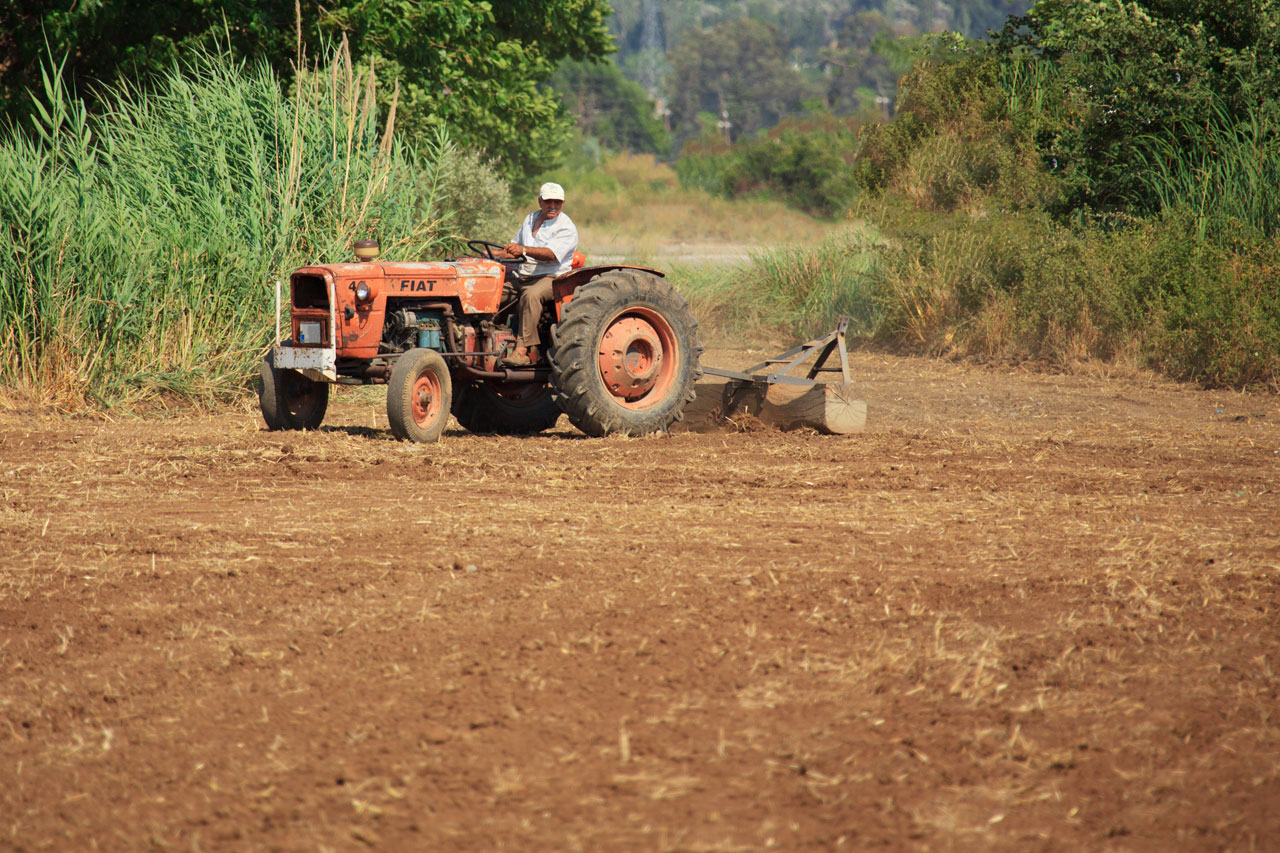
- « Ce n’est pas l’Europe que nous voulons » : entre protectionnisme, libéralisme et écologie, l’explication d’une crise agricole européenne
Cette crise est donc révélatrice de défis de taille, mais également de discordances profondes concernant la politique agricole : alors, comment concilier ces revendications, comment satisfaire à la fois les agriculteurs qui souhaitent augmenter leurs productions et leurs revenus, tout en prenant en compte les enjeux écologiques du siècle, mis en avant par les partisans d’une transition agroécologique ? < Back « Ce n’est pas l’Europe que nous voulons » : entre protectionnisme, libéralisme et écologie, l’explication d’une crise agricole européenne By Maëlys Malaboeuf-Lasselle for European Society February 29, 2024 Ces dernières semaines ont été marquées par de violentes contestations des agriculteurs dans toute l’Europe : Allemagne, France, Italie, Belgique, Pologne, Lettonie… ont été le terrain de grandes manifestations et blocages de la part du monde agricole. Leurs revendications sont nombreuses : hausse des revenus, améliorations des conditions de travail et de vie, suppression de certaines normes contraignantes en matière d’environnement, et amélioration des politiques nationales. Mais ils témoignent surtout d’un mécontentement général autour de la PAC, la politique agricole commune, qui ne date pas d’hier. Revenons à la mise en place et l’évolution de ce marché agricole européen, source première de la crise. C’est en 1962 que naît la PAC, suite aux ravages causés par la Seconde Guerre mondiale. Première politique commune de l’Union européenne, ses objectifs sont clairs : accroître la productivité agricole, assurer un niveau de vie décent aux agriculteurs, garantir la sécurité des approvisionnements, stabiliser les marchés, et harmoniser les règles de concurrence. Un système économique de soutien des prix et du marché est donc instauré, afin de relever le défi de l’autosuffisance alimentaire à l’échelle du continent. Réunissant les six pays fondateurs, elle est aussi un moyen de placer l’Europe sous le signe de la paix et de l’unité. Les résultats sont bénéfiques : la productivité alimentaire et la disponibilité des denrées ont augmenté. Néanmoins, les revenus restent faibles. C’est alors qu’un certain Mansholt, alors commissaire européen à l’agriculture, propose un plan modernisateur pour résoudre le problème. Appliquée en 1970, cette réforme passe par l’optimisation des surfaces cultivées, et la fusion des exploitations pour agrandir les unités. L’évolution de la PAC se poursuit en 1984 avec l’instauration de quotas afin de ralentir la surproduction et gérer l’offre, alors supérieure à la demande européenne. La PAC opère un revirement six ans plus tard, lorsque le soutien du marché est abandonné au profit d’une aide directe aux agriculteurs. Toutefois, des premières déceptions se font ressentir : le marché européen s’ouvre aux marchés internationaux, la concurrence s’accroît, ainsi que les pressions économiques qui effraient les agriculteurs. Malgré une volonté d’élargir les domaines d’actions de la PAC, à la dynamisation des zones rurales ou à l’écologie, elle est le sujet de fortes tensions, exprimées lors des blocages de ces derniers jours. Des divisions émergent au sein du monde agricole. Certains dénoncent un abandon de la part de l’Union européenne, qui, en dépit de la pression croissante des industriels et de l’accroissement compétitivité mondiale, multiplie ses traités avec les pays producteurs à bas coût, comme le CETA avec le Canada ou le traité avec le Mercosur, vu comme un véritable couteau dans le dos pour les agriculteurs européens. Le 1 février 2024, des milliers de manifestants de plusieurs pays et 1200 tracteurs ont envahi les rues bruxelloises, faisant entendre « ce n’est pas l’Europe que nous voulons », « sortons l’alimentation du libre-échange », « moins de normes ». Les lourdes procédures administratives de la PAC sont aussi visées par le mécontentement. D’autres en revanche, partisans d’une agriculture biologique respectueuse de l’environnement et de la biodiversité, reprochent à la PAC son laxisme en matière d’écologie. C’est aussi le reproche fait à la France, déjà condamnée pour inaction climatique en 2021 et pour non-respect de ses engagements environnementaux en 2023. Suite aux violents blocages en France, Gabriel Attal a décidé de stopper le plan Ecophyto, dont l’objectif était de réduire les usages de produits phytopharmaceutiques de 50% et de sortir du glyphosate, ce qui réveille la colère des agriculteurs écologistes et des ONG environnementales : c’est un « cadeau empoisonné fait aux agriculteurs » selon Marie Toussaint, « à contre sens de l’urgence écologique » selon Agir pour l’environnement (via Le Monde). Des agriculteurs sensibles aux questions environnementales interrogés par Le Monde disent vouloir conserver la production biologique et les traditions agricoles, mais l’abandon progressif de l’Etat, qui a supprimé une aide pour les exploitations biologiques en 2017, complique les choses. Alors que l’agriculture est confrontée aux défis du dérèglement climatique, aucun moyen n’est mis en place par l’Etat pour repenser nos productions et évoluer vers une agriculture plus durable. Toutefois, l’écologie est un sujet qui divise les agriculteurs. La FNSEA, la Fédération Nationale des Syndicats d’Exploitants Agricoles, s’indigne quant aux normes environnementales comme le plan Ecophyto, qui limitent la production massive et donc favorisent les productions des pays à bas coûts, peu chers, facilement importables par les pays européens, et plus accessibles financièrement aux ménages dans les supermarchés. Elle alerte également sur la dureté du quotidien des agriculteurs, indispensables à notre alimentation, travaillant sans compter, et dont les revenus et les rendements restent pourtant faibles. Or, selon Guilhem Roux, agriculteur économiste, la question n’est pas d’accroître la production mais le profit. Incités par le marché international et la pression en amont des emprunts à rembourser et en aval des distributeurs, ils sont poussés à vouloir toujours produire plus. L’important reste la marge, et un changement de modèle est nécessaire à l’augmentation des revenus des exploitants agricoles. Mais encore faudrait-il un consensus au sein de la communauté agricole, ce qui est loin d’être le cas. La FNSEA ne semble pas faire l’unanimité : sa négligence des questions environnementales lui vaut des critiques, vue comme ayant « sacrifié le bio » (via Le Monde). Les blocages ont finalement été levés après l’appel du syndicat, mais les revendications n’ont pas toutes été entendues : des efforts de la part de l’Etat français sont attendus, sans quoi les manifestations pourraient reprendre de plus belle, risquant à terme une panne agricole sans précédent avec des répercussions à l’échelle européenne. Mais la France n’a pas été le premier pays à se mobiliser : effectivement, le mouvement allemand dure depuis janvier, avec le blocage des autoroutes menant vers les grands ports ou les aéroports Les causes sont semblables à la France : ils s’insurgent contre la décision du gouvernement de supprimer les avantages fiscaux sur le gazole agricole, en place depuis 1951, et de taxer les véhicules. Or, cette décision suscite la colère car les agriculteurs n’ont aucune autre solution électrique pouvant remplacer le gazole. Tout ça en subissant de plein fouet les conséquences du dérèglement climatique : sécheresses, gelées tardives, pluies diluviennes qui bouleversent les récoltes et n’arrangent donc en rien le souci des revenus des agriculteurs, à la différence des distributeurs qui en profitent pour s’enrichir. Les subventions, estimées à plus de 9 milliards d’euros par an, alimentent la dépendance des agriculteurs envers l’État. D’autant plus que celui-ci tend à favoriser les grandes exploitations au détriment des petites. Ces révoltes fragilisent directement le gouvernement, jugé déconnecté de la réalité et incapable de répondre aux demandes, alors qu’il mène simultanément un combat depuis quelques semaines contre la montée de l’extrême droite en Allemagne. Même chose dans les autres pays européens : l’Italie, troisième puissance agricole de l’Union européenne, a vu ses agriculteurs aux portes de la capitale, rejoint ensuite par les syndicats espagnols, puissance exportatrice de la plupart de nos fruits et légumes, et portugais qui bloquent contre la Politique Agricole Commune, la précarité et la sécheresse que le secteur connaît depuis maintenant 3 ans. Mais aussi Belgique et Pays-Bas où des feux ont été allumés ; Pologne, Bulgarie et Lettonie qui dénoncent une concurrence déloyale de l’Ukraine ; Grèce où les agriculteurs déplorent le retard des indemnisations suite aux feux de forêts et inondations qui ont ravagé le pays l’an dernier. Enfin, contre toute attente, les agriculteurs suisses rejoignent le mouvement le 3 février, avec une première journée de mobilisation contre le maintien des importations de céréales et de denrées alimentaires russes dans l’Union. Cette crise est donc révélatrice de défis de taille, mais également de discordances profondes concernant la politique agricole : alors, comment concilier ces revendications, comment satisfaire à la fois les agriculteurs qui souhaitent augmenter leurs productions et leurs revenus, tout en prenant en compte les enjeux écologiques du siècle, mis en avant par les partisans d’une transition agroécologique ?
- Culture | The Menton Times
June 10, 2026 The Reinvention of Coachella Since the beginning of the year, 2026 has been dubbed “the new 2016” across various social media platforms. Young people online seem to be yearning for a resurgence of how life was ten years ago. The rose-tinted social media filter has been revived and 2016 pop music is having its moment, with Zara Larsson’s hit “Lush Life” reentering the Billboard’s Top 100 for the first time in years. Read More June 3, 2026 Comment Hollywood a façonné la figure de l’Arabe Le 25 novembre 1992, aux États-Unis, environ 1,5 million de personnes quittent leurs domiciles un jour de week-end pour se rendre au cinéma le plus proche. Et pour cause : c’est la première diffusion du film Aladdin, production tant attendue du groupe Disney. Une histoire d’amour entre un voleur pauvre surnommé « Diamant brut » pour son cœur en or, et une princesse prisonnière de son statut, qui rêve de se rebeller contre les traditions… Quoi de mieux pour faire rêver les amateurs d’amour impossible ? Read More March 15, 2026 Cinéma et masculinisme : comment les films cultes nourrissent la manosphère En 1999, David Fincher livrait Fight Club, portrait d'une génération d'hommes désœuvrés, englués dans le consumérisme et en quête désespérée de sens. Vingt-cinq ans plus tard, le film n'a pas seulement acquis un statut culte, il est également devenu une sorte de texte sacré pour les communautés masculinistes en ligne. Dans les forums incels, Tyler Durden (Brad Pitt) est érigé en modèle de virilité à retrouver, et ses répliques sont scandées comme des mantras sur les réseaux sociaux. Read More February 23, 2026 Le True crime: quand l’horreur devient divertissement Imaginez regarder les aventures de meurtres comme ceux de Jeffrey Dahmer ou l’affaire des frères Menendez. C’est ce que propose la série Netflix Monsters qui, malgré les polémiques, a tout de même enregistré 12,3 millions de vues lors des quatre premiers jours du lancement de la deuxième saison. Read More November 13, 2025 The Mediterranean Charm: Why Writers and Painters Keep Coming Back to This Sea On a tranquil Mentonnais weekend, two weeks before the midterms rush, I boarded a train bound for Antibes. As I wandered through its cobbled streets, the Mediterranean shimmered next to me, breathing light into every corner of the city; a scene not so different from that of my hometown in Alexandria, Egypt. Apparently, this feeling of familiarity with this vast blue sea is nothing new—a feeling shared by many people no matter on which shore one is standing. Read More November 10, 2025 “When They Tell You to Sing, You Just Sing.”: The Khmer Rouge’s Musical Manipulation of Cambodian Society “If you want to eliminate values from past societies, you have to eliminate the artists.”, reflects Prince Norodom Sirivudh of Cambodia, in the 2014 documentary “Don’t Think I’ve Forgotten: Cambodia’s Lost Rock and Roll”, recounting the systematic erasure of music from Cambodian society under the brutal regime of the Khmer Rouge in the 1970s. Read More October 23, 2025 Is being a Virgin as Cool as Being a BRAT? : A Review of Lorde’s Latest Studio Album BRAT was summer. BRAT was coming to terms with your suppressed desires, the hate you bore and the complicated friendships you were a part of. The fun, the ugly and the embarrassing. It was about the euphoria of partying into the light of early summer mornings and the walks of shame back home. Drug abuse, sex, and all other kinds of highs of life was what BRAT encompassed. It encouraged difficult conversations about fertility and friendship, revealing that fame doesn’t equate feelings getting spared or receiving grace. Read More October 5, 2025 Is Romance Dead?: How Reality TV Shows Reflect Modern Dating How does watching strangers fall in love on national television reflect the most complicated parts of our emotional lives – dating? The transition from heartful romcoms to dating shows such as Love Island, Love is Blind or Too Hot to Handle perhaps indicate romance has died. Read More September 30, 2025 Politicizing the Heartland: The Conservative Instrumentalization of Country Music Given country music’s association with the American South and its conservative majority, it is difficult to ignore the correlation of country music's revival with the rise of the far-right in the US. However, can one link these phenomena? Is country music inseparable from conservatism? Read More September 28, 2025 Americans on the Riviera At the start of the 1920s, although hard to imagine today, the Riviera was practically deserted during the summer months. Hotels and restaurants catering to the European elite would close shop after spring, as their wealthy patrons would leave for colder climates. The Murphys were the first to convince hotels in Antibes to stay open during the summer months, as a way to host their American friends. Thus beginning the transformation of the Riviera into the summer destination it is today. Read More September 28, 2025 Threads of Memory: The Story of Palestinian Tatreez In Palestine, threads carry stories. Each stitch of tatreez — the traditional Palestinian embroidery — embodies memory, identity, and resilience. On a quiet afternoon, an elderly woman sits with fabric in her lap, weaving patterns passed down through generations. Read More September 27, 2025 The Pen, the Camera, and the Microphone: The Egyptian Kit of Soft Power The truth is this: Egypt has never ruled merely by sword or throne. Its empire was always one of imagination, where a pen could be sharper than steel, a song louder than artillery, and a camera brighter than any spotlight. The world may forget armies, but it remembers stories. And Egypt has always known how to tell them. Read More April 30, 2025 “Clean Girl” or “White Girl”? Exploring Racial Double Standards in the Fashion Industry It’s time to embrace these styles as more than just ‘trends’, but as a long-lived facet of Black culture. Recognizing the enormous influence that Black communities have had on fashion and aesthetics will allow for the long-overdue dismantling of structural hegemonies, which not only ignore Black culture but also build an alarming double standard between races in the fashion industry. Read More April 30, 2025 Thrifting and the Price of Exclusion: Gentrifying Secondhand Stores in Toronto The question of immorality does not pertain to the act of thrifting itself, but how the thrift environment has been redesigned to serve corporate interests at the expense of those it was initially designed to support. Read More March 31, 2025 Who is “Saving” Europe? In the digital age, the responsibility of verifying and trusting information falls on us, the users. While content under the branding of Save Europe might not be falsified, it is deliberately presented with emotional imagery, evocative music and slogans—blurring the line between political activism and propaganda. Read More March 31, 2025 Fasting, not a dividing element after all Fasting in different religions does not divide us. It just makes us realize how similar we are, how we have the same needs, temptations and desires. And that’s precisely what I realized when I came to Menton, a campus full of diversity—ethnically, culturally and religiously. At the core, we are all the same… Read More March 31, 2025 Love is in the Air? Une Lutte Contre le Vent If the campus is about 70% female and 30% male, and of the women, 75% are available and heterosexual, and of the men, about half are gay and maybe 25% are in a relationship, how many available, straight men does that leave for the single women, keen and looking? No need to do the math. We are not all EcoSoc majors. To put it simply, the answer is not a lot. Read More March 31, 2025 Le racisme aussi peut être pluraliste Sans qu’on puisse mettre un trait d’égalité entre le RN et la Nouvelle droite, il faut saisir l’apport essentiel de cette mouvance à l’extrême-droite tant sur le plan idéologique que sur la formation intellectuelle de ses cadres. La Nouvelle droite est une entreprise de blanchiment car derrière le ‘pluralisme’ dont elle se targue, se cache directement le nazisme et le néo-fascisme terroriste. La grande blanchisserie aujourd’hui est le Rassemblement national. Read More March 31, 2025 With Prada and Ten Protagonists on to a new self-destruction feminism Feminism does not always require being vocal, an activist, or engaging in mass mobilization. Sometimes resisting is retreating—in the choice to withdraw from cultural pressures knowingly. Dissociative feminism expands the scope of what feminist action can entail. Read More March 31, 2025 A Review of the Oscars The Oscars, once regarded as the highest award form of artistic recognition, have increasingly been subject to scrutiny over their selection process, inclusivity and cultural relevance. While the ceremony continues to attract global attention for viewers tuning in from all over the globe, one cannot help but ask: is the Academy truly honoring the best in cinema, or is it simply reinforcing the industry’s biases and political inclinations? Read More
- Amnesty: The United States Border Crisis is Still a Human Rights Emergency
The United States border crisis is a human rights emergency — there is no room for bipartisan hatred and broken promises in our immigration system. American leaders must act to protect the legal right to seek asylum and ensure that migrants are treated humanely and fairly at all steps of the immigration process. < Back Amnesty: The United States Border Crisis is Still a Human Rights Emergency By Peyton Dashiell December 31, 2022 For decades, migrants have used the United States’ vast border with Mexico as a crossing point to enter the United States and seek asylum. While most migrants originate from Mexico or Central America, thousands of migrants from Russia, China, India and Turkey seeking U.S. residence have flown to Mexico and crossed the frontier to potentially evade border patrol when crossing by land. The migrants and asylum seekers arriving at the border have a variety of motivations, from fleeing violence to wanting to join family members or seeking better economic opportunities. While anybody with a legitimate fear of persecution can apply for asylum, most asylum applications in the United States are rejected due to a cap on refugee admissions and specific requirements for asylum seekers, such as not having been convicted of a serious crime or felony. As a result, many migrants crossing the border aim to do so illegally and evade immigration controls so they can start their lives in the United States without having to undergo the long and arduous process of obtaining asylum. In 2014, the Obama administration declared a crisis at the border due to a sharp increase in unaccompanied minors and women illegally crossing. Illegal immigration has long been used as a right-wing scapegoat for the issues the United States faces, including high unemployment and increasing violent crime rates. This rhetoric featured prominently in the presidential campaign of Donald Trump, in which he mobilized supporters with calls to build a border wall and made inflammatory statements about the character of migrants, notably stating that “They’re bringing drugs. They’re bringing crime. They’re rapists. And some, I assume, are good people.” In January 2017, Trump began his term by signing Executive Order 13767, which directed the U.S. government to start the construction of the border wall. Throughout his term, a wall was constructed along 455 miles of the border, 49 miles of which previously had no barrier. By 2020, much of this construction was in danger of collapsing due to erosion. Several officials, including Trump advisor Steve Bannon, were indicted for defrauding investors and using wall funds for personal gain. Additionally, Trump sparked controversy with policies designed to separate migrant children from their families, detain migrants in overcrowded detention centers in dangerous and unhealthy conditions, and end the practice of allowing asylum seekers to live in the U.S. while awaiting court proceedings. In 2018, the conditions of migrant detention centers run by Immigration and Customs Enforcement (ICE) were exposed in the media. Journalists and human rights monitors who visited the centers discovered egregious human rights violations, including sexual abuse, a lack of food and clean drinking water and insufficient medical care. Many members of Congress visited the detention centers to observe the poor conditions firsthand in what Department of Homeland Security Secretary Kirstjen Nielson labeled a “Hill stunt.” The international community quickly condemned the detention centers. Amnesty International released a report detailing the poor conditions on both sides of the border. United Nations High Commissioner for Human Rights Michelle Bachelet said she was “deeply shocked” at the treatment of children and expressed concern for their development and wellbeing. In 2019, Trump implemented the Migrant Protection Protocol, or “Remain in Mexico” policy, which forced asylum seekers to stay in Mexico while their immigration papers were processed. This policy returned at least 70,000 asylum seekers to Mexico, many of whom were trying to escape threats and persecution experienced in the country. While President Biden pledged a sharp turnaround from Trump’s cruel immigration policies while on the campaign trail, his leadership has demonstrated outright hypocrisy and little progress on border matters. He vowed to reunite migrant families separated by the Trump administration, close ICE-operated detention centers, end construction of the border wall and raise the annual cap for refugee admissions. However, none of these promises have been delivered during his two years in office, and there is little evidence that conditions for migrants at the border have improved from the standard set by the Trump administration. Despite his mantra of “not another foot” of border wall development, in July 2022, Biden’s administration quietly began construction to fill four major gaps in the border wall near Yuma, Arizona — one of the busiest locations for illegal border crossings. Additionally, while Biden ran on a promise of ending the Migrant Protection Policy, it remains in place after the two years he has spent in office, although he did exempt LGBTQ asylum seekers and people with certain medical and mental health conditions, recognizing their vulnerability in Mexico. Furthermore, President Biden has controversially used Title 42, a COVID-19 control policy, to increase expulsions of migrants at the border. Title 42 was first enacted by Trump in 2020 to rapidly expel asylum seekers to control COVID-19 and has been used 2.4 million times since its establishment. Title 42 was ruled unconstitutional by a federal court in Nov. 2022 in response to a lawsuit filed by the American Civil Liberties Union. Still, the Biden administration appealed the ruling on Dec. 8 to continue expulsions under the guise of public health. The Centers for Disease Control and Prevention is reportedly working with Biden to formalize this policy as a permanent health measure, despite lifting most other COVID policies. The United States border crisis is a human rights emergency — there is no room for bipartisan hatred and broken promises in our immigration system. American leaders must protect the legal right to seek asylum and ensure that migrants are treated humanely and fairly at all steps of the immigration process.
- “I Am A Drug Lord”: A Glimpse Into International Security
“I Am A Drug Lord” is a manifestation of the drug business and how it started, and most importantly, what happens to relationships at the micro and macro level in the initial stage of drug trade. < Back “I Am A Drug Lord”: A Glimpse Into International Security By Catarina Vita for Sciences Defense February 29, 2024 After an arduous goodbye from my parents and a weekend in the wonderful city of Rome, I decided to browse the local airport bookstore to distract my mind. Originally planning on going to my gate earlier, something caught my eye. An orange and black book cover lured me into the bookstore, and it read: “I Am A Drug Lord.” What enthralled me the most by this book, however, was the author: Anonymous. This book is not supposed to be scrutinized grammatically or dissected with technical, stylistic and storytelling devices. “I Am A Drug Lord” is a manifestation of the drug business and how it started, and most importantly, what happens to relationships at the micro and macro level in the initial stage of drug trade. This book starts with an intricate demographic analysis of the setting, the island of Ibiza. The author details the difficulties his parents encountered being from outside Spain but still having volunteered to fight the subsequent dictator Francisco Franco. After years of injuries, exclusion and scrutiny in Ibiza, the author presents his relationship with his uncle, who lived in the United Kingdom, and eventually took the protagonist to study in a prestigious boarding school in the country. After suffering racism and bullying, Anonymous returned to his homeland, Ibiza, to find his mother sick and his parents divorced. Shortly after, the uncle also capsized on his way back to Ibiza, killing him. Anonymous, confronting feelings of grief and anger, did not expect to be involved in a drug trafficking cartel, but the leader of the cartel argued that his uncle had an outstanding debt, and Anonymous was in charge of covering it. “I Am A Drug Lord” is not to be regarded as an informative book, or even an autobiography; due to the need to preserve the identity of certain individuals, especially with key characteristics and names, this book is too altered to be considered informative. However, the book shows unprecedented details about cartel involvement, and what flashy Netflix shows such as Narcos and Griselda (which are still amazing and worth the watch) cannot disclose due to television regulations. Evidently, Anonymous pairs the dynamic nature of being in a drug cartel to his love life and sentiments, but this adds to the reader being able to think how a previous drug lord thought, and feel like a drug lord felt. Nonetheless, a common misinterpretation of this book and other means of art inspired by drug cartels is that too much luxury is showcased, possibly convincing people to be involved in cartels. In “I Am A Drug Lord,” Anonymous definitely shared the luxuries his uncle obtained suddenly after a few months of implied drug trade. However, Anonymous also anecdotes how in each of his uncle’s luxuries, such as his race car and boat, either him or his uncle found themselves in danger. The general critique that people ingress in the drug trade business solely out of pure desire is refuted upon reading this book. Although the author describes his regret for continuing his business and committing certain actions during his time as a drug lord, he also takes time to recount his story and the part that contingency and path dependency played on his future. As his uncle left him the alleged debt, Anonymous was not aware of his participation in the drug trade due to his young age. The book also describes situations that would put his father and ill mother in danger upon threats if a certain package was not delivered or if a certain meeting was not conducted. In essence, Anonymous does not wish to blame his drug trade on himself or say that he is entirely blameless; he wishes to broaden the concept of what it is to get involved in a drug trade and emphasize the implications of this business. “I Am A Drug Lord,” with its easy digestibility and informativeness despite the necessary anonymity, can be considered a precise glimpse into international security. Besides giving specific intel on how a drug cartel functions intersected with the niche demographic of the island of Ibiza, the book also shows the complications of international relations after the drug market became one of the key movers of the economy — but describing what Anonymous talked about international relations would spoil the book too much. This book is necessary for demystifying the drug cartel business and tracing the economic and social impacts back to Ibiza and Francoist Spain, through a young boy’s perspective.
- Corps et Conscience: L’Écriture révoltée de Nawal El Saadawi
La liberté implique-t-elle nécessairement la solitude? Ou bien avons-nous, malgré tout, besoin d’un témoin, d’un appui, d’une présence pour exister pleinement? < Back Corps et Conscience: L’Écriture révoltée de Nawal El Saadawi Christy Ghosn for Feminist Union February 28, 2025 Lire Combien de cœurs , c’est s’exposer au feu d’une parole qui ne s’éteint jamais. Nawal Al Saadawi, écrivaine égyptienne, médecin et militante féministe , ausculte son propre corps, le corps d’autres femmes et, à travers eux, la maladie qui gangrène nos sociétés: le patriarcat. Née en 1931 dans un petit village égyptien, El Saadawi a consacré sa vie à dénoncer les injustices faites aux femmes, tant dans ses écrits que dans ses actions militantes. Fondatrice de l'Association de solidarité avec les femmes arabes en 1982 (ensuite interdite en 1991) et militante pour l'abolition des mutilations génitales féminines, ses prises de position souvent exprimées à travers ses œuvres lui ont valu des persécutions et des contraintes à l'exil. En 1981, sous le régime de Anwar el-Sadate en Égypte, son opposition à la loi instaurant le parti unique conduit à son emprisonnement. Libérée après trois mois de détention suite à l'assassinat du président Sadate en octobre 1981, et après plusieurs années d'exil aux États-Unis, Nawal El Saadawi revient en Égypte en 1988, continuant son combat pour les droits des femmes. Elle décède au Caire le 21 mars 2021, laissant derrière elle un héritage littéraire et militant. Son écriture ne rassure pas, elle bouscule. Elle refuse la complaisance, l’illusion du progrès sans combat. Dès les premières pages, son texte crépite comme une autobiographie, bien que l’autrice s’en défende. Ce n’est pas seulement son histoire que l’on traverse, mais une mémoire collective pour toutes celles qui, un jour, ont senti leur existence corsetée par des traditions, des lois, des silences imposés. Al Saadawi regarde la médecine comme elle regarde la vie: sans fard. Déconstruisant la binarité des rôles genrés, elle révèle une vérité crue et universelle: nous sommes toutes prisonnières d’un système qui a fait de nos corps des objets de contrôle, de convoitise, de domination. La science au service de Saadawi Dans Combien de cœurs, premier roman de Saadawi publié en 1957, l’autrice ne se contente pas de nourrir son propos d’émotions et de réflexions philosophiques: elle intègre également des arguments scientifiques pour étayer sa vision d’une égalité fondamentale entre les hommes et les femmes. Elle écrit: « La science nous enseigne que les organes de la vie, qu’ils soient féminins ou masculins, fonctionnent avec la même logique, la même recherche de survie et de bien-être. Toute prétention à l’infériorité est une erreur de lecture des faits. » Saadawi utilise la science avec une intelligence stratégique, la transformant en un outil de démystification pour rappeler que les différences biologiques entre les sexes n’ont rien à voir avec une quelconque infériorité intellectuelle ou physique des femmes. L’un des aspects les plus frappants de Combien de cœurs est la manière dont Saadawi aborde la place des femmes dans le milieu médical. Malgré leurs compétences, elles restent toujours sous-représentées aux postes de pouvoir. En Égypte aujourd’hui, beaucoup de femmes médecins sont largement cantonnées à la pédiatrie et à la gynécologie, les spécialités « attendues » pour elles, tandis que la chirurgie reste dominée par les hommes. Au Moyen-Orient, il nous est souvent appris dès l’enfance que nos mains sont faites pour caresser, non pour inciser. Que nos esprits doivent comprendre le corps des autres, mais jamais prendre le pouvoir sur lui. Féminité en cage Nawal El Saadawi fustige également avec une acuité poétique la dévalorisation de la féminité à travers une citation qui frappe par son imagerie singulière: « Dieu devait sans doute préférer les oiseaux aux filles. » A la fois dérangeante et profondément évocatrice, cette phrase incarne le rejet systématique de la grâce et de la liberté inhérentes à la féminité dans une société patriarcale. Les oiseaux représentent tout ce que la culture dominante refuse d'attribuer aux filles: l’innocence libre et la capacité de s’envoler sans entrave. Par contraste, les filles sont présentées comme des êtres destinés à porter le poids de la conformité, à être façonnées par des normes qui les limitent dès leur plus jeune âge, sans possibilité de fuir. « Le conflit entre ma féminité et moi-même a commencé bien avant que je n’aie des attributs féminins, avant même que je puisse reconnaître en moi ce qui, par la force des conventions, devait être perçu comme une faiblesse. » écrivait-elle. Un cœur libre, mais vulnérable Alors que tout au long de l’œuvre, Saadawi se présente comme une femme farouchement indépendante, affirmant sa capacité à se suffire à elle-même sur les plans intellectuel et émotionnel, elle conclut pourtant par ces mots troublants: « J’avais besoin d’un homme pour pleurer. » Cette confession ouvre un débat sur la nature même de l’émancipation féminine dans son récit. En effet, certains critiques y perçoivent une contradictio n avec l’ensemble du discours de Saadawi. Dans un livre où elle prône l’égalité et l’autonomie absolue, admettre une forme de dépendance affective envers un homme peut sembler en décalage avec ses idéaux. La liberté implique-t-elle nécessairement la solitude? Ou bien avons-nous, malgré tout, besoin d’un témoin, d’un appui, d’une présence pour exister pleinement? Avec réflexion et d’un point de vue ‘humaniste,’ j’y vois une reconnaissance sincère de la com plexité des émotions humaines. Loin de contredire son engagement féministe, cette phrase pourrait illustrer l’idée que l’indépendance ne signifie pas l’absence de vulnérabilité, mais plutôt la capacité à accepter ses émotions sans crainte, y compris dans le cadre de relations interpersonnelles. L’œuvre de Saadawi, tout en relevant des questionnements intimes, ouvre en somme la voie à une analyse concrète des avancées et des défis rencontrés par les femmes dans le monde arabe. Outre la médecine, d’autres secteurs témoignent également d’une montée en puissance des femmes. Dans l’enseignement supérieur, par exemple, les femmes représentent souvent une majorité dans de nombreuses disciplines, et en droit comme en sciences humaines, elles occupent de plus en plus de postes de responsabilité. Toutefois, le chemin vers une égalité totale reste semé d’embûches. En effet, dans l’ensemble du monde arabe, la condition féminine oscille entre avancées et régressions. Si certains pays, comme l’Arabie Saoudite, ont récemment levé certaines restrictions (droit de conduire, accès au marché du travail,..) d’autres durcissent leur contrôle sur les femmes, notamment en matière de droits civils et vestimentaires. Le combat de Nawal al Saadawi reste donc d’une actualité brûlante. Son roman n’est pas seulement une critique du passé, mais un miroir de luttes toujours en cours. Combien de coeurs est une œuvre à lire, pour être secoué, pour questionner et pour ne jamais accepter ce qui nous est présenté comme une fatalité. Photo credits: freshheadfilms on Flickr
- Borders after Borders: How Europe is Falling Short in the Integration of People on the Move
Agree or disagree: “Most refugees who come to my country will successfully integrate into their new society”? If, on a global average, half of the people believe this to be true, the people of Europe seem less optimistic. < Back Borders after Borders: How Europe is Falling Short in the Integration of People on the Move Maria Francisca R. Costa for SPRH October 31, 2024 Agree or disagree: “Most refugees who come to my country will successfully integrate into their new society”? If, on a global average, half of the people believe this to be true, the people of Europe seem less optimistic. Under 40% of people seem to have faith in the integration of refugees in their societies—with France, Greece, Germany, the Netherlands, Bulgaria, Belgium, and Hungary, among the countries where this share of the population is one of 35% or below. These countries are also among the ones ranking the lowest in the percentage of population believing that refugees are likely to have either a positive or neutral impact in their country’s culture or way of life; in Germany and in the Netherlands, the share of people believing that they will have a negative impact in this field almost reaches 50%. A study conducted to examine the impact of local populations’ perspectives on refugees on their social integration in Germany found that negative natives’ attitudes do, in fact, reduce the chances of a successful social integration. This last term is defined by whether refugees “feel welcomed in their municipality”, “how much they trust others”, “how often they feel disadvantaged due to their heritage” and “social ties” assessed through “how much time they spend with Germans in general” and in particular “time spent with their German neighbours.” Locals’ attitudes towards refugee populations appear therefore to generate a vicious cycle: more discrimination, less integration and vice versa. Two factors have been found to influence the attitudes of acculturation from locals to refugees: “perceived value, similarity and threat”. Those who are perceived as more similar to the host community—and thus perceived as having greater “value”—have a greater chance of a successful integration. On the other hand, cultural minorities are frequently perceived as threatening, leading local communities to adopt an exclusionary attitude, “ endorsing more ethnocentric forms of acculturation,” towards these groups of refugees. These attitudes perpetuate other obstacles to integration, such as “in the face of hostility and prejudice, refugees’ disengagement front the host society may function as a self-protective mechanism to avoid further rejection.” In the EU, many non-institutional and institutional factors play a significant role in the difficulties faced by refugees in integrating their host societies. A comparative study between France, Germany, and Switzerland, found frequent discrimination of refugees in accessing employment: “a refugee with higher education and proper training in France described submitting 30 applications for jobs at local pharmacies and all of them being rejected” and “women who wear hijabs were routinely rejected for employment.” Additionally, governmental institutions make the recognition of refugees’ qualifications difficult by demanding “coursework, examinations, and lengthy times of supervision.” These issues generate frequent underemployment within these groups. Accessing the job market is a crucial means for refugee integration, as “it allows them to learn the language, build a future, regain confidence, and establish status.” Focusing on the relevance of the value perceived of a refugee by the host community, we can easily deduce that such obstacles to achieve status through employment only serves to generate greater stereotyping and discrimination against refugees. Furthermore, the lack of a stable income hinders refugees’ ability to attend community events which reduces the opportunity to establish links within their host societies. These obstacles generate a distance between refugee communities and locals that is likely to further perpetuate misperception and discrimination against refugees. The most frequent forms of discrimination encompass the “overgeneralization of stereotypes and religion.” As the same study notes, “masses of refugees from the same population” were pictured as “backward, inferior, terrorists or supporters of the Islamic State ISIS, lazy, job-stealing, criminals, and religiously radical”. Together with their institutions, many European societies struggle to make the successful integration of refugees a reality. The institutional obstacles posed to the economic and social establishment of these groups are those which contribute to perpetuating a devaluation of their position in host societies. Refugees are impeded access to mechanisms of cultural participation and their chances of acculturation and social integration are reduced due to further discrimination. European policies must be redesigned so the reception of people on the move is not thought of as a process to obtain asylum—but one where the acquisition of a refugee status is but the first border to be crossed.
- America First, Migrants Last: Trump’s New Southern Border Policy
Trump’s new border policy isn’t as simple as just closing the border and getting “terrorists the hell out” of the United States. It encompasses a myriad of endeavors, each dealing a blow to the U.S.’ immigration program, which comprises one-fifth of the entire world’s international migrants. < Back America First, Migrants Last: Trump’s New Southern Border Policy Loowit Morrison for Amnesty Sciences Po Menton February 28, 2025 In a flurry of 37 executive orders signed by President Donald Trump during his first week in the Oval Office, eight regarded immigration. This proportion is unsurprising; Trump’s campaign revolved tightly around promises to stunt immigration, having long pledged to “restore the travel ban, suspend refugee admissions, stop the resettlement and keep the terrorists the hell out of our country.” Trump’s new border policy isn’t as simple as just closing the border and getting “terrorists the hell out” of the United States. It encompasses a myriad of endeavors, each dealing a blow to the U.S.’ immigration program, which comprises one-fifth of the entire world’s international migrants. Below lists a handful of the Trump Administration’s embryonic, yet already destructive, immigration policies. It is crucial to understand the impacts of Trump’s agenda, as it will fundamentally transform the U.S.’ immigration process as we know it today. To do so, we must observe what actions Trump has taken so far, and what each of these policies will entail. Eliminating CBP One “CBP One came like a gift from God”, reflects Yoandis Delgado, an immigrant from Nicaragua who entered the U.S. in 2023. Launched in 2020 by U.S. Customs and Border Protection, CBP One is an app that offers resources for migrants, including scheduling appointments, securing travel authorization and accessing a plethora of migration-related materials. It has been cherished as a “salvation” by many migrants, principally those from Cuba, Nicaragua, Venezuela and Haiti. However, CBP announced the app’s termination on January 20, 2025. Tens of thousands of appointments scheduled for upcoming months were canceled after the notice, leaving migrants stripped of CBP One’s resources. In its short lifetime, CBP One helped admit nearly one million migrants. Ending humanitarian parole for migrants On the first evening of his term, Trump halted an initiative that allowed migrants to apply for non-land -based entry in cases of “urgent humanitarian reasons or significant public benefit”. After receiving a U.S.-based sponsor and background check, these migrants could stay on American soil for up to two years with a work permit, which would shield them from deportation. Since 2023, nearly 532,000 migrants, predominantly Haitians, have benefitted from this program. Undeterred by its advantages, Trump argued that terminating the program would “protect the American people from the disastrous effects of unlawful mass migration and resettlement”. In reality, this program was crucial to reducing pressure on the land border with Mexico. Canceling flights for refugees, including those already approved for travel Thousands of refugees already approved for travel were blocked from entry after Executive Order 14163, “Realigning the United States Refugee Admissions Program,” indefinitely paused refugee resettlement. Over 10,000 refugees in the process of coming to the U.S. from Afghanistan, Africa, Latin America and the Middle East are now barred from entry. Trump’s harsh policy towards refugees is unexpected — in 2020, the number of admitted refugees sank to an incredibly low 11,000, as compared to 100,000 under Biden in 2024. In line with his “America First” policy, President Trump holds that continuing to receive refugees would burden American communities, which are unequipped to absorb them. He did not, however, comment on how terminating the program would burden the refugees, who already live under acute threat. Expanding Immigration and Customs Enforcement (ICE) powers Immigration and Customs Enforcement (ICE), a branch of the Department of Homeland Security, is notoriously responsible for the enforcement of immigration laws. Although it already has a considerable amount of monetary power — its annual budget is approximately $9 billion — ICE’s abilities have expanded substantially under the Trump Administration. ICE now has the power to deport migrants who temporarily entered the country under Biden-era programs and sidestep immigration courts to accelerate deportation by labeling undocumented immigration as an “alien invasion.” The past weeks have seen a flood of ICE raids and arrests, sometimes resulting in over 1,000 arrests per day. A new directive revealed that “sensitive areas,” such as schools and churches, can now be targeted by officials, and undocumented immigrants who happen to be present at the arrest of a criminal can be arrested as well. While some “ sanctuary cities ” — those that limit their cooperation with efforts to deport undocumented immigrants — are fighting against this development, the Justice Department has threatened to prosecute local and state officials who resist federal immigration crackdowns. Declaration of a “national emergency” at the southern border. Since 1978, there have been 83 national emergencies declared under the National Emergencies Act of 1976. The most recent of these is the Declaration of a National Emergency at the Southern Bord er of the United States, under the justification that the U.S. is being threatened by widespread crime. The statement permits President Trump to unlock billions of dollars without congressional approval, ones he will likely use for border wall construction and the deployment of the military and National Guard. Typically, the National Emergencies Act is invoked in times of acute stress, allowing the executive to respond quickly to sudden and exceptional cases. Immigration, however, is not sudden , nor is it exceptional. Instead, immigration is a phenomenon that has long occurred on the U.S.’ southern border, leading many to dub this declaration as a worrisome abuse of executive power. Deployment of troops to the southern border. On January 20, the landscape of the U.S.’ southern border was drastically altered with the signing of two executive orders: Securing Our Borders and Clarifying the Military’s Role in Protecting The Territorial Integrity of the U.S . These orders authorized the deployment of personnel to the southern border with the goal of ensuring “complete operational control” and maintaining the “sovereignty, territorial integrity, and security” of the nation. Following the executive orders, the Department of Defense immediately sent 1,500 troops to the border, joining the stationed 2,500 troops and 18,000 Border Patrol members. While most troops will work in logistics and support tasks, deployment poses the potential for heightened issues at the border, as “military personnel are trained and equipped to destroy enemy forces, [...] regard[ing] civilians as a potential threat,” according to CSIS senior advisor Mark F. Cancian. The deployment of the military is an alarming reflection of Trump's militaristic goals and ruthless practices, both at the border and beyond. Restarting “Remain in Mexico” “Remain in Mexico,” a souvenir from Trump’s previous term, was ended by Biden in 2021 amidst concerns about abuses faced by migrants at the border. The program forces certain migrants to wait south of the border while their cases are processed. Requiring migrants to remain in Mexico during processing subjects them to the risk of kidnapping, extortion, rape and botched smuggling . At the border, migrants, including families and children, face pressure from drug cartels and often live in miserable conditions. In its first lifetime, Remain in Mexico saw some 70,000 migrants sent back across the border. How many more will suffer from its revival? “We are witnessing the reinstatement of some of the most inhumane and harmful immigration policies the U.S. has imposed in recent years,” states Avril Benoit, Chief Executive Officer of Doctors Without Borders USA. The crisis at the U.S.’ southern border — which has been ongoing — will only worsen with Trump’s brutal crackdown on immigration. Even before his inauguration, the border was home to a host of abuses, including cruelty, victimization, family separations, falsifying paperwork and a range of health issues, from heat exhaustion to drowning. The list of abuses faced at the border has not, and will not, deter Trump from pursuing his pillage at the border. His North Star is the “ America First ” doctrine, which outlines the aspirations of his border policy, justified by protecting American communities from strain and criminals. “America First” does not, however, mean “immigrants second,” nor third, fourth, or fifth. In reality, “America First” implies “everybody else last.” Highlighted in his endeavors from Panama to Gaza, Trump has made it clear that he will stop at nothing to “ protect ” Americans, even if this means abusing everybody else. The Trump Administration’s new border policy is actively working to dehumanize migrants, whom he has openly referred to as “animals.” Instead of working to improve the U.S.’ immigration system to aid both migrants and the communities which take them in, the administration has focused on efforts to eject and criminalize migrants. If the Trump Administration were, on the other hand, to center attention on reshaping and bettering the immigration system, both migrants and Americans would benefit greatly. Not only does immigration contribute to economic growth in the U.S., but migrants have permitted the U.S. to develop a diverse, multicultural social fabric. The U.S. flourishes thanks to immigration, a prosperity that is radically threatened by Trump’s new policies on the southern border. Photo credits: Alisdare Hickson, 2018
- Driven Snow; A Review of “The Hunger Games: The Ballad of Songbirds and Snakes”
Feet planted firmly on purple and teal tiles faintly covered in a layer of filth, I was greeted by the familiar odor of buttered popcorn blended with a candy scent so sweet it could make your teeth ache. < Back Driven Snow; A Review of “The Hunger Games: The Ballad of Songbirds and Snakes” By Maia Zasler January 31, 2024 Feet planted firmly on purple and teal tiles faintly covered in a layer of filth, I was greeted by the familiar odor of buttered popcorn blended with a candy scent so sweet it could make your teeth ache. Ever since the coronavirus pandemic disrupted and permanently altered our lives in 2020, movie-going has become an extra thrilling prospect, a novelty; we’re able to sit in an often densely-packed room, eating and drinking at our leisure, feeling a profound range of emotions alongside complete strangers. I was pleased to note that Short Pump Regal Cinemas, my local movie theater, had not changed in my absence. It was 10:30 p.m., the last showing of the night. The theater was practically empty save for me and my good friend from home. The two of us made our way down a dark hallway, ready to see the latest installment in Suzanne Collins’s Hunger Games franchise, “The Ballad of Songbirds and Snakes,” released on Nov. 17, 2023. Until that night, we lived adjacent to “The Hunger Games” realm, uninterested in and fairly dispassionate to the story and its characters. Before this outing, I had not seen a single Hunger Games movie, ever. My friend and I were moved to see this new film only due to the immense social media hype surrounding it (and, candidly, a few well-done TikTok edits of one Coriolanus Snow). We found seats in the center of the unoccupied theater. We took a moment to run around the perimeter, enjoying the freedom from un watchful eyes and the subsequently liberating lack of social norms before the trailers stopped running. Silence then befell us both. The original Hunger Games trilogy is set in the dystopian, fictional nation of Panem, a country divided into 12 districts and ruled by the Capitol. Each year, the Capitol hosts a Hunger Games in which a boy and a girl (aged 12 to 18) from each district are “reaped” / selected and forced to fight to the death until just one survivor remains, the Victor. The competition is televised, serving as entertainment for the citizens of the Capitol. The annual, horrific spectacle also serves as a means of punishment for and control of the districts that had attempted a failed revolt 74 years prior. The Hunger Games themes of the growing divide between rich and poor, the weaponization of food access, and the normalization of violence as entertainment are also replicated in this movie-adapted prequel. “The Ballad of Songbird and Snakes” is primarily oriented around the 10th Annual Hunger Games and the development of the trilogy’s most prominent, detestable villain, Coriolanus Snow, President of Panem. The film chronicles young Snow’s ascension to power and the critical interactions and events leading to his apathy and dictatorial, sociopathic behavior as a totalitarian leader 64 years later. Dimly lit and foreboding, the first scene opens three years prior to the first annual Hunger Games. These “Dark Days” reveal a young Snow (Tom Blyth) and his cousin, Tigris (Hunter Schafer), fearfully running around desolate city streets littered with dead bodies in a desperate search for sustenance. The pair see a man violently chop the leg off of one of these dead bodies; Coriolanus asks Tigris why the man would do such a thing. She responds, simply: “He’s starving.” The film then jumps several years into the future, where 18-year-old Coriolanus is in his final year of schooling, hoping to attend university. His family (his grandmother / “Grandma’am” (Fionnula Flanagan) and Tigris) are struggling financially, masking their economic plight from Capitol society. The dynamics between the Snow family members emerge quickly in the plot; Coriolanus may seemingly prioritize his relatives, but there is a lingering sense that selfish motives drive these efforts. He works to preserve the Snow family name to present a strong front in hopes of climbing the political ladder of Panem. At this time, the Capitol notes that the Hunger Games are losing viewership. To help encourage more spectators, the Capitol enlists Coriolanus and his fellow classmates as mentors, assigned to each tribute, or competitor, from the districts. Whoever is able to make their tribute the greatest spectacle, whoever turns their tribute into a Victor , will be the designated recipient of the Plinth prize, an unfathomable sum of money. Coriolanus is assigned to Lucy Gray Baird (Rachel Zegler), an errant singer from District 12. Lucy Gray’s vocal gift captures the hearts of the Capitol audience, aiding in her chance for survival and sparking Coriolanus’s infatuation. The two strike up an unlikely romance, which must be put on hold throughout Lucy Gray’s coerced participation in the Games. In each scene where the two interact, the audience is left to determine whether or not Coriolanus is acting in good faith: Is he helping Lucy Gray because he genuinely cares for her and is willing to do everything in his power to ensure she makes it out of the Games alive? Or, is he instead helping her because he views her as a pawn in a larger game, a necessary piece in his pursuit of the Plinth prize and political prestige and power? The progression of the plot and intricate dialogue perfectly captures Snow’s moral regression, the series of choices he makes that increasingly favor “evil” over “good.” Coriolanus is a main character that we, as audience members, cannot, in good conscience, root for. His decaying core characteristics are juxtaposed with the goodness in Lucy Gray, her relative pureness to his internal corruption. In this prequel, Snow “lands on top” (to use his own words). Along this vein, the portrayal of humanity is thus intensely bleak. As the movie reached its final minutes, I sat, deflated. I longed for the triumph of good, or at least some insertion of hope for future change in Panem’s social structure. In a way, I mourned the hero that could have been, the failed and fraught love story, and the deaths of the only characters courageous enough to challenge the system that Coriolanus goes on to propagate. Truthfully, my upset and frustration felt a bit silly, but upon further reflection—and binge-watching all four original Hunger Games movies—I realized it was far from frivolous emotion. What ultimately prevails in “The Ballad of Songbirds and Snakes” is a manipulative, over-indulgent, perverse ruling class profiting off of the labor and—in the case of the Games—relishing in the deaths of those in the districts, the masses. For the impoverished, the victims of a system that is structured to never be in their favor, unity and solidarity are a pipedream. As highlighted by the outcome of each Hunger Games (up until, of course, the 74th), alliances turn to enemies and there is no winning (other than survival at the expense of human life, of the violent extinguishing of children). The tributes make a show of themselves in hopes of attracting rescuers in the Capitol; the elite have the ability to send “gifts” (e.g., bottled water) to competitors in the Hunger Games arena. Through the lens of “art imitates life,” dystopian stories are often more eerily close to our realities than strict fantasy. Although this film may have been less of an overt political commentary or demonstration of existing societal inequalities and injustices, it astutely captures the initial transitional choices before devolving completely into authoritarian brutality of leadership/regime (on a micro level with Coriolanus Snow himself and on a macro level in the case of Panem). Income inequality in the United States increased by about 20 percent from 1980 to 2016 according to the Pew Research Center. American programs such as the food stamp system are known to cause resentment among the disinvested: the tax-paying low income and those who receive welfare. Food abundance, extravagance and waste are characteristics of the elite—often of “Western” nations—whereas the masses are deprived of necessities (not due to a lack of supply or resources, necessarily, but inefficient distribution and a focus on profit-driven production). The exploitation of violence for views is extremely prevalent in our modern digital culture. As the ancient Greek philosopher Plutarch asserted: “The poor go to war, to fight and die for the delights, riches, and superfluities of others.” The violence of war is turned into blockbuster Hollywood hits or best-selling novels, and the victims of real war, more often than not, do not perish in an honorable manner. They are slaughtered and, in several instances, serve the selfish interests of others more financially well-off. For survivors, veterans who return home are frequently overlooked, and they lack adequate support. This is a particularly prevalent issue in the United States. The Hunger Games—and, more pertinently, “The Ballad of Songbirds and Snakes”—does not provide any answers to pressing social and complex moral questions but rather poses them; the film holds up a mirror to the audience and our society, allowing us to see the impurities, the risks, and the dangers that currently lay bubbling below the surface. What I thought this film prequel did most effectively (apart from the fantastic world-building, impressive cinematography, character portrayal, and an epic soundtrack) was incorporate veiled, almost diluted elements of silhouettes of real-world systemic issues and moral quandaries into an already action-packed and compelling narrative; at no point during its two hour and 38 minute duration was I bored. When I finally begrudgingly walked out of the theater, I whined to my friend; I wanted more — both more content (in which I happily absorbed watching the other movies), but also more in a grander sense of the word. We should be able to expect more from our leaders, from each other, and from ourselves. “The Hunger Games”—like any quality piece of art—gives us an opportunity to reflect, if not just to enjoy its aesthetics and intrigue. In a review published in the New York Times, Amy Nicholson shrewdly writes that the film and its content “moves us to spend its gargantuan running time reflecting on contemporary headlines, mourning the generational tragedy of anger and fear begetting anger and fear.” Through the medium of film, the Hunger Games illustrates the susceptibility of the inherent goodness and purity that we are born to the probability of it being tainted by our surrounding conditions. In this view, nurture trumps nature, and if this is true (which I believe it to be), then change can be made in both directions. What is done can be undone, laws can be written and rewritten, and extended power can be limited. After all, the “Victor” should be a healthy society where collaboration and understanding set a stage for the next generations to thrive.
- Mourning Tiba Ali: A Reflection on Iraqi Honor Killings
A woman choosing to live alone, escape abuse, and build a life for herself should never be seen as a desecration of family honor, and forcing women to live in fear of their husbands and male family members has no place in the “social fabric” of any nation. < Back Mourning Tiba Ali: A Reflection on Iraqi Honor Killings By Peyton Dashiell February 28, 2023 On Jan. 31, Tiba Ali, a 22-year-old Iraqi woman, was strangled to death by her father in Iraq’s southern Diwaniya province after a reported domestic dispute. In the days preceding her murder, Iraqi police reportedly attempted to mediate an argument between Ali and her father regarding her living arrangements. After being sexually assaulted by her brother in 2017, Ali moved to Turkey and wished to stay there permanently. She attended university, was engaged to a Syrian man, and gained over 20,000 followers documenting her day-to-day life on Youtube. Sadly, Ali’s killing is not an isolated incident; honor killings are prevalent in Iraq, and they are best documented in the Iraqi Kurdistan region. Hospitals in Iraqi Kurdistan report over 500 honor killings each year, but true numbers are likely much higher — many deaths claimed as suicides are believed to be honor killings concealed by responsible parties. Ali’s murder immediately sparked condemnation and protests from Iraqi women’s rights activists and feminist groups, who highlighted increasing violence against women in Iraq and underscored the need for better legislative protections. On Feb. 5, 2023, hundreds of women mobilized before the Supreme Judicial Council in Baghdad to decry Ali’s murder and advocate for stricter laws against gender-based violence. Politician Ala Talabani, head of the Patriotic Union of Kurdistan Bloc in the Iraqi Parliament, stated that “women in our societies are hostage to backward customs due to the absence of legal deterrents and government measures — which currently are not commensurate with the size of domestic violence crimes.” Amnesty International joined a long list of human rights non-governmental organizations condemning the murder. Aya Majzoub, Deputy Director for the Middle East and North Africa division, echoed Talabani’s sentiment: “Until the Iraqi authorities adopt robust legislation to protect women and girls… we will inevitably continue to witness horrific murders.” The United Nations in Iraq called on the government to improve gender-based violence protections in accordance with international human rights standards and enhance aid services for survivors. The international community was previously drawn to the topic of honor killings in Iraq after Dua Khalil Aswad was killed in Mosul in 2007. Aswad, a non-Muslim Yazidi woman from the village of Bahzan, was stoned to death in front of over 2000 men for the purported “honor crime” of being in a relationship with a Muslim man. Four men, including Aswad’s cousin, were arrested and charged with her murder, but this is outside of the norm — Iraqi law is usually lenient toward domestic crimes and alleged honor killings. Article 409 of the Iraqi Penal Code specifically mitigates punishments for murders of female family members suspected of honor crimes. Article 41 allows husbands to physically “discipline” their wives and face no penalty. Draft legislation outlawing domestic violence was proposed in the Iraqi Parliament in 2014 but stalled after the opposition accused it of aiming to erode Iraq’s “social fabric.” Human Rights Watch defines honor killings as “acts of violence, usually murder, committed by male family members against female family members who are perceived to have brought dishonor upon the family.” Today, honor killings are most common in the Middle East, North Africa and South Asia, but they have been strongly influenced by the legacy of European colonialism. Article 324 of the French Penal Code of 1810 reduced punishment for murders in which a husband killed his wife after suspected adultery. This law inspired similar provisions in countries with French colonial influence, including Algeria, Iraq, Lebanon, Morocco, Syria and Tunisia. While it is crucial that the Iraqi government removes this harmful provision and enshrines protection from gender-based violence into law, more work must be done to address the underlying issues. A woman choosing to live alone, escape abuse and build a life for herself should never be seen as a desecration of family honor and forcing women to live in fear of their husbands and male family members has no place in the “social fabric” of any nation.